
Posted by:
Admin
Date:
July 1, 2026
Category:
blogs
What Are Management Accounts and Why Do Businesses Need Them?
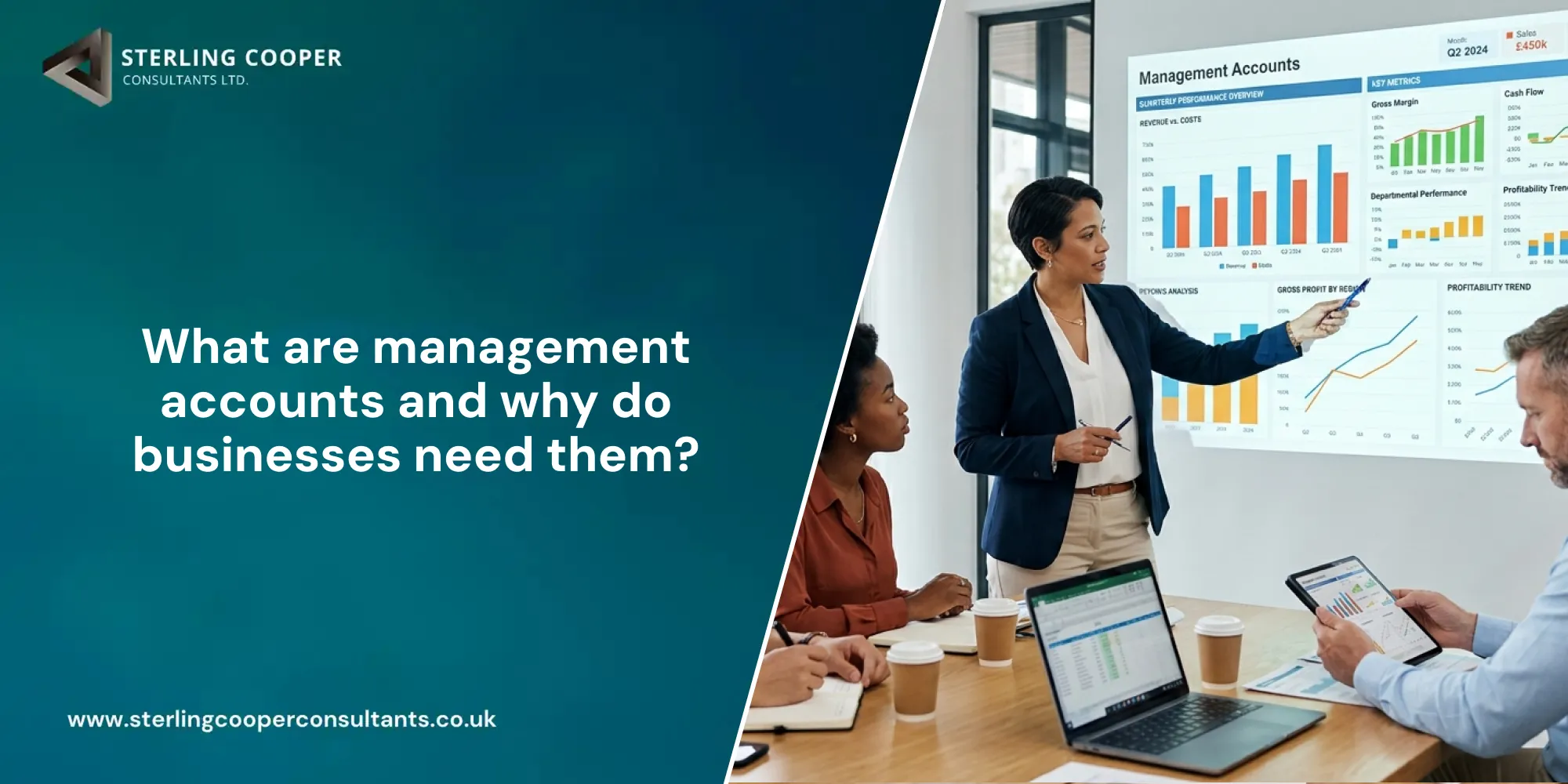
Many business owners are often found unfamiliar with what are management accounts, and why do they matter so much? These are the regular financial reports that help businesses to understand how they are performing.
These reports provide you up-to-date financial details that help you to monitor the performance, control cost and plan for the future growth.
Understanding what are management accounts helps you to improve profits, control costs and manage cash flow in a more effective way.
Research shows that businesses that work with management reporting achieved an average 46% increase in profit margins.
“What gets measured gets managed.”
– Peter Drucker
Key Takeaways
- Management accounts are regular financial reports that help business owners understand performance, monitor cash flow, and make informed decisions throughout the year.
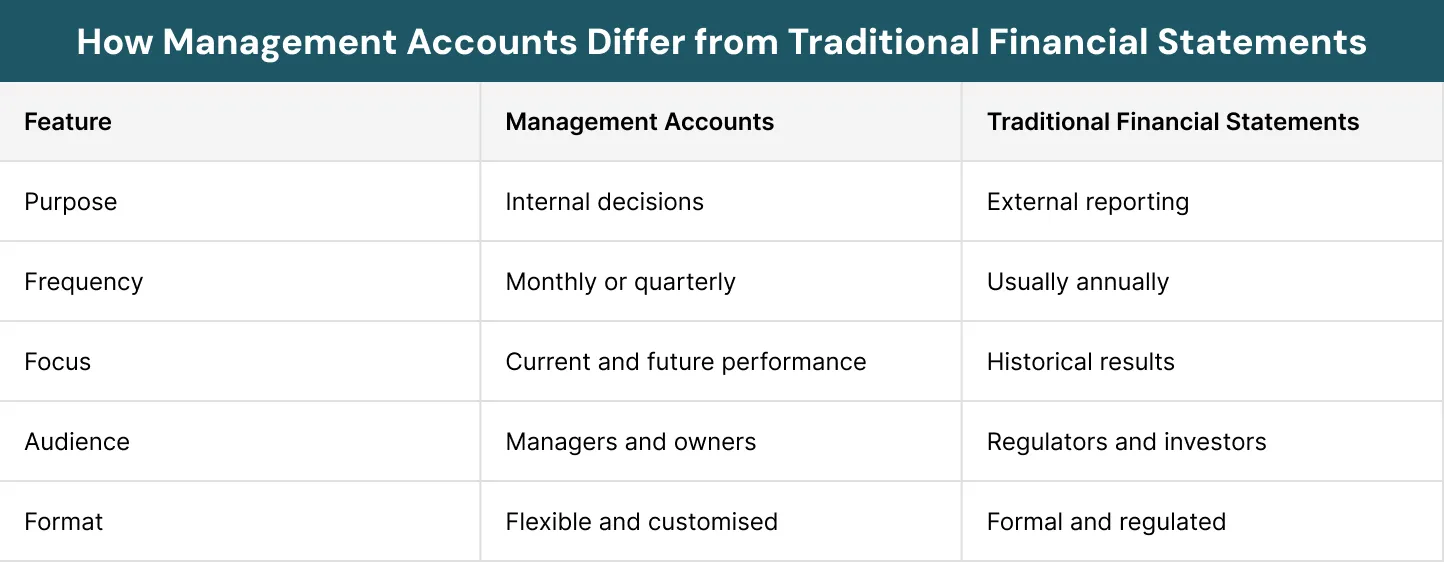
- Unlike statutory accounts, management accounts are designed for internal use and focus on current performance, future planning, and business growth.
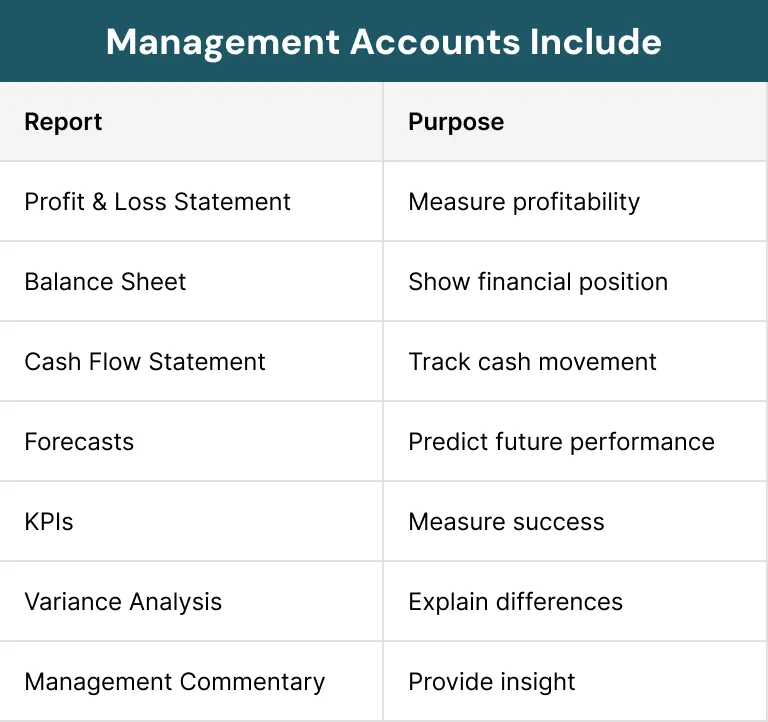
- Key reports within management accounts often include profit and loss statements, balance sheets, cash flow reports, forecasts, KPI tracking, and variance analysis.
- Regular management reporting helps businesses identify financial risks early, allowing problems to be addressed before they become more serious.
- Accurate management accounts support budgeting, forecasting, and strategic planning by providing reliable financial data.
- Businesses can use management accounts to improve profitability by monitoring margins, controlling costs, and identifying high-performing products, services, or customers.
- Strong cash flow management is easier with regular financial reporting, helping businesses maintain liquidity and avoid unexpected shortages.
- Management accounts provide valuable evidence when applying for loans, attracting investors, securing grants, or preparing a business for sale.
- SMEs can benefit significantly from management accounts because they provide financial clarity, improve decision-making, and support sustainable growth.
- Effective management accounts should be tailored to the needs of the business, include relevant KPIs, and provide clear analysis alongside financial figures.
- Outsourcing management accounts can give businesses access to financial expertise, improved reporting accuracy, and strategic business support.
- Businesses that regularly review and act on management account insights are often better positioned to improve performance, manage risks, and achieve long-term success.
Who Uses Management Accounts?
Management accounts are useful for a wide range of people within a business. Owners use them to make informed decisions. Directors rely on them when they plan future growth.
Managers use these reports to track the progress against targets. They can identify the areas that need attention.
Investors and creditors may also review them when they assess the financial health of a business.
Common Users
- Business owners
- Company directors
- Senior managers
- Investors
- Banks and lenders
- Financial advisers
How Often Should Management Accounts Be Prepared?
Most businesses prepare the management accounts every month. Monthly reporting provides you timely information and allows you to respond quickly.
Some small businesses may choose quarterly reports. This approach still provides useful insight. The right method depends on the size of your business.
Pro Tip:
The faster you receive accurate financial information, the faster you can respond to problems and opportunities.
Why Do Businesses Need Management Accounts?
They help you to make informed decisions based on the right financial information.
They help to provide insight into profitability, costs and cash flow. This allows you to act with confidence.
Without regular reporting, you may rely on assumptions rather than facts. This can increase the financial risks.
1. Supporting Better Business Decisions
Every business decision has a financial impact. They provide the details needed to assess the risks before taking any action.
Whether you are launching a new product or hiring staff, financial reports help you to understand the likely effects on cash flow.
Businesses that understand what are management accounts can make better decisions for growth.
2. Providing Real-Time Financial Visibility
Conditions of the business can change quickly. Management accounts provide you a current picture of the performance and help you to stay informed throughout the year.
Regular reporting allows you to see how sales, expenses and profits are changing over time. This makes it easier to identify the trends.
3. Monitoring Performance of The Business
This is one of the most important functions of the management accounts.
Reports allow you to compare the actual results against the targets. Regular monitoring helps you to identify the strengths and weaknesses of the business.
4. Identifying Risks
Many business problems arise gradually over time.Declining sales or rising costs often provide warning signs.
Management accounts help you to identify these signs early. This allows you to take right action before these small issues grow into bigger problems.
When people understand what are management accounts, they often see them as an important tool for risk management.
Did You Know?
Many cash flow problems can be identified months before they become critical.
5. Help You to Stay Focused on Business Goals
Every business has goals related to growth or customer service. They help you to track the progress towards these objectives.
By reviewing reports on a daily basis, managers can ensure that daily activities remain aligned with long-term business plans. This improves the focus.
A strong understanding of what are management accounts help you to stay on track and maintain the direction of the business.
“The goal is to turn data into information, and information into insight.”
– Carly Fiorina
Key Benefits of Management Accounts
There are some key benefits of management accounts which include:
- Better business decisions
- Improved cash flow control
- Stronger budgeting
- More accurate forecasting
- Greater profitability insight
- Better risk management
- Improved accountability
- Support for business growth
Read more: Why Monthly Management Reports Matter for Growing Businesses
What Do Management Accounts Typically Include?
They contain a range of financial reports that help you to measure the financial health of your company.
These reports provide useful details about income, spending and profits.
The exact content will vary from one business to another. A retail company may focus on sales and stock levels. While a service business may focus more on profit margins and staff costs. Reports should always be tailored to the needs of a business.
Understanding what are management accounts aids you further in knowing which reports you need for your business.
1. Profit and Loss Statement (P&L)
A profit and loss statement shows how much money a business has earned and spent during a specific period. It helps to highlight whether the business has made a profit or a loss.
This report helps managers to understand where income comes from and where money is being spent. It can reveal areas where costs are increasing or sales are declining.
Many people that are learning what are management accounts find that the profit and loss statement is the most useful report for tracking the performance of the business.
2. Balance Sheet
The balance sheet provides you a snapshot of the financial position of a business at a specific date. It shows assets, liabilities and equity of a business.
Assets may include cash, stock and money owed by customers. Liabilities include loans and supplier balances.
3. Cash Flow Statement
Cash flow is one of the most important areas of business management. A cash flow statement helps you to track the money moving into and out of the business.
A profitable business can still experience cash shortages. This report helps them to identify the possible cash flow issues before they become serious.
When exploring what are management accounts, business owners quickly realise that cash flow reporting is essential for the long-term growth of the business.
4. Cash Flow Forecasting
It looks ahead rather than focusing only on current figures. It estimates the future cash inflows and outflows based on the expected activity.
Forecasts help you to prepare for seasonal changes, planned investments or periods of lower sales. This helps you to reduce the risk of unexpected shortages of cash.
Pro Tip:
Never wait until cash becomes a problem. Regular forecasting allows businesses to prepare well in advance.
5. Variance Analysis
It explains why actual results differ from budgets. It focuses on the reasons behind the financial changes.
For example, increased costs may be caused by the rise of supplier price. Understanding these reasons helps you to make the right decisions.
Businesses that study what are management accounts often find variance analysis useful for improving the future planning growth of the business.
6. Key Performance Indicators (KPIs)
KPIs are measurements that are used to track the performance of business. They provide a quick view of how well a company is achieving its goals.
Examples include profit margin, sales growth and operating costs. The most useful KPIs depend on the type of the business.
When discussing what are management accounts, KPIs are often one of the most valuable tools for measuring the success of your business.
7. Financial Forecasts
It estimates the future sales, costs, profits and also cash flow. They help you to prepare for upcoming challenges.
It supports the planning of business and allows you to test the different scenarios before making any important decision.
8. Management Commentary
Numbers alone do not always tell the full story. Management commentary helps to explain the financial results in a better way.
It helps decision-makers to understand what is happening within the business and why certain results have occurred.
Did You Know?
Many successful businesses spend as much time discussing the reasons behind financial results as they do reviewing the numbers themselves.
Key Components of Effective Management Accounts
Effective management accounts provide you more than basic financial figures. They offer insight that helps you to achieve business goals that you want.
Each report should focus on details that support you in the decision-making process. The aim is to provide clear guidance.
When considering what are management accounts, it is important to understand the key areas that make these reports truly valuable.
1. Revenue Analysis
It helps you to examine where business income comes from. It also helps to identify which products or services generate the most revenue.
This information helps you to focus on the areas which deliver the best results.
2. Cost Analysis
It looks at all expenses of the business. It helps to identify the errors to improve efficiency. It also helps you to understand where money is being spent.
Reviewing the costs on a daily basis can help you to reveal the waste of money. This helps to improve the overall profitability.
Businesses that understand what are management accounts often use the cost analysis to strengthen the financial control.
3. Break-Even Analysis
Break-even analysis identifies the point where income is equal to the costs. At this stage, the business is neither making a profit nor a loss.
Knowing the break-even point helps you to set realistic sales targets and pricing strategies. It also supports financial planning.
Many business owners who truly know what are management accounts, find break-even analysis highly useful.
4. Trend Analysis
It helps to compare the financial performance over time. This helps you to identify the patterns.
By reviewing trends, you can spot the growth opportunities and address the issues before they become major issues.
How Management Accounts Support Business Growth?
Growth requires strong planning and financial control. Management accounts provide the details needed to support the growth of a business.
Without reliable financial records, growth can create risks. In this case, management accounts help you to grow with confidence.
When discussing what are management accounts, growth support is one of their key benefits.
1. Improving Profit Margins
Management accounts help you to monitor the profit margins on a daily basis. This allows you to identify the areas where profits can be improved.
Small changes in pricing or costs can have a good impact on overall profit margins.
2. Cash Flow Management
Cash flow is often one of the biggest challenges for growing businesses. Management accounts help you to monitor the requirements of cash.
This allows you to prepare for future spending and avoid cash shortages during the growth periods.
3. Identify New Growth Opportunities
Financial reporting can help you to reveal the trends that may go unnoticed. This includes groups of profitable products or markets.
Identifying these trends allows you to act before your competitors.
It helps you to provide valuable details that support long-term growth of the business.
Read more: Business Growth Guide That Drives Long-Term Success
Case Study: How Management Accounts Helped a UK SME Grow
A UK-based SME was growing quickly but struggled to understand its financial performance.
The owners only reviewed the annual accounts. They had limited visibility of profits, costs and cash flow. As a result, important decisions were often based on guesswork rather than right financial information.
To solve this problem, the company introduced monthly management accounts. These reports included profit and loss records, cash flow forecasts and budget comparisons.
The management team used these reports to track the performance, control the costs and identify the areas where profits could be improved.
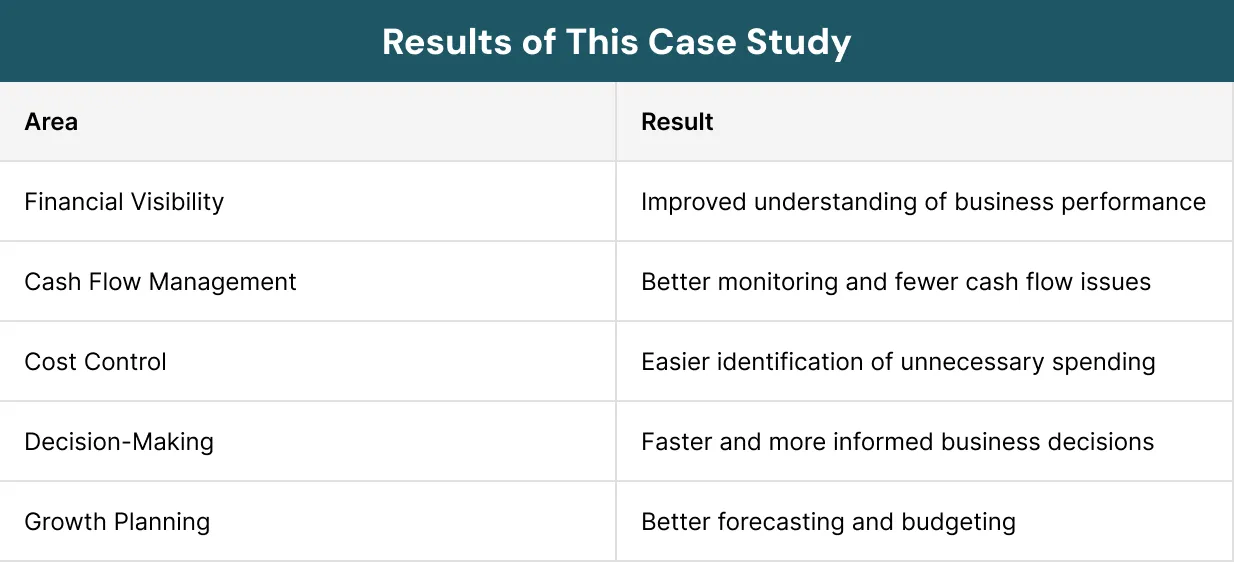
Within a year, the business had a much clearer understanding of its finances and was able to make better decisions. Cash flow improved and spending became more controlled.
Conclusion
Understanding what are management accounts is key for any business that wants great financial control. These reports provide you timely details about profit, cash flow and overall performance of the business.
These reports help you to plan effectively, identify risks early and support business growth. They transform financial data into practical insight.
Whether you are a small business owner or leading a larger organisation, they provide the results needed to achieve your goals.
They also help you to make the right decisions. At Sterling Cooper, we deliver management accounts that help you forecast, budget and plan for the future with confidence.
Growth requires a clear strategy.
Our tailored management accounts provide the information you need to monitor performance, control costs and make right financial decisions. Get in touch today for expert support.
FAQs
Management accounts are internal financial reports prepared monthly or quarterly to help business owners and managers make informed decisions.
They often include profit and loss statements, balance sheets, cash flow reports, forecasts, KPIs, and management commentary.
They provide financial visibility, improve planning, strengthen cash flow management, and support growth.
No. However, many businesses use them because they provide valuable financial insight and support better decision-making.
A management accounts format is a structured financial report that typically includes a profit and loss statement, balance sheet, cash flow report, KPIs and performance analysis to help businesses make informed decisions.
Recent Posts