

Posted by:
Admin
Date:
June 4, 2026
Category:
blogs
Business Growth Guide That Drives Long-Term Success
If you run a business in the UK, you may have seen that growth is getting harder.
The UK Government said that 99% of businesses fall under Small and Medium-sized Enterprises (SMEs) in the UK. This shows that business expansion is a must for survival and success.
This clearly shows that SMEs power the economy. However, many SMEs find it hard to grow because they lack clear direction. Business growth is not about speed. It is about control, planning and steady progress.
Business owners either rush the process of growing their businesses or defer it. They may lose opportunities along the way. So, these strategies are important.
Key Takeaways
- Business growth needs planning, stable cash flow and strong systems.
- The best business growth strategies focus on steady and sustainable scaling.
- Business development growth strategies help improve market reach and customer growth.
- Strong customer demand and clear goals are important before expansion.
- A business growth consultant can help reduce risks and improve planning.
- A business growth service supports businesses with structure, strategy and financial control.
- Cash flow management is essential during business growth.
- Technology and digital tools can improve efficiency and customer retention.
- Businesses should track revenue, profit margins and customer retention regularly.
- Long-term business growth comes from consistent improvement, not quick win.
What Is Business Growth and Why Does Business Growth Matter?
It means that your business will grow bigger over time.
This may be:
- Increase in sales
- More customers
- Increase in profit margins
- Increased workforce
- Entering new markets
However, true growth of a business does not include only growth. Growth must include stability and control.
UK businesses tend to focus only on sales. However, good business expansion includes balance, cash flow and systems.
Quick Insight:
Business growth is not about doing more. It is about doing things better and smarter.
What Are the Types of Business Growth Strategies in the UK?
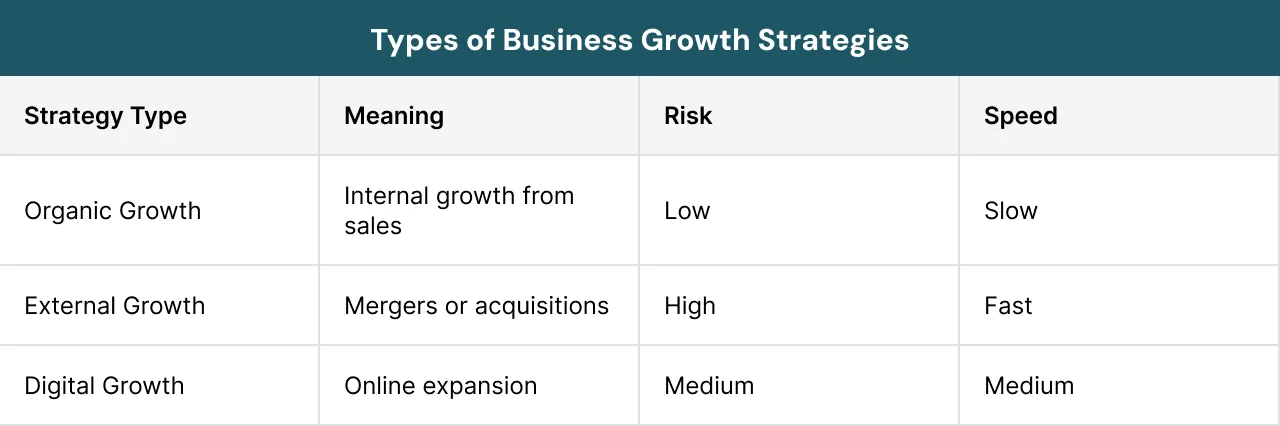
There are various strategies that you can consider based on how they work.
1. Organic Growth
Organic growth means using your existing customer base. It also includes reinvesting your profits. This type of growth is steady but usually slow.
2. External Growth
External growth includes mergers between companies. It also includes acquisitions where one company buys another. Partnerships are also part of this type.
3. Digital Growth
Digital growth focuses on online channels. It includes online marketing to reach more people. It also uses SEO to improve search visibility. Social media marketing is also a key part of it.
A business consultant is normally helpful in choosing the right strategy.
Read More: Business Growth Strategies: A Complete Guide to Planning, Execution and Long-Term Success
How Can You Prepare Your Business for Long-Term Business Growth?
Make sure your business is ready before focusing on growth. Many businesses expand too early and later face financial problems.
1. Stable Customer Demand
Your business should have a steady demand before you expand.
Positive signs would be:
- Loyal customers
- Steady inquiries
- Monthly sales
Inconsistent sales each month can make business expansion difficult.
2. Strong Cash Flow
Cash flow plays a crucial role in business expansion.
Your business needs to be able to handle:
- Salaries of employees
- Costs related to marketing
- Overhead costs
- Capital expenditure
Most business owners grow sales yet have cash flow issues. Business consultants will help you check your finances before expanding your business.
3. A Reliable Team
Expanding a business needs strong backing from employees and management.
Before expansion, make sure that:
- Your employees can handle their present workload
- Employee roles are clear
- There is basic infrastructure in place
Without support from the team, expanding your business will be challenging.
4. Clear Goals
Setting goals helps the firm expand with purpose.
Goals you can have:
- Increase earnings
- Enter new markets
- Improve customer loyalty
- Offer new services
Many business development growth strategies work better when businesses set real goals.
5. Good Systems
Better systems make daily activities simpler when the company is growing.
Systems such as:
- Customer relations management
- Financial management
- Sales system
- Communication system
It can be added by a professional business expansion service before expanding.
What Are the Best Business Growth Strategies for SMEs?
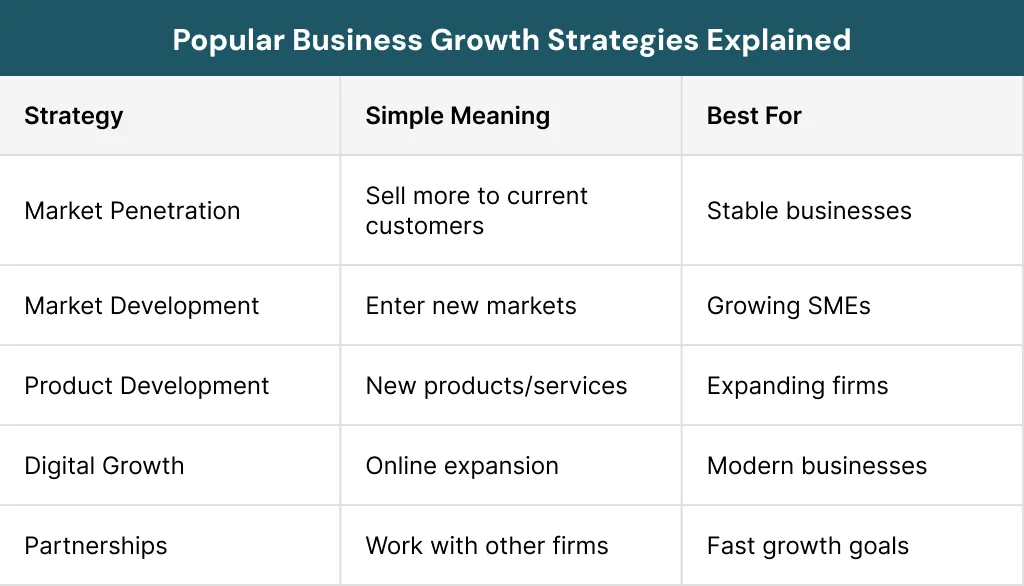
Best growth strategies for businesses are:
- Generating sales from current customers
- Expanding into new markets
- Enhancing products
- Retaining customers
Growth strategies for the business help you to decrease risks and ensure stability. Several organisations also adopt firm growth strategies.
Helpful Tip:
Start with one business growth strategy. Do not try to do everything at once.
What Are Business Development Growth Strategies and Why Do They Matter?
Strategies for expanding businesses include long-term expansion plans.
Examples include:
- Networking
- Partnerships
- Referrals
- Branding
These strategies help your business grow and build a strong position in the market. Most UK companies use business expansion services to develop these strategies.
When Should You Use a Business Consultant?
Consulting helps in the expansion of businesses.
The services provided include:
- Planning
- Market entry
- Control of finances
- Reducing risks
The need for business expansion services occurs where:
- There is no growth
- Unstable cash flows
- Lack of planning
- Business expansion plans exist
Read more: Business Consulting Strategies, Benefits and Best Practices for Growth
Important Note:
If your business is growing without structure, it is risky and can fail fast.
How Do You Know Your Business Is Ready for Business Growth?
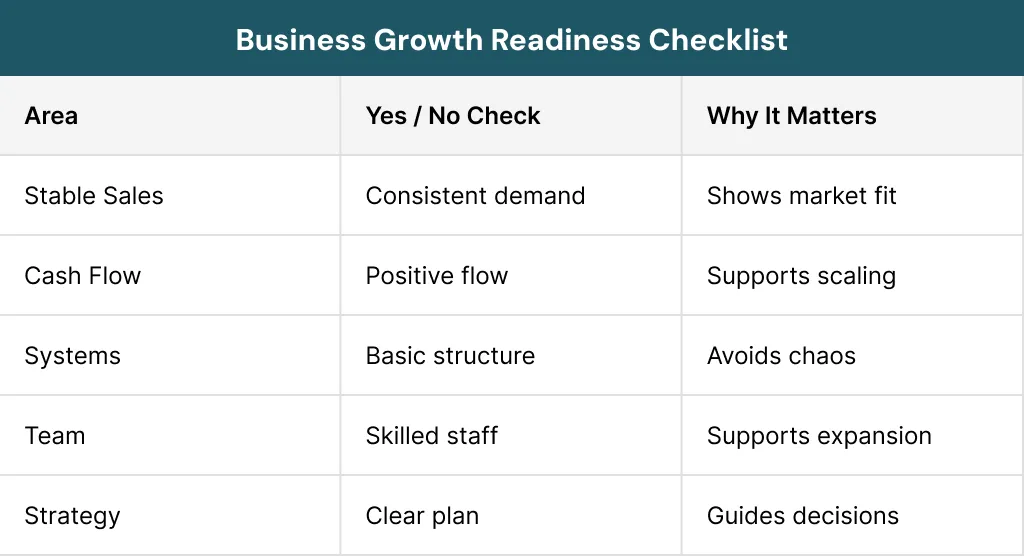
Before using these strategies, consider the business’s preparation for this step. You should check for:
1. Stability of Demand
There are regular clients who bring in consistent business. Revenue stays steady over time without big changes. This helps the business plan ahead with confidence. It also reduces the risk of sudden income loss.
2. Good Cash Flow
Earnings remain stable throughout the business cycle. Incoming and outgoing money is easy to track and control. This helps the business meet daily expenses on time. It also reduces financial pressure during slow periods.
3. Strength
Services are clearly defined and easy to deliver. The business focuses on a specific niche market. This makes it easier to attract the right customers. It also helps build a strong brand identity.
4. Business Team
Basic systems and processes are already in place. Employees are available to support daily operations. This improves efficiency and reduces workload pressure. It also helps the business run smoothly.
5. Vision
Goals are clear, specific, and well understood. There is a proper plan to achieve future growth. This helps guide business decisions in the right direction. It also keeps the team focused and motivated.
A business expansion consultant will help in this.
Quick Reminder:
Small changes in strategy can create big long-term business growth.
How Can You Create a Business Growth Plan That Works?
Business expansion requires a good strategy. Without a good strategy, growth can be very risky and costly. The right strategy helps businesses grow in the right direction with less confusion. Simple goals should be set first.
Ask yourself:
- What should be done?
- How much growth is right for my firm?
- What resources are available?
Many firms choose a business consultant to develop realistic strategies.
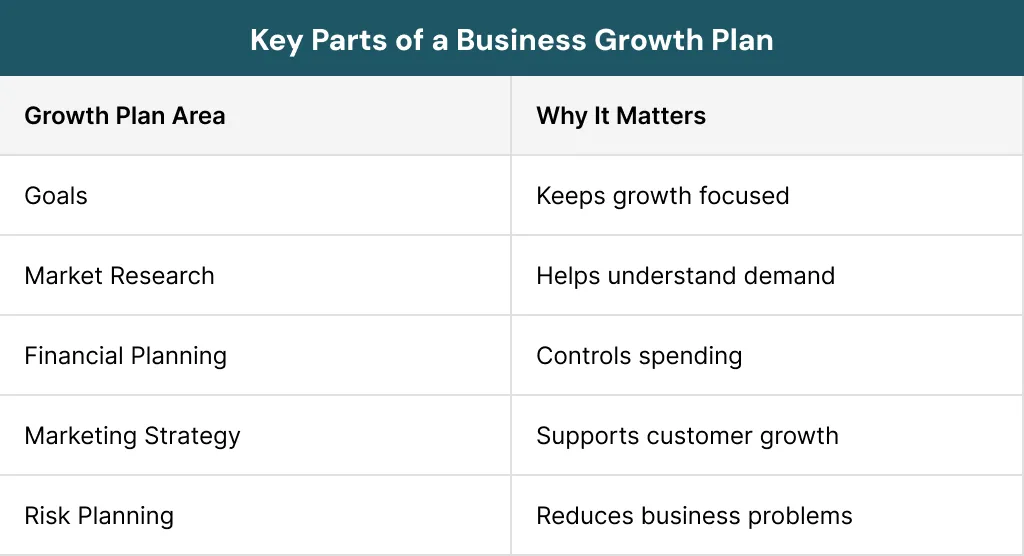
What Should a Business Growth Plan Include?
Planning should remain as simple and practical as possible.
1. Business Goals
State goals for:
- Income
- Clients
- Number of staff
- Market reach
2. Market Research
Get information on:
- Competitors
- Client needs
- Trends
3. Financial Plan
Monitor:
- Costs
- Profit margin
- Cash flow
- Growth budget
4. Sales and Marketing Plan
Effective growth plans usually focus on:
- SEO
- Content marketing
- Referrals
- Partnerships
5. Risk Plan
Anticipate:
- Poor sales results
- Increasing costs
- Market shifts
Why Is Cash Flow Important for Business Growth?
Most firms fail due to poor cash flow rather than low sales. It’s a crucial problem for any firm that is growing.
As the business expands:
- Costs rise
- Salaries go up
- Marketing budgets increase
- Work becomes bigger
Ways to improve cash flow:
- Invoicing quickly
- Reducing late payments
- Avoid unnecessary cost
- Monitor the cost per month
Quick Tip:
Revenue looks good on paper. Cash flow keeps the business alive.
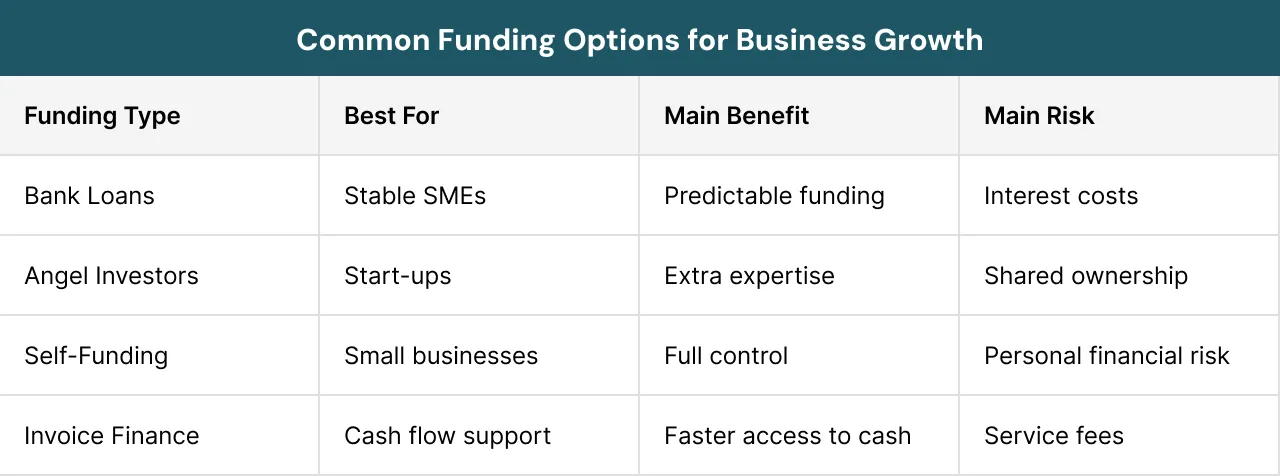
What Funding Options Support Business Growth?
Various business expansion strategies demand different types of funding.
1. Business Loans
Business loans are money borrowed from a bank or lender. They must be paid back with interest over time. They are useful for expansion, equity needs, and working capital.
2. Angel Investors
Angel investors are individuals who invest their own money in a business. They usually support new and growing start-ups. They often help businesses that have strong growth potential.
3. Self-Funding
Self-funding means using your own savings or profit. It gives you full control of your business. It is best for small and low-risk businesses.
4. Invoice Financing
Invoice financing helps you get money from unpaid invoices early. A finance company pays you based on your pending bills. It improves cash flow and helps manage short-term expenses.
What Mistakes Can Slow Business Growth?
Many firms harm themselves unintentionally as they expand their businesses.
1. Expanding Too Quickly
Expanding too quickly may harm quality and overwhelm staff. It can also cause cash flow problems.
2. Not Adding Systems
Failure to add proper systems will lead to disorganised teams. It can also lead to poor customer service.
3. Poor Leadership
The owners are trying to control everything and limit growth.
4. Lack of Strategy
This leads to uncontrolled decision-making and poor investing. It can cause budget wastage, too.
Business development growth strategies avoid these problems.
“Growth is never by mere chance. It is the result of forces working together.”
– James Cash Penney.
How Does a Business Growth Consultant Help Long-Term Success?
The consultant offers external support.
They help firms in:
- Creating structure
- Improving planning
- Constructing better systems
- Minimising risk
Businesses take help from consultants when:
- Growth is unstable
- Firms are being stretched
- Income is not growing
Excellent consultants focus on long-term growth.
What Is the Guide to Working With a Business Growth Consultant?
The guideline for collaborating with a consultant begins by establishing expectations.
When taking help, be sure to ask about:
The issues that need to be addressed
- Your growth goals
- Your budget
Your ideal business consultant would be able to:
- Know your market
- Explain ideas effectively
- Be result-oriented
You also have to assess:
- Experience
- Case studies
- Communication Style
All this will help in choosing the proper business expansion service.
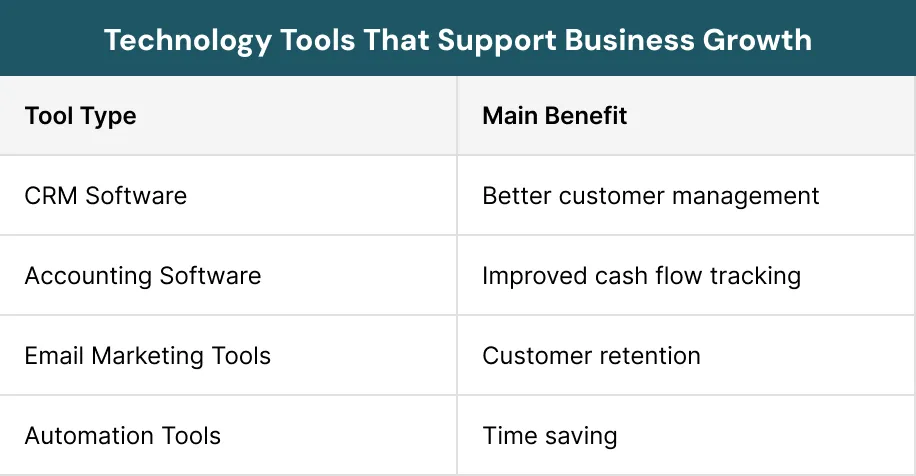
How Can Technology Support Business Growth?
Technology today is a vital part of business expansion.
It can help firms by:
- Saving time
- Improving customer support
- Tracking progress
- Reducing paperwork
Some useful technologies to be used include:
- Customer relationship management tools
- Accounting software
- Email marketing applications
- Automation technology
Many of today’s strategies for business expansion use digital systems.
How Can Businesses Measure Business Growth?
Tracking progress is necessary. Progress cannot be achieved without measuring progress.
Some useful metrics include:
1. Revenue Increase
It tracks how sales are growing. It shows if business income is rising. It helps measure overall performance. It supports better future planning.
2. Profit Margins
It shows how much profit is made. It compares income and costs. It tells real business profitability. It helps in pricing decisions.
3. Customer Retention Rate
It tracks repeat customers. It shows customer loyalty. It helps understand customer satisfaction. It improves long-term business growth.
4. Cash Flow Monitoring
It tracks money coming in and going out. It shows financial stability. It helps manage daily business needs. It reduces the risk of cash shortages.
5. Customer Acquisition Cost
It shows the cost of getting new customers. It measures marketing effectiveness. It helps control spending on ads.
These metrics can help in improving business expansion strategies.
Case Study: Simple Business Growth Through Better Systems
A small UK retail company faced challenges such as slow growth and increasing costs.
They focused on:
- Improved stock management
- Effective communication with clients
- Online sales platforms
And enhanced their firm’s growth strategies by forming local partnerships.
Within one year, the following was observed:
- Increased sales
- Decreased costs
- Improved customer retention
Thus, showing how an effective system helps business expansion.
How Can Businesses Build Long-Term Business?
Long-term business expansion requires both patience and planning.
Focus on:
- System balance
- Cash flow management
- Customers retention
- Training of employees
- Effective planning
Forget quick fixes. The best business expansion strategies include constant improvement.
Conclusion
Business success comes from planning, structure and smart decisions.
Clear business growth strategies help businesses manage risks better. They also support steady growth. Strong business development growth strategies help businesses reach more customers. It also helps them build long-term stability.
Sterling Cooper Consultants understands the challenges businesses face during growth and expansion. Need help with planning, strategy or growth? Contact us today to discuss your business goals.
Struggling to manage business growth without a clear direction?
Our team supports UK businesses with practical strategies, financial planning and structured growth support. We have helped firms improve stability and scale with confidence. Explore our business advisory services today.
FAQs
Business growth means increasing sales, customers, profits or market reach over time.
Popular business growth strategies include market expansion, digital marketing, partnerships and customer retention.
A business growth service is useful when your business faces slow growth, weak planning or operational pressure. It can help improve structure, strategy and financial control.
The guide to working with a business growth consultant starts with setting clear goals and understanding your business challenges. You should also review the consultant’s experience, communication style and approach to business growth.
Yes. Small businesses can achieve steady business growth by using clear systems, realistic planning and strong customer relationships.
Recent Posts

How to Build a Cash Reserve for Business Stability
August 11, 2026

How to Forecast Cash Flow During Economic Uncertainty
August 6, 2026