Posted by:
Admin
Date:
July 23, 2026
Category:
blogs
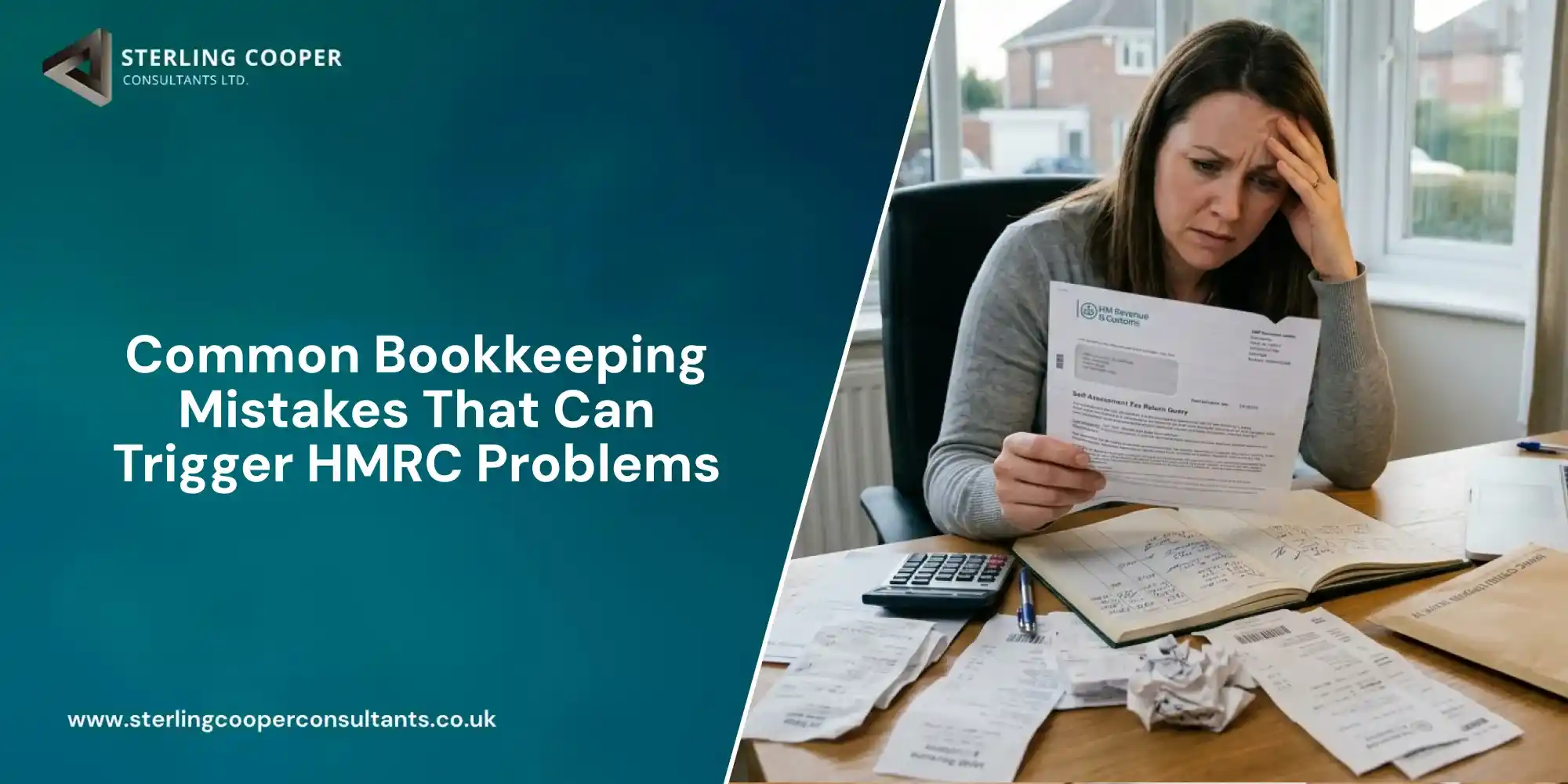
Common Bookkeeping Mistakes That Trigger HMRC Problems
Many HMRC problems start with simple bookkeeping mistakes that can be avoided with a little attention and care. HMRC states that record-keeping errors are a leading cause of tax filing mistakes that can lead to compliance checks for UK SMEs. These errors can also be costly, as HMRC collected £2.6 billion in fines and penalties during the 2023–2024 financial year.
This shows why accurate bookkeeping is essential for every UK business. It helps you manage your finances, keep records up to date, file the right tax returns and stay compliant with HMRC. Most compliance issues start with simple bookkeeping mistakes that could have been avoided. These errors can lead to fines, penalties and compliance issues.
In this blog, you’ll learn the most common bookkeeping mistakes that result in HMRC problems and simple ways to avoid bookkeeping mistakes.
Key Takeaways
- Good bookkeeping helps businesses stay HMRC compliant and avoid penalties.
- HMRC uses digital systems to detect unusual financial activity and bookkeeping errors.
- Mixing personal and business finances can create confusion and increase HMRC scrutiny.
- Delaying bookkeeping tasks increases the risk of missing transactions, late filings and inaccurate tax records.
- Regular bank reconciliation helps identify duplicate entries, missing payments and financial errors.
What Are Common Bookkeeping Mistakes That Trigger HMRC Problems?
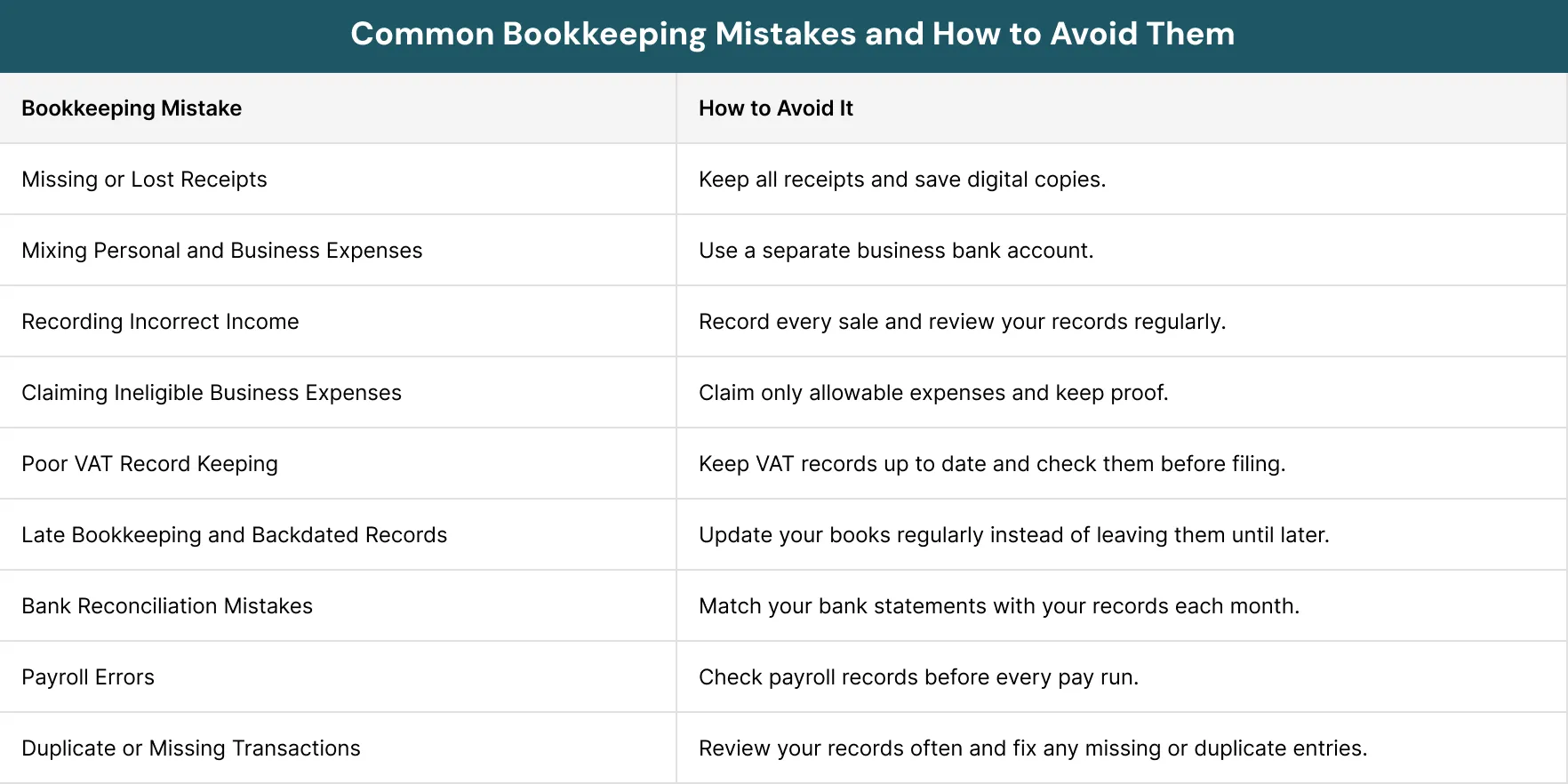
The most common bookkeeping mistakes include missing receipts, mixing personal and business expenses, incorrect recording of revenue, wrong claim of expenses, poor VAT records, late bookkeeping, mistakes in bank reconciliation, payroll errors and duplicate entries. These mistakes can then lead to HMRC inquiries, fines and penalties.
Below are some of the common bookkeeping mistakes that every business should avoid:
1. Missing or Lost Receipts
Receipts and invoices prove that your business earned from the sale of a product or service or paid for one. Every business should keep them as part of its financial records. Paper receipts can get lost, damaged or thrown away. Digital receipts can also be deleted by mistake. This is one of the most common bookkeeping mistakes made by small businesses. Keeping complete records makes it easier to manage your accounts and meet HMRC rules.
Why It’s a Problem
HMRC may ask to see proof of your business expenses and revenue. If you cannot provide receipts, your claims may be rejected. This can increase your taxable profit. As a result, you may pay more tax than necessary or underpay entirely. Missing records can also slow down an HMRC compliance check. In some cases, poor record-keeping may lead to penalties. Good records protect your business and support every claim you make.
How to Avoid It
Make a copy of every receipt as soon as you receive it. Store paper receipts in labelled folders. Scan them and keep digital copies as a backup. Save digital files in secure cloud storage. Record each expense in your bookkeeping system straight away. Check your records every month to make sure nothing is missing. This simple habit helps you avoid one of the most common bookkeeping mistakes.
2. Mixing Personal and Business Expenses
Many business owners use one account for both personal and business spending. This often happens when a business is new. It may seem simple at first. However, it makes your records harder to manage and confusing. This is one of the most common bookkeeping mistakes for small businesses. Keeping business and personal money separate makes bookkeeping much easier.
Why It’s a Problem
While you can pay for business expenses through your personal account, it leads to problems when filing for self-assessment and business taxes. Using the same account for personal and business expenses can lead to errors and problems in bookkeeping. This complicates filing tax returns, leading to missing tax deductions or an HMRC inquiry.
How to Avoid It
Open a different account for business expenses. Pay business expenses through one account and keep personal spending separate. This will make bookkeeping easier and ensure HMRC compliance for self and business.
3. Recording Incorrect Income
Each transaction must be recorded accurately. Your income records should match your invoices and bank statements. Any missing or incorrect figures may affect your accounts. Errors, even minor ones, tend to grow over time. It is one of the common bookkeeping mistakes that affect tax records. Accurate income records provide you with details of how your business is performing.
Why It’s a Problem
Incorrect figures for income lead to incorrect tax returns. There could be cases where you end up paying either too much or too little tax. HMRC may question your records if there is a mismatch in the values. There are chances of missing out on crucial data relating to your business. Fixing old mistakes takes extra time and valuable resources.
How to Avoid It
Record all sales at the time they occur. Maintain copies of all the bills. Compare your income with the bank statements each month. Check your records before filing your taxes. Fix all errors once detected. Use accounting software to reduce mistakes. Regular checks keep accuracy in your records.
4. Claiming Ineligible Business Expenses
All costs cannot be claimed as business expenses. There are rules issued by HMRC on the type of expenses that are included. Personal costs are not allowed to be considered. The wrong claiming of the expenses can lead to issues in the future. This is one of the most common bookkeeping mistakes that businesses should avoid. Knowing the rules helps you claim the right expenses.
Why It’s a Problem
HMRC may also refuse expenses that cannot be claimed. It will affect your tax payments in a way that you will end up paying more taxes. In some cases, the incorrect claim for tax deductions will mean that you have to repay the tax money that you claimed. Wrong claims can also delay your tax process. They may also trigger an HMRC review. Accurate claims help keep your records compliant.
How to Avoid It
Read HMRC guidance before claiming any expenses. Always keep your receipts for all purchases. Always record the reason why that expense was made. Ask an accountant in case you have doubts. Examine your expense records often. Reduce any expenses that do not qualify. Careful checks help prevent mistakes.
5. Poor VAT Record Keeping
All businesses that have VAT registration need to keep proper VAT records. Such records show the VAT charges that a business pays and invoices. It is vital to store all VAT invoices safely. In case of loss of such records, VAT accounting will be more difficult to conduct. This is one of the common bookkeeping mistakes in VAT-registered businesses. Good records make VAT reporting much easier.
Why It’s a Problem
Poor VAT records can lead to errors on your VAT returns. You may pay the wrong amount of VAT. HMRC may charge interest or penalties. Missing invoices can delay your filing and return. Errors may also trigger an HMRC check. Correcting VAT mistakes takes considerable time and effort. Accurate records help you avoid these problems.
How to Avoid It
Keep every VAT invoice in one place. Update your VAT records throughout the year. Check your figures before submitting your return. Store digital copies as a backup. Use accounting software if possible. Review your VAT records regularly. This makes VAT filing easier and more accurate.
6. Late Bookkeeping and Backdated Records
Bookkeeping should be done regularly. Waiting until the end of the month or year can create problems. It is easy to forget important details. Receipts and invoices may also go missing. This is one of the most common bookkeeping mistakes for busy business owners. Regular updates keep your records accurate.
Why It’s a Problem
Many of these bookkeeping errors happen because records are not updated regularly. A simple bookkeeping routine can help you avoid bookkeeping mistakes before they affect your business. Late bookkeeping increases the chance of mistakes. You may forget income or expenses. Missing information can affect your tax return. Filing late may lead to HMRC penalties. It also makes year-end work more stressful. Finding old records can take hours. Regular bookkeeping saves time and reduces errors.
How to Avoid It
Update your bookkeeping every week or month. Record income and expenses as they happen. Keep your receipts organised. Set reminders for bookkeeping tasks. Do not leave everything until tax season. Review your records often. Small updates are easier to manage.
Good record-keeping helps you manage your business and can save you time and money. HM Revenue & Customs
7. Bank Reconciliation
Bank reconciliation means comparing your bookkeeping records with your bank statements. It helps you make sure every transaction is correct and verifiable. This process can find missing or duplicate entries. It also shows if any payments have been recorded incorrectly. Skipping this step is one of the common bookkeeping mistakes businesses make. Regular checks help keep your accounts accurate.
Why It’s a Problem
Without bank reconciliation, mistakes can stay hidden. Your account balance may be incorrect. You may miss payments or record transactions twice. These errors can affect your financial reports. They may also lead to tax mistakes. Finding old errors is often difficult. Accurate records depend on regular reconciliation.
How to Avoid It
Compare your bank statements with your records every month. Check each payment and deposit carefully. Correct any differences as soon as possible. Look for duplicate or missing transactions. Use accounting software to speed up the process. Keep your bank records organised. Regular checks improve accuracy.
8. Payroll Errors
Payroll includes employee wages, tax and National Insurance. Every payroll record should be correct. Even small mistakes can affect your employees. Wrong figures can also create tax problems. Payroll errors are among the most common bookkeeping mistakes made by employers. Accurate payroll keeps your business compliant.
Why It’s a Problem
Payroll mistakes can lead to incorrect employee pay. Tax or National Insurance may also be wrong. HMRC may charge penalties for payroll errors. Employees may lose trust if they are paid incorrectly. Fixing mistakes often takes time. You may need to submit corrected payroll records. Accurate payroll protects both your staff and your business.
How to Avoid It
Check employee details before every payroll run. Review wages and tax amounts carefully. Keep payroll records updated. Use payroll software where possible. Check every payroll report before submitting it. Fix mistakes as soon as they are found. Regular reviews reduce payroll errors.
9. Duplicate or Missing Transactions
Every payment should appear once in your records. Sometimes transactions are entered twice. Other times, they are missed completely. Both mistakes can affect your accounts. These are common bookkeeping mistakes that can happen during manual data entry. Checking your records often helps you spot these errors.
Why It’s a Problem
Duplicate transactions can overstate your income or expenses. Missing transactions can understate them. This makes your financial reports inaccurate. Your tax return may also contain errors. HMRC may question records that do not match your bank statements. Correcting these mistakes later takes time. Accurate records help avoid these issues.
How to Avoid It
Review your transactions every month. Compare them with your bank statements. Check for missing or duplicate entries. Correct mistakes as soon as you find them. Use accounting software to detect errors automatically. Keep your records updated throughout the year. Regular reviews improve accuracy and save time.
Simple Mistake, Heavy Fines: Case Study
A self-employed taxi driver did not keep accurate bookkeeping records. When HMRC carried out a compliance check, it compared the driver’s bank payments, income records and tax return. The figures did not match. HMRC found that some business income had not been reported. Because of these bookkeeping mistakes, the driver had to pay the unpaid tax along with a penalty. This HMRC example shows that keeping clear and accurate bookkeeping records can help businesses avoid HMRC problems.
Did you Know?
A missing receipt or an incorrect entry may seem minor. However, repeated bookkeeping mistakes can lead to HMRC penalties, compliance checks and extra tax. Checking your records regularly can help you avoid these problems.
Final Thoughts
Accounting errors happen all the time, but they may turn into something more serious when not corrected. Most of the HMRC checks usually begin due to poor records. Even the smallest problem can lead to penalties.
The best way to avoid bookkeeping errors is to maintain clear records throughout the year. Separate your personal and business finances, secure your receipts and manage your accounts. Also, ensure that you file your tax returns on time. By avoiding these bookkeeping errors and checking your records regularly, you can save time, reduce stress and keep your business compliant. Good bookkeeping helps businesses to manage their cash flow better.
At Sterling Cooper, our experts can help you to keep your accounts accurate and HMRC compliant. Contact us today if you want to avoid HMRC penalties for poor bookkeeping errors.
Are your bookkeeping records fully HMRC-compliant?
Even small mistakes can put your business at risk. Our bookkeeping experts help you identify errors, maintain accurate records and stay prepared for HMRC checks. Contact us today for reliable professional support.
FAQs
HMRC may start a compliance check if it notices errors, inconsistencies or unusual patterns in tax returns. Checks can also be triggered by late filings, inaccurate records, significant changes in income or expenses or information received from third parties that does not match the details provided by the taxpayer.
An HMRC investigation can be triggered when there are concerns about the accuracy of a tax return or signs of potential tax avoidance or evasion. Common triggers include unexplained income, unusually high expense claims, repeated mistakes in tax filings or discrepancies between reported figures and information held by HMRC.
Yes, poor bookkeeping can lead to HMRC penalties if it results in inaccurate tax returns, missing records or incorrect calculations. Keeping complete and accurate financial records helps businesses comply with tax rules and reduces the risk of fines.
There is no fixed schedule for HMRC compliance checks. A business may be selected at random or HMRC may conduct a check if it identifies a specific risk or concern related to the business's tax affairs.
Businesses should keep records of income, expenses, invoices, receipts, payroll information, bank statements and tax documents. Maintaining organised and accurate records makes it easier to complete tax returns correctly and respond to any HMRC enquiries.
Recent Posts