Posted by:
Admin
Date:
July 21, 2026
Category:
blogs
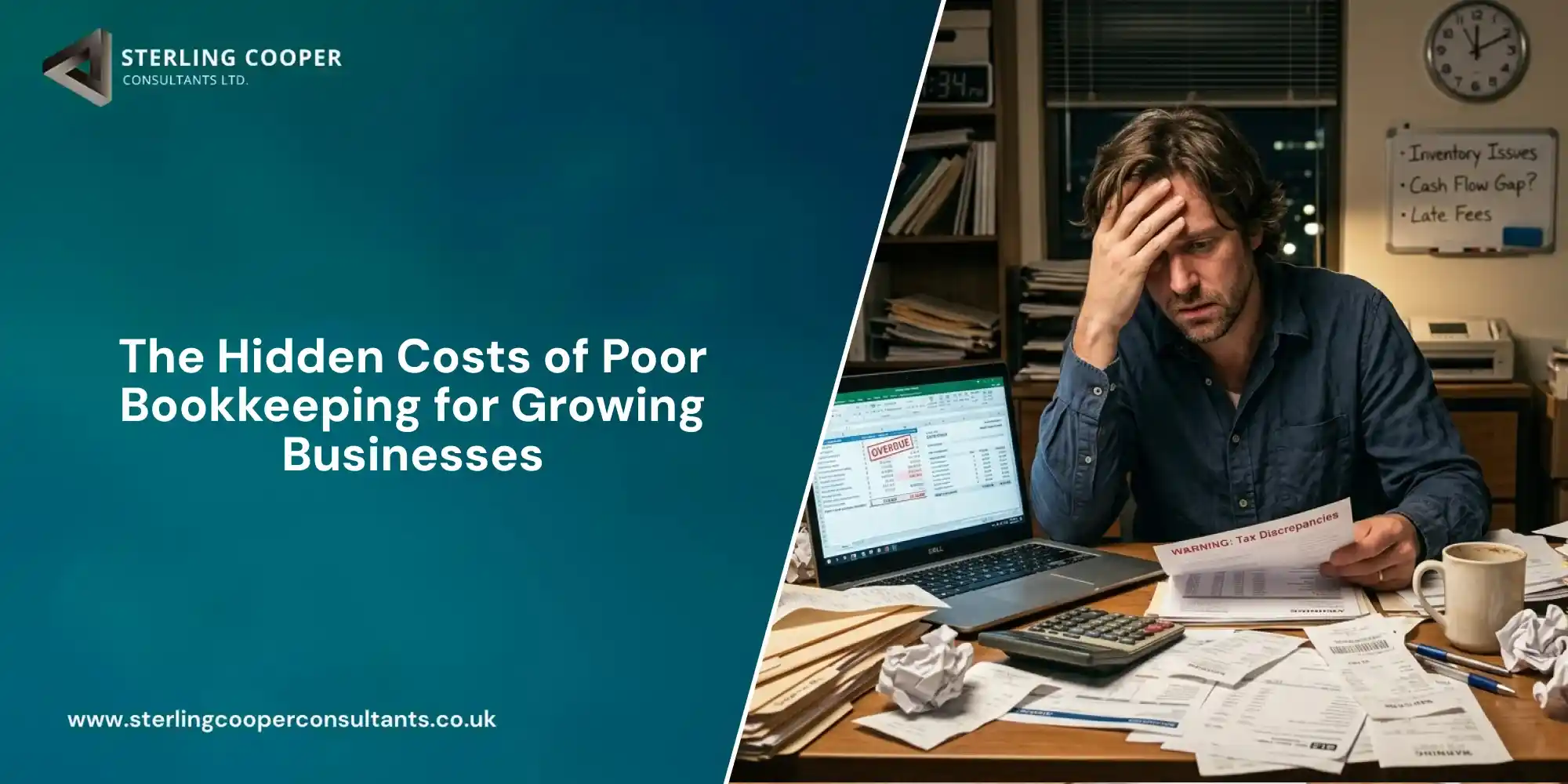
The Hidden Costs of Poor Bookkeeping for Growing Businesses
A growing business needs more than good sales. It also needs good bookkeeping. Many owners focus on winning new customers and leave financial records until later. An estimated 1.1 million taxpayers missed the Self Assessment deadline in the year 2025. This shows how poor record-keeping and late bookkeeping can quickly become expensive.
This is where the consequences of poor bookkeeping begin. Small mistakes, like a missing receipt or forgotten invoice, can soon grow into bigger problems. They can hurt cash flow, increase tax bills and slow business growth.
The bad bookkeeping cost is not only about paying extra money. It also includes wasted time, stress and missed business chances. Many owners only notice these hidden costs when it is too late.
This guide explains the consequences of poor bookkeeping, why they happen and how to avoid them. Small changes today can save a growing business a lot of money tomorrow.
Key Takeaways
- The consequences of poor bookkeeping can lead to cash flow problems, poor decisions, HMRC penalties and slower business growth
- The bad bookkeeping cost includes more than fines. It also covers missed tax deductions, wasted time, hidden expenses and lost business opportunities
- Hiring a bad bookkeeper or delaying financial records can increase errors, create compliance risks and make financial reports unreliable
- Keeping accurate records throughout the year helps reduce the consequences of poor bookkeeping on small business taxes and makes HMRC reporting easier
- Regular bank reconciliations, organised records and cloud accounting software help prevent the consequences of bad bookkeeping before they become costly
- Reviewing financial records regularly helps identify problems early and supports better business planning, stronger cash flow and long-term growth
What Is Poor Bookkeeping?
Poor bookkeeping means financial records are incomplete, inaccurate or not up to date. Some income or expenses may be missing, receipts may be lost and bank records may not match the accounts.
Bookkeeping shows how money is earned and spent. It also helps determine whether or not the firm is profitable. Sometimes records are wrong and they make every report less reliable. A business owner thinks everything is going well but this may not be the case at all.
This is one of the first consequences of poor bookkeeping. Inaccurate data causes wrong conclusions.
Why Accurate Record-Keeping Matters for Business Growth?
Accurate record-keeping matters for business growth because it helps owners make better decisions, manage cash flow, prepare tax returns and secure funding.
Good bookkeeping shows where money comes from and where it goes. It also makes VAT returns and year-end accounts easier to prepare.
Banks and lenders also check financial records before approving finance. Poor records can make a healthy business look risky. One of the consequences of poor bookkeeping is losing funding because the records cannot be trusted.
Key Point:
Poor records can damage cash flow, delay business growth and lead to costly financial mistakes.
What Are the Hidden Costs of Poor Bookkeeping for Growing Businesses?
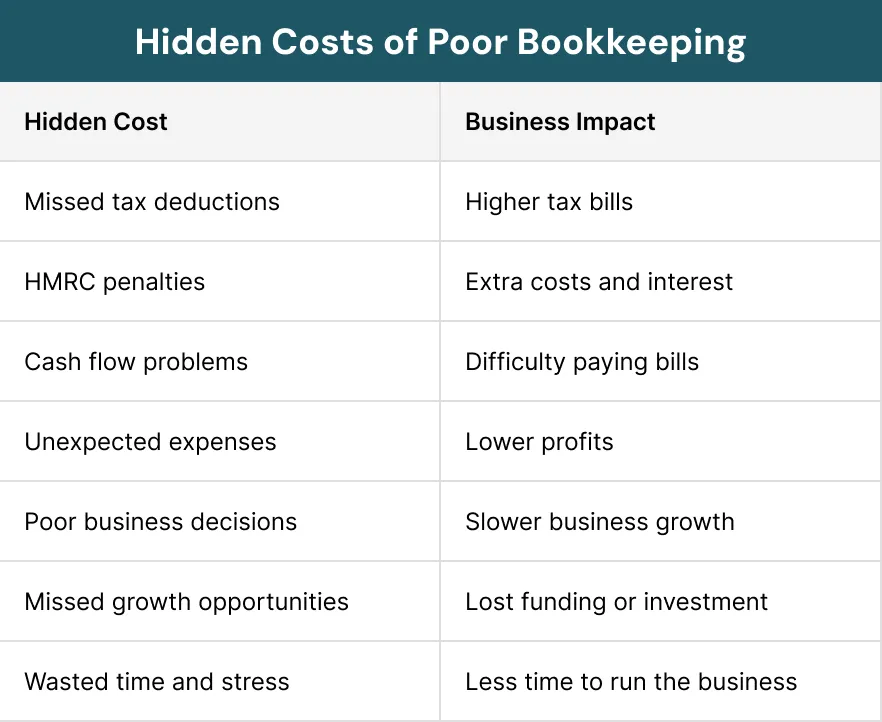
The hidden costs of poor bookkeeping include missed tax deductions, HMRC penalties, cash flow problems, unexpected expenses, poor decisions, missed growth chances and wasted time. These costs often build slowly, so many business owners do not notice them until they start losing money.
The consequences of poor bookkeeping are often hidden because they build slowly. One mistake leads to another. Before long, the business starts losing money without knowing why. Some costs are easy to see. Others stay hidden for months.
The following are the hidden costs of poor bookkeeping for growing businesses:
1. Missed Tax Deductions
Businesses can claim many expenses to reduce their tax bill. But these expenses must be recorded correctly. If receipts are missing, some expenses cannot be claimed.
For example, travel costs, office supplies, software and training costs may all qualify as business expenses. If they are not recorded, the business may pay more tax than needed. This is one of the biggest consequences of poor bookkeeping on small business taxes.
Paying extra tax because of poor records is money that cannot be used to grow the business. Missing one expense may not matter much. Missing many expenses every year can become very costly.
2. HMRC Penalties and Fines
One of the biggest consequences of poor bookkeeping is paying HMRC penalties. Every business must keep clear records and submit correct tax returns on time.
Poor bookkeeping can also become expensive when company accounts are filed late. Companies House can charge private companies up to £1,500 for late filing, and repeat late filing can double the penalty.
Poor bookkeeping makes mistakes more likely. Figures may be wrong. Important documents may be missing. Deadlines may also be missed.
HMRC may charge penalties and interest for these mistakes. The longer the problem continues, the more the cost can grow.
The bad bookkeeping cost is not always one large fine. It is often many small penalties that slowly reduce business profits.
Good bookkeeping keeps records ready throughout the year. This makes tax returns easier and helps avoid unnecessary penalties.
3. Cash Flow Problems
Cash flow is the money moving in and out of a business. A business can make a profit and still have cash flow problems.
Poor bookkeeping makes it hard to see how much money is available. Some invoices may not be sent on time. Others may never be chased. Supplier bills may also be forgotten.
Imagine a business ordering new stock because the bank balance looks healthy. A few days later, several unpaid supplier invoices appear. Suddenly, there is not enough cash to pay everyone.
This is one of the most common consequences of poor bookkeeping. Good bookkeeping helps owners see future payments before they become a problem.
Did you know?
A missing receipt, unpaid invoice or delayed record may seem minor but these small errors often become hidden costs that affect profits, taxes and business decisions.
4. Unexpected Expenses and Financial Losses
Poor bookkeeping often creates costs that no one expects. Late payment fees are one example. Interest charges are another. Duplicate payments can also happen if records are not updated.
Some businesses keep paying for software they no longer use because no one checks the monthly payments. Others pay the same supplier twice because earlier payments were never recorded.
Each mistake may seem small. Together, they can cost hundreds or even thousands of pounds each year. Many business owners do not notice this hidden cost of bad bookkeeping until they review their accounts.
These costs are another example of the consequences of poor bookkeeping for growing businesses.
Beware of little expenses. A small leak will sink a great ship.
– Benjamin Franklin
5. Poor Business Decisions
Good decisions need good information. Business owners use financial reports to decide when to hire staff, buy equipment or increase stock.
If the reports are wrong, the decisions may also be wrong. A bad bookkeeper can produce inaccurate financial reports, making it harder for business owners to make the right decisions.
For example, a business may think profits are rising. It hires more staff and spends more money. Later, updated records show that several expenses were never recorded. The business was making much less profit than expected.
These are serious consequences of poor bookkeeping because poor decisions often affect future growth. Correct records help owners make better decisions with confidence.
6. Missed Growth Opportunities
Growing businesses often need finance. They may apply for loans or look for investors. Banks and investors usually ask for financial reports first.
If the records are incomplete, they may lose confidence in the business. Even a profitable business can struggle to secure funding if the accounts contain mistakes.
The consequences of bad bookkeeping are not always immediate. Sometimes they appear months later when the business is ready to grow. Good bookkeeping helps show that a business is organised and financially healthy.
7. Wasted Time and Stress
Poor bookkeeping creates extra work. Business owners spend hours looking for receipts, checking invoices and fixing old mistakes.
Tax season becomes stressful because important records cannot be found. Instead of growing the business, time is spent solving problems that could have been avoided.
The consequences of poor bookkeeping affect more than money. They also affect confidence and peace of mind. Many owners only realise this after improving their bookkeeping system.
What Are the Warning Signs of Hidden Costs from Poor Bookkeeping?
Bookkeeping problems build up over time. Spotting the warning signs early can prevent costly mistakes. The following are the key warning signs:
1. Red Flags That Indicate Your Records Are Hurting Your Business
Several signs show that bookkeeping needs attention. One sign is when bank balances do not match the accounts. Another is when customer invoices stay unpaid for a long time. Supplier bills may also be paid late because they were forgotten.
Missing receipts are another warning sign. Financial reports may also change every time they are checked.
These signs should not be ignored. The longer they continue, the greater the consequences of poor bookkeeping become.
2. Outdated Books Can Hinder Decision-Making
Business owners need current financial information. If the books are several weeks or months behind, the reports no longer show the true picture. This can lead to poor spending decisions.
For example, an owner may think there is enough cash to buy new equipment. Later, updated records show that several unpaid bills were missing from the accounts.
Keeping records up to date helps reduce the consequences of poor bookkeeping and supports better business decisions.
Fast Facts:
Accurate bookkeeping improves HMRC compliance and gives business owners reliable financial information for better decisions.
How to Avoid Hidden Costs of Poor Bookkeeping?
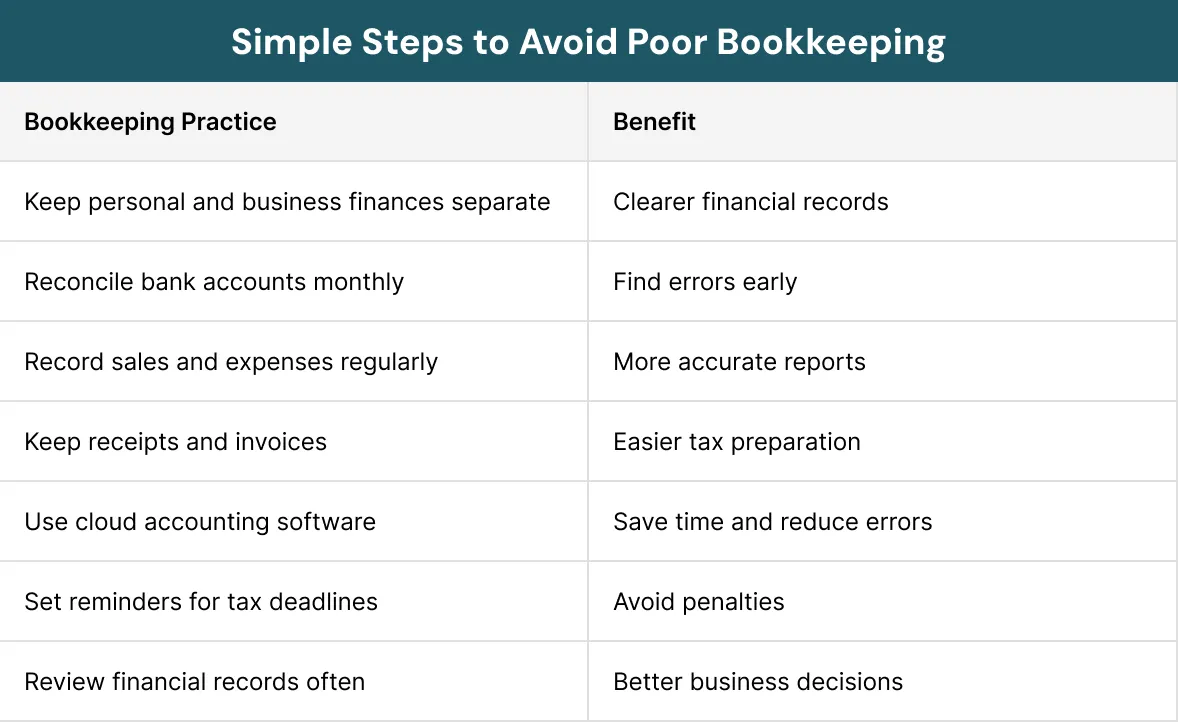
The following are the steps to avoid the hidden costs and consequences of poor bookkeeping:
1. Separate Personal and Business Expenses
Personal spending should never be mixed with business spending. Using separate bank accounts makes bookkeeping much easier. Every payment has a clear purpose. This also makes tax work faster and more accurate.
2. Reconcile Bank Accounts Regularly
Bank reconciliation means checking business records against bank statements. This helps find missing payments, duplicate transactions and recording mistakes. Doing this every month is much easier than correcting a full year’s records.
3. Monitor Accounts Receivable
Customers should pay on time. Outstanding invoices should be checked often. Late payments should be followed up quickly. This improves cash flow and helps the business avoid cash shortages.
4. Use Cloud Accounting Software
Cloud accounting software saves time and reduces errors. Many systems import bank transactions automatically. They also create invoices and produce reports in minutes.
Business owners can view their accounts at any time. Their accountant can also access the same records when needed. Cloud software cannot fix poor habits but it makes good bookkeeping much easier.
5. Keep Records of Petty Cash Expenses
Small purchases matter. A coffee for a client, parking charges or office supplies may seem unimportant. Together, they can become a large business expense. Keeping every receipt helps create complete financial records.
6. Choose a Suitable Accrual or Cash Method
Businesses should use an accounting method that suits their needs. Some record income when money is received. Others record it when it is earned. Using the right method gives a clearer picture of the business. Professional advice can help if there is any doubt.
7. Record Sales and Loans Properly
Sales and loans should never be mixed. Each transaction should be recorded correctly. This helps produce accurate profit figures and reduces confusion during tax time.
Accurate records help prevent the consequences of poor bookkeeping and keep financial reports reliable.
8. Set Reminders for Deadlines
Important dates should never be forgotten. Reminders for VAT returns, payroll and tax payments help businesses stay organised. Simple reminders can prevent penalties and reduce stress.
These habits reduce the consequences of poor bookkeeping and help a business grow with confidence.
Case Study
Source: Cooke v HMRC (2024), First-tier Tribunal Tax Chamber
In 2024, the First-tier Tribunal heard the case of Cooke v HMRC. The taxpayer believed they met the 5% shareholding requirement for Business Asset Disposal Relief. However, a small calculation error meant the recorded shareholding was slightly below the required threshold. This led to a tax dispute with HMRC.
The Tribunal later accepted that the parties had intended the taxpayer to hold a 5% shareholding. The case shows how even small mistakes in financial records or calculations can lead to costly tax disputes. It highlights the importance of keeping accurate records and checking financial information carefully before submitting it to HMRC.
Conclusion
The consequences of poor bookkeeping often start with small mistakes, such as a missing receipt or an unpaid invoice. If left unchecked, these small errors can become costly problems.
The bad bookkeeping cost goes beyond fines and missed tax deductions. It can also lead to poor decisions, cash flow issues, lost opportunities and wasted time. These are common consequences of bad bookkeeping, but they are often preventable.
Accurate records support better planning, stronger cash flow and easier tax reporting. They also reduce the consequences of poor bookkeeping on small business taxes and help businesses meet HMRC requirements.
Whether bookkeeping is handled in-house or by a professional, choosing an experienced bookkeeper instead of a bad bookkeeper can help prevent costly mistakes and support long-term business growth.
Sterling Cooper helps growing businesses keep their finances accurate, organised and HMRC-compliant. Contact us today and take the first step towards better bookkeeping and stronger financial control.
Are the consequences of poor bookkeeping affecting your business?
Sterling Cooper keeps your records accurate, organised and HMRC-compliant. We have helped businesses improve financial accuracy. Get in touch to protect your business from costly bookkeeping mistakes.
FAQs
The consequences of poor bookkeeping include cash flow problems, HMRC penalties, missed tax deductions, poor financial decisions, wasted time and slower business growth. Small mistakes can become costly if they are not fixed early.
The bad bookkeeping cost can include late filing penalties, interest charges, missed tax savings, duplicate payments and lost business opportunities. The total cost depends on how long the bookkeeping problems continue.
The consequences of bad bookkeeping can make it harder to manage cash flow, secure funding, prepare accurate reports and meet tax deadlines. These issues can slow growth and increase financial risk.
One of the main consequences of poor bookkeeping on small business taxes is paying the wrong amount of tax. Missing records or incorrect figures can also lead to missed deductions, HMRC enquiries and financial penalties.
A bad bookkeeper can record incorrect figures, miss deadlines, fail to update accounts and produce unreliable reports. This can lead to costly mistakes and make it difficult to make informed business decisions.
Businesses can reduce the consequences of poor bookkeeping by keeping accurate records, reconciling bank accounts regularly, using cloud accounting software and reviewing financial reports throughout the year.
Yes. A professional bookkeeper helps keep records accurate, supports HMRC compliance, improves financial reporting and reduces the risk of costly bookkeeping errors as the business grows.
Recent Posts