
Posted by:
Admin
Date:
June 15, 2026
Category:
blogs
VAT Return Deadlines for the 2025/2026 Tax Year: Complete Guide
VAT is a key task for UK businesses, whether you run a small organisation, work as a sole trader or manage a growing company.
Understanding VAT return deadlines is essential. As missing them can lead to fines, interest charges and financial pressure.
It is also true that many people struggle with VAT compliance. The rules, filing periods and VAT return deadline can often seem confusing. In fact, the UK VAT gap was estimated at 5.0% of the total VAT owed in the 2023/2024 tax year.
This shows the challenges many businesses face in meeting their VAT obligations. This also says why it is important to file VAT returns correctly and on time.
Key Takeaways
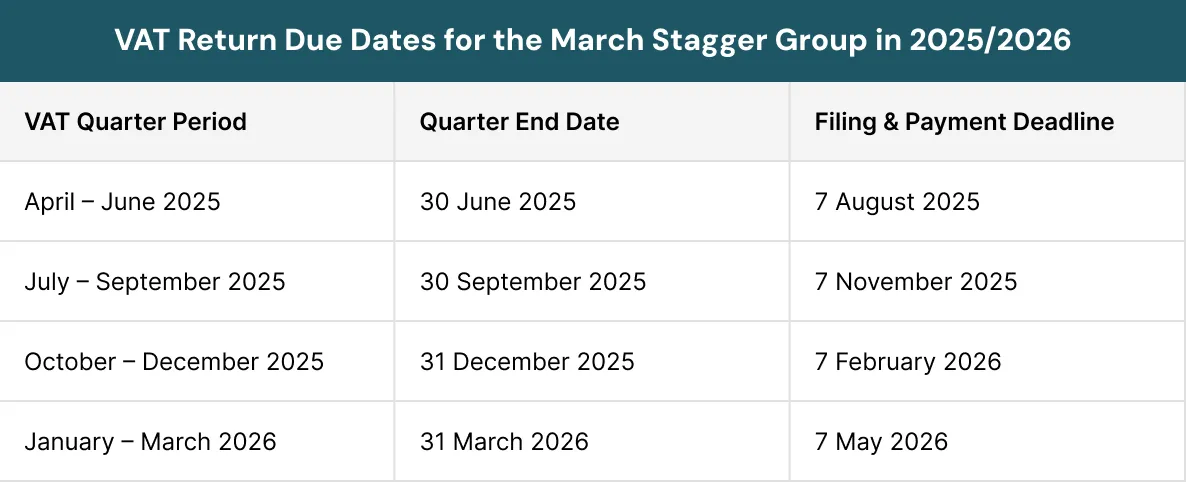
- VAT returns are usually due one month and seven days after the VAT period ends.
- Late VAT returns can lead to penalties and interest charges.
- Most businesses file VAT returns every three months.
- MTD requires digital records and online VAT submissions.
- Accounting software helps reduce VAT filing errors.
- Filing early helps avoid penalties and last-minute problems.
- Good bookkeeping makes VAT management easier.
- Accountants can help businesses stay compliant with HMRC rules.
This is a complete guide on VAT return deadline for the 2025/2026 tax year. But before we go through the process and deadlines for VAT returns in the UK, let’s first understand what a VAT return is.
What Is a VAT Return
A VAT return is a tax record document that you registered for value added tax to submit to HM Revenue and Customs (HMRC). It displays VAT applied on sales and purchases. It decides if the business owes VAT or is entitled to a refund.
VAT refers to value added tax. It is included with the majority of products and services in the UK. VAT registered companies collect taxes from clients and recover VAT on business expenses.
The majority of businesses file VAT returns quarterly. However some of them file monthly or annually based on their schemes.
Understanding the UK Tax Year for 2025/2026
The 2025/26 UK tax year runs from 6 April 2025 to 5 April 2026. However, VAT periods do not always follow these exact dates.
Some common VAT periods include:
- January to March
- April to June
- July to September
- October to December
Standard VAT Return Deadline Rules
You must usually submit your VAT return and pay any VAT owed by the standard deadline after the end of your VAT period.
Example VAT Return Deadline Rules:
- VAT period ending: 31 March 2026
- Deadline: 7 May 2026
This deadline for VAT return applies to both:
- Submitting the VAT return
- Paying any VAT owed to HM Revenue and Customs
Important VAT Deadline Rule
Most UK businesses must submit their VAT return and pay any VAT due within one month and seven days after the end of their VAT period. Missing the VAT return deadline can lead to penalty points, interest charges and financial penalties from HMRC.
VAT Return Due Dates for the 2025/2026 Tax Year
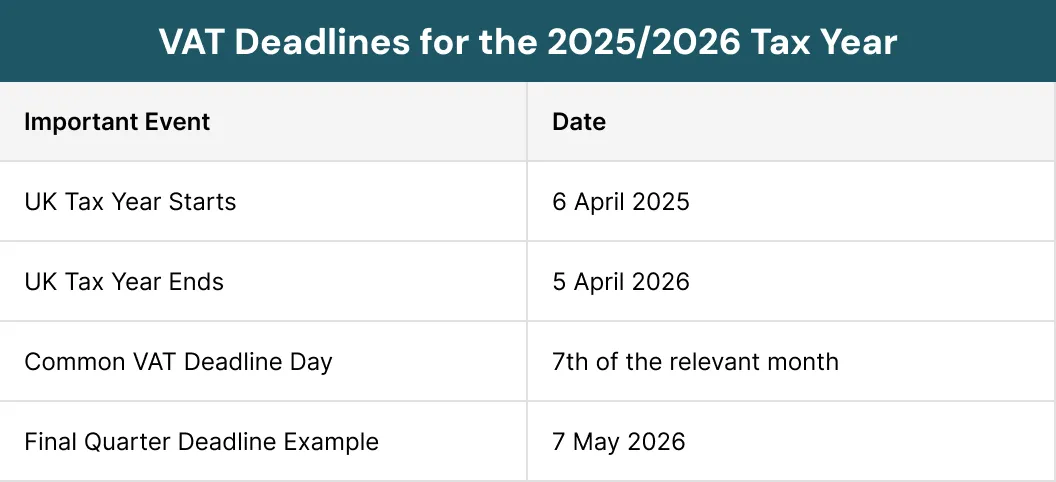
Businesses registered in the March stagger group usually follow quarterly VAT return periods throughout the tax year. VAT returns and any VAT due are normally due one month and seven days after the end of the VAT quarter.
VAT Accounting Schemes
Not every business submits VAT returns in the same way. HMRC offers several VAT accounting schemes to suit different business sizes and needs.
These schemes can affect how and when businesses calculate and pay VAT.
1. Quarterly VAT Returns
- The most common VAT accounting method.
- Businesses submit four VAT returns each year.
- Returns are filed every three months.
- The VAT return deadline is usually one month and seven days after the end of each VAT quarter.
2. Monthly VAT Returns
- Often used by businesses that regularly reclaim VAT refunds.
- Can result in faster VAT refunds from HMRC.
- May help improve cash flow.
- Involves more paperwork and administration.
- Requires more frequent filing deadlines.
3. Annual Accounting Scheme
- Mainly designed for smaller businesses.
- Businesses submit one VAT return each year.
- Helps simplify VAT reporting and administration.
- VAT payments are usually made throughout the year, with a final adjustment when the annual return is submitted.
Making Tax Digital (MTD) for VAT
Making Tax Digital for VAT is a mandatory UK government initiative. It requires VAT registered businesses to keep digital records and submit VAT returns using compatible software.
Tax Digital is one of the biggest changes affecting VAT reporting in the UK. All VAT registered businesses must now follow MTD rules.
This means businesses must:
- Keep digital records
- Use compatible software
- Submit VAT returns electronically
The older HMRC VAT portal is no longer available for most businesses.
MTD Compliance Reminder
All VAT-registered businesses must keep digital VAT records and submit VAT returns using MTD-compatible software. Failure to follow Making Tax Digital requirements can increase the risk of errors, missed VAT return deadlines and HMRC compliance issues.
Are VAT Return Deadlines Important
Yes, VAT return deadlines are very important for all VAT registered businesses in the UK.
If a VAT return is submitted late, it can lead to financial problems and action from HMRC. Missing deadlines for VAT return can also affect a business’s cash flow and compliance record.
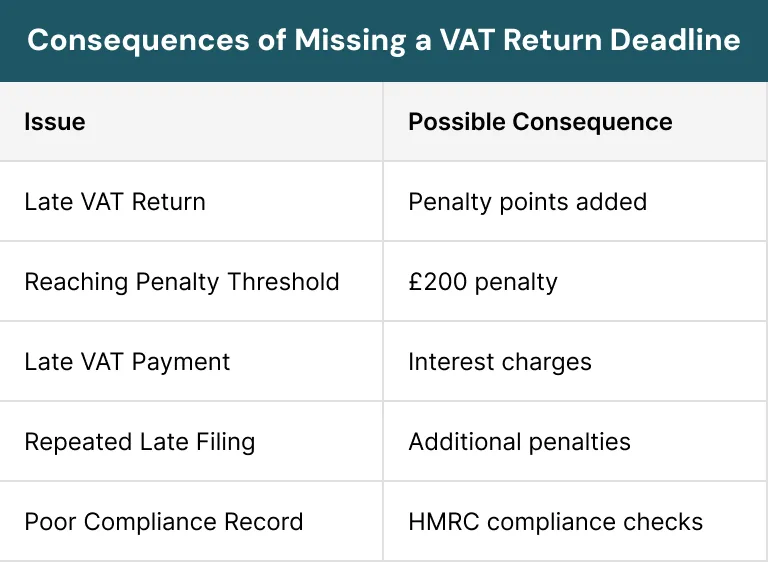
Possible outcomes of missing VAT return deadlines 2026 include:
- Penalty points
- Financial penalties
- Interest charges
- HMRC compliance checks
What Is the VAT Penalty for Late Filing in the UK
HMRC now uses a penalty points system for late VAT returns. Each time a business misses a deadline for VAT return, penalty points may be added to its account.
Once the business reaches the penalty threshold set by HMRC, a £200 penalty can be issued. Any further late submissions may result in additional £200 penalties.
HMRC can also impose penalties when VAT payments are not made within the due date.
Late VAT Payment Penalties
Businesses may also face penalties for paying their VAT late. HMRC can charge financial penalties and interest on unpaid VAT. Businesses may have to pay more if the VAT remains outstanding for longer.
Common charges for late VAT payments include:
- Late payment penalties
- Interest charges on overdue VAT amounts
- Additional penalties for continued non payment in some cases
Why Do Businesses Miss VAT Return Deadlines
Many businesses miss the deadline for VAT return because they do not manage their records properly. This can lead to errors, stress and possible penalties from HMRC.
Here are some VAT missed reasons and deadlines:
- Poor bookkeeping
- Missing invoices
- Incorrect calculations
- Forgetting deadlines
- Cash flow problems
But you can always avoid missing these deadlines. The following discussion explains it.
How to Avoid Missing VAT Return Deadlines
A good company helps businesses to manage VAT more easily and avoid missing important deadlines. By staying organised and planning ahead, you can reduce the risk of late filing and HMRC penalties.
You can avoid missing VAT return deadlines 2026 by:
- Using accounting software
- Keeping digital records updated
- Setting reminders
- Check bank processing time
Read more: Common Errors on VAT Returns and How to Avoid Them
Does Filing Early Help You
Yes, it always helps you. Although businesses technically have until the deadline date to submit their VAT returns. Filing earlier can offer several important advantages.
Some of the benefits of filing early include:
- More time to fix mistakes
- Better cash flow planning
- Reduced stress
- Lower penalty risk
- Faster VAT refunds
Given below is the information you need to file your VAT return.
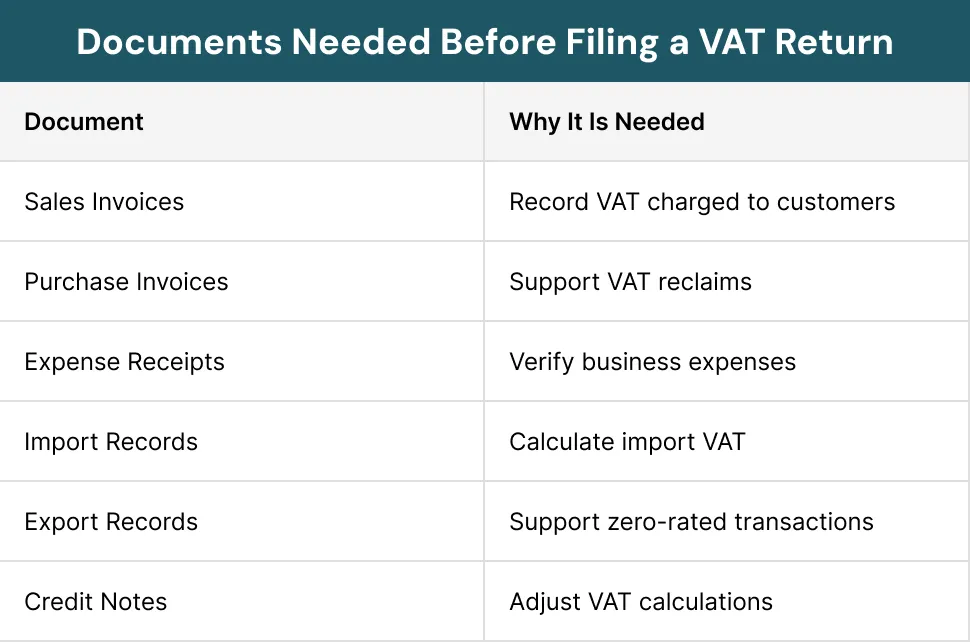
Information Needed for a VAT Return
Before submitting a VAT return file, you must collect and check all important financial records. These records help ensure the return is accurate and complete. It reduces the risk of errors or HMRC issues.
The information needed for a VAT return includes:
- Sales and purchase invoices
- Expense receipts
- Import records
- Export records
- Credit notes
- VAT account summaries
What Happens if a VAT Return Contains Errors
Mistakes can happen on VAT returns. Small errors may sometimes be corrected on the next VAT return. Larger mistakes may need to be reported directly to HMRC.
Incorrect submissions can sometimes trigger the following:
- Penalties
- Compliance reviews
- Investigations
‘The hardest thing in the world to understand is the income tax.’
Albert Einstein
You should always double check figures before submitting returns.
Common VAT Filing Mistakes
Many businesses can make similar VAT filing errors. Here are some common mistakes:
- Duplicate invoices
- Missing transactions
- Incorrect VAT rates
- Calculation errors
- Input and output errors
What Are VAT Stagger Groups
VAT stagger groups are categories used by HMRC to divide businesses into reporting schedules. HMRC places businesses into staggered groups to spread VAT return deadlines throughout the year.
It also determines when your specific quarterly VAT returns and payments are due.
There are three stagger groups.
1. March Stagger Group
Returns cover:
- March
- June
- September
- December
2. April Stagger Group
Returns cover:
- April
- July
- October
- January
3. May Stagger Group
Returns cover:
- May
- August
- November
- February
How to Check VAT Return Deadlines in the UK
In the UK, VAT returns and payments are typically due 1 calendar month and 7 days after your accounting period ends.
VAT return deadlines can be easily checked if businesses use the right tools and stay organised. You can check your exact upcoming deadlines using the following methods:
1. HMRC Account
Log in to your GOV.UK VAT online account to see your specific filing periods, deadlines and outstanding returns.
2. Accounting Software
If you use Making Tax Digital (MTD) software, your dashboard will display return deadlines and allow you to set up notifications.
You can check your VAT return deadlines through your accountant or HMRC letters or emails.
What Is the Bank Processing Time for VAT Payments
One important issue that many businesses overlook is bank processing time. Even if a VAT payment is sent on the deadline day, it may still reach HMRC late. As a result, the business could face interest charges or penalties despite making the payment on time.
To avoid this, it is important to allow extra time for:
- Bank transfers
- Weekends
- Bank holidays
- Processing delays
Making VAT payments a few days before the deadline can help ensure the funds reach HMRC on time and reduce the risk of late payment penalties.
It is also important to remember that VAT does not always result in a payment being owed to HMRC. In some cases, businesses may be entitled to receive money back through a VAT refund.
When Is VAT Refunded
Sometimes, businesses reclaim more VAT than they owe. In these situations, HMRC may issue a VAT refund.
VAT refunds often occur when a business:
- Purchases expensive equipment
- Has high business expenses
- Exports goods or services
- Is in the early stages of growth and investment
If your business regularly receives VAT refunds, submitting monthly VAT returns may help you receive those refunds more quickly and improve cash flow.
VAT Responsibilities for Sole Traders
Sole traders registered for VAT must follow the same VAT filing rules as limited companies. Their VAT responsibilities include:
- Charging VAT correctly
- Keeping digital records
- Filing returns on time
- Paying VAT by the required deadlines
HMRC VAT Compliance Checks
As part of its efforts to ensure businesses meet their VAT obligations, HMRC may review VAT records if it notices:
- Repeated mistakes
- Late submissions
- Unusual figures
- Missing amounts
You should always keep records accurate and organised. Strong bookkeeping practices can help reduce the risk of compliance issues and make VAT management much easier.
How Do Accountants Help With VAT Returns
Accountants help UK businesses manage VAT returns while ensuring compliance with HMRC’s Making Tax Digital requirements.
They oversee the process from record reconciliation to final submission. They help businesses save time and reduce the risk of costly errors. They can also identify eligible VAT claims and deductions that might otherwise be missed.
Professional accountants typically provide the following VAT related services:
- VAT Scheme Selection
They assess your business structure and turnover to recommend the most suitable VAT scheme, such as the Standard VAT Scheme, Flat Rate Scheme or Cash Accounting Scheme.
- Record Keeping and Reconciliation
They organise sales and purchase records, check for inaccuracies and reconcile financial data before VAT returns are submitted.
- MTD Compliant Software Support
They help businesses set up and manage MTD compliant accounting software, such as Xero or QuickBooks, ensuring VAT data can be submitted correctly to HMRC.
- VAT Recovery and Deductions
They identify eligible input VAT claims and assist with more complex VAT rules, including partial exemption calculations and reverse charge requirements.
- VAT Return Submission and HMRC Support
They calculate VAT liabilities or refunds, submit returns on time and provide support if HMRC raises questions or conducts compliance checks.
By working with an accountant, businesses can reduce administrative burden, improve accuracy and stay compliant with changing VAT regulations.
VAT Return Checklist
Before submitting a VAT return file, it is important to check your documented records. It ensures everything is correct before you submit them. This helps avoid mistakes, penalties and delays from HMRC.
A VAT return deadline checklist includes the following:
- All invoices are recorded
- VAT rates are correct
- Sales figures are accurate
- Expenses are included
- Deadlines are confirmed
Tips for Easier VAT Management
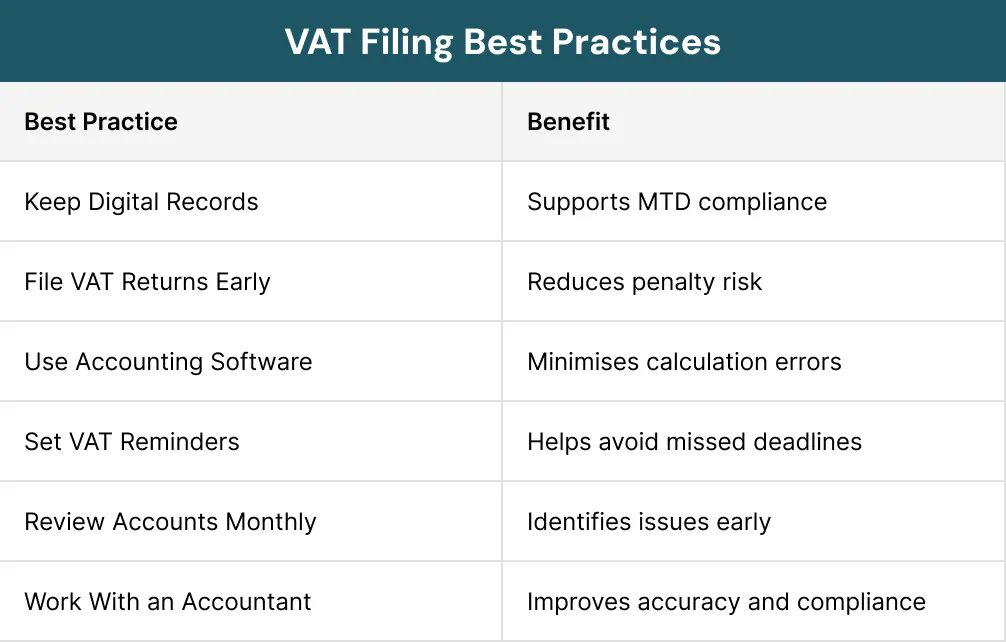
VAT management becomes much easier when you stay organised and follow simple routines. Good habits can help reduce mistakes and make filing VAT returns on time much simpler. People can simplify VAT management by:
- Filing regularly
- Keeping receipts organised
- Using automated accounting software
- Reviewing accounts monthly
- Setting reminders
- Avoiding last minute filing
Important Reminder:
Staying organised and filing VAT returns early can help businesses avoid penalties and reduce stress.
Conclusion
VAT return deadlines are an important responsibility for VAT registered businesses in the UK. Missing deadlines can lead to penalties, interest charges and unnecessary stress. For the 2025/2026 tax year, businesses should remember that VAT returns and payments are generally due one month and seven days after the end of the VAT accounting period.
Keeping accurate records, using MTD compatible software and submitting returns on time can make VAT management much easier. Businesses that stay organised and monitor their VAT return deadlines carefully are less likely to face compliance issues.
Whether you are a sole trader or a limited company, effective VAT management helps reduce financial risk and avoid unnecessary penalties.
At Sterling Cooper, we help businesses manage VAT returns, stay compliant with HMRC requirements and avoid costly filing mistakes. Contact us today for professional VAT support and expert accounting advice.
VAT deadlines and MTD rules can feel stressful, but we make them simple.
Our team helps you file accurate VAT returns on time, stay HMRC compliant, and avoid costly penalties.
Get in touch today for reliable VAT return and accounting support tailored to your business.
FAQs
Most VAT-registered businesses file VAT returns quarterly. Common VAT periods are January to March, April to June, July to September, and October to December, although some businesses may qualify for monthly or annual VAT returns.
Businesses must file VAT returns digitally through HMRC's Making Tax Digital (MTD) system. This requires MTD-compatible accounting software that submits VAT returns directly to HMRC.
A VAT return form records VAT charged on sales, VAT paid on purchases, and the total amount due to or reclaimable from HMRC. It also includes the total value of sales and purchases for the VAT period.
The VAT return deadline is usually one calendar month and seven days after the end of the VAT period. Any VAT payment due must also reach HMRC by the same date.
Yes, but submitting a VAT return late can result in penalty points, financial penalties, and interest charges. Repeated late submissions increase the risk of further HMRC penalties.
Recent Posts

How to Build a Cash Reserve for Business Stability
August 11, 2026

How to Forecast Cash Flow During Economic Uncertainty
August 6, 2026