Posted by:
Admin
Date:
August 3, 2026
Category:
blogs
HMRC Penalties Small Businesses Often Overlook
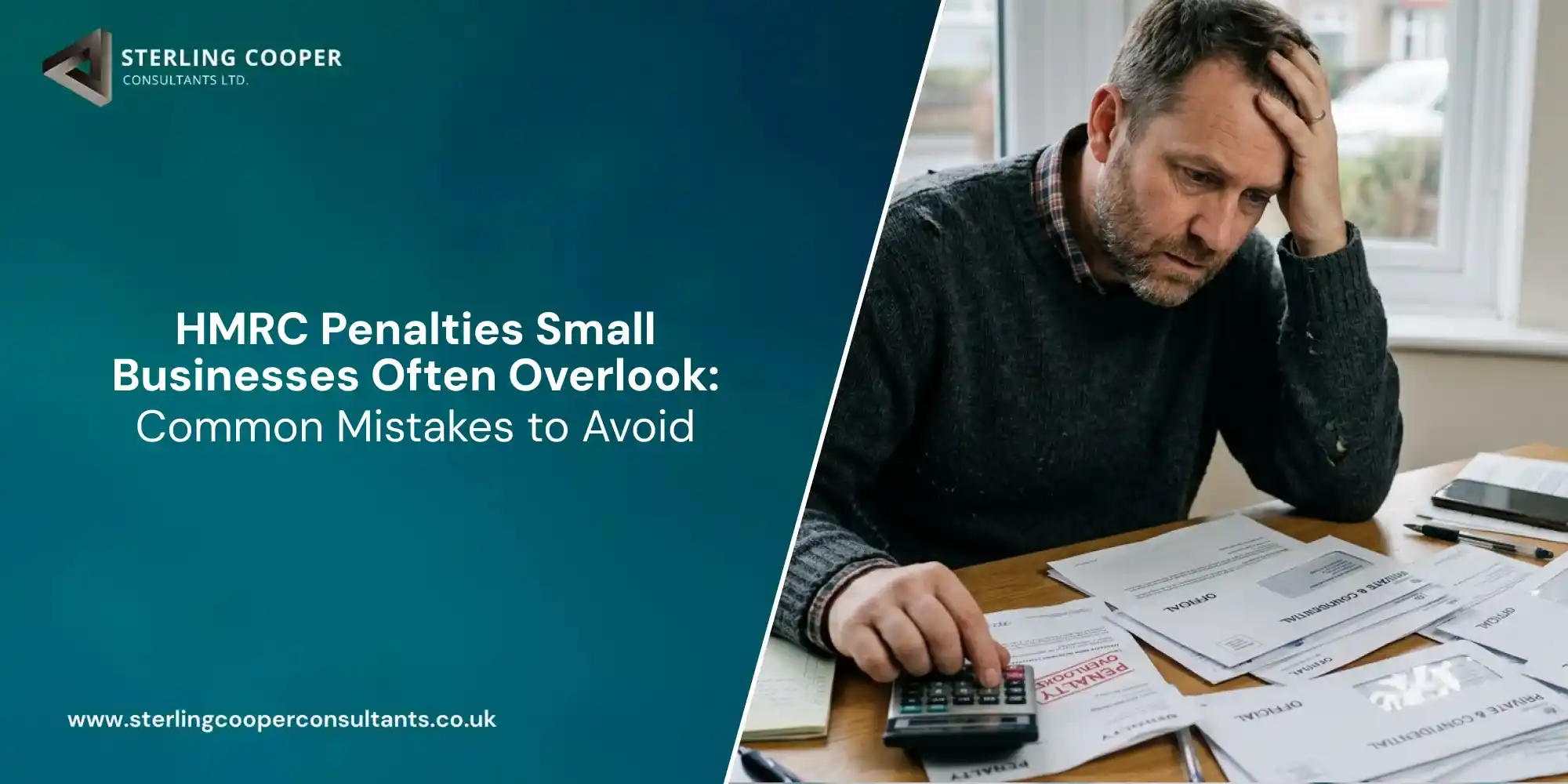
Do you sometimes get HMRC penalties and wonder why you got them? Most of the time, small business owners only worry about their tax payments near the deadline or even a little too late. This delay and a combination of other reasons lead to HMRC penalties that small businesses often overlook.
Errors in record keeping, tax returns and tax payments can be costly for the business in terms of loss and penalties. Recent figures show that HMRC issued over £16 million in Corporation Tax penalties to mid-sized businesses. HMRC also carried out more compliance checks than before. This shows that HMRC is monitoring businesses more closely and taking action when compliance criteria are not met.
The problem is that some penalties result due to negligence and error. These penalties come up due to routine compliance problems, which many businesses are unaware of, leading to penalties. Knowing some common HMRC penalties for late payments can help you understand what the risks are and avoid them.
This guide explains the hidden compliance mistakes that can lead to unexpected charges.
Key Takeaways
- HMRC penalties can arise from more than missed deadlines. Failure to notify HMRC, poor record-keeping and reporting errors can also lead to charges.
- HMRC penalties for late payment can increase over time. Interest and additional charges may be added if the debt remains unpaid.
- Good record-keeping helps reduce compliance risks. Accurate financial records make it easier to file returns and support tax calculations.
- Early action can prevent further problems. Contacting HMRC quickly may help you manage penalties, discuss payment options or resolve issues sooner.
- Businesses can appeal HMRC penalties in certain situations. A valid reason, such as a serious illness or technical failure, may support a successful appeal.
What Are HMRC Penalties?
HMRC Penalties are fines that are issued by HM Revenue and Customs if a person or company does not comply with their tax liabilities. This applies in cases where they do not file and submit their tax return on time, where they provide wrong information, do not pay taxes or even in cases where they do not inform the HMRC of tax liability.
One instance is the HMRC penalties for late payment of tax. It applies when tax is not paid within the required deadline. The amount to be charged depends on the type and circumstances of the breach. Even with these risks, many SMEs do not realise why HMRC penalises them until they receive one. The role of HMRC is summed up in their own words.
‘The tax system is based on individual and business customers taking responsibility for getting their tax right.’
HM Revenue & Customs
Which HMRC Penalties Do Small Businesses Often Overlook?
Many small business owners focus on filing and paying taxes on time. However, overlooked compliance mistakes such as failing to notify HMRC, poor record keeping and reporting errors can also lead to penalties, interest and unnecessary costs.
The most common neglected HMRC penalties for late payment are:
1. Failure to Notify Penalties
You may face HMRC penalties for late payment if you do not notify HMRC about your firm’s tax liability. This usually occurs if the firm has become liable for a tax and does not register within the specified period.
What You Might Be Overlooking
You can still get a fine even if you do not owe any tax.
- Self Assessment: £100 fine after 31 January
- VAT returns: £200 fixed fine for repeat late filing
- Corporation Tax: £100 fine after one day late
How To Avoid It
- Know your tax dates.
- Mark them in your diary.
- Send returns early where you can.
- Use a tax app or set a clear reminder.
2. Late Payment Penalties
HMRC can charge interest and penalties when you pay your taxes late. This can happen even if you filed your tax return on time. HMRC penalties for late payment can also add to the total tax you owe.
What You Might Be Overlooking
- Interest can start from the day after the payment due date.
- Self-assessment may lead to penalties after 30 days, 6 months and 12 months.
- Corporation Tax interest starts from the payment due date.
- PAYE and NIC payments must also be made on time.
How To Avoid It
- Set a budget for tax payments.
- Ask your accountant to help plan future tax bills.
- Set reminders for both filing and payment dates.
3. Record-Keeping Penalties
Failure to maintain proper records may result in HMRC penalties for late payment if records are incomplete or inaccurate. Lack of receipts, invoices or any other missing accounting records may cause errors in filing tax returns. The HMRC requires that all businesses have proper records maintained at all times.
What You Might Be Overlooking
HMRC does not accept rough guesses as proper records. Missing receipts or unclear spreadsheets can make it hard to prove your figures.
- Poor records can lead to a fine.
- Missing proof can make your tax figures hard to check.
- Errors are more likely when records are not kept up to date..
How To Avoid It
- Save money for taxes all year.
- Keep track of your tax bills.
- Set reminders for each payment date.
- Ask your accountant to help you plan ahead.
Small Errors Can Lead to Big Costs
HMRC penalties are not only linked to late tax payments. Late filing, poor records, VAT errors and missed tax updates can also lead to fines. A small mistake can become costly if it is not fixed in time.
4. VAT Compliance Penalties
HMRC penalties for late payment may be imposed on businesses if there are mistakes in VAT returns or VAT payment is made after the due date. Even honest mistakes can be penalised if HMRC thinks they weren’t made with due care and attention. Errors that lead to underpaid VAT can trigger fines up to 30%. Repeated mistakes can lead to increased fines.
What You Might Be Overlooking
Missing receipts and poor records can lead to errors in your tax return. You may also face a fine if HMRC finds that your records are not good enough.
How To Avoid It
- Use tools such as Xero or QuickBooks.
- Keep receipts and bills in a safe place.
- Save digital copies of key records.
- Check your accounts on a set date each month.
5. PAYE and Payroll Penalties
Any errors in payroll reporting can result in HMRC penalties for late payments. Issues occur if the employee details are wrong and the PAYE liability is not met. The penalties can range from £100 to £400 depending on the number of employees.
What You Might Be Overlooking
Small errors in pay or staff details can lead to the wrong tax report. Late PAYE or NIC payments can also lead to fines and interest.
How To Avoid It
- Check employee details before each pay run.
- Check salary, tax and NIC figures.
- Send payroll reports on time.
- Keep clear records of pay and employee details.
- Set reminders for PAYE and NIC payment dates.
Stay Ahead of HMRC Penalties
Keep clear records, track key tax dates and check your business details often. Simple checks can help you avoid missed deadlines, late payments and costly HMRC fines.
6. Corporation Tax Penalties
Late submissions of the corporation tax return or the taxes owed lead to HMRC penalties for late payment. There are interest charges that may be applied, thus increasing the total amount owed.
What You Might Be Overlooking
Many firms only look at their yearly sales. However, VAT registration is based on your rolling 12-month turnover. A late registration may lead to a fine and a backdated VAT bill.
How To Avoid It
- Check your turnover each month.
- Track your sales over a rolling 12-month period.
- Act fast when you get close to the VAT limit.
- Tell your accountant about major changes in sales.
7. Failure to Register or Deregister Correctly
Businesses must register for VAT when they reach the VAT threshold. Failing to register or deregister on time can lead to HMRC penalties for late payment. You may also have to pay backdated VAT. So, it is vital that you check your turnover regularly and register as soon as you reach the limit. If your turnover falls below the threshold, deregister if needed.
What You Might Be Overlooking
Failing to tell HMRC about a change is more than a small admin task. It can lead to a fine if you do not share key tax details on time.
How To Avoid It
- Tell HMRC about key changes as soon as you can.
- Check your tax records once a year.
- Keep your firm details up to date.
- Ask your accountant to help with key updates.
Compounding Penalties: Case Study
HMRC recently published the names of more than 150 individuals and businesses that deliberately failed to pay the tax they owed. Many of these were small businesses, including builders, takeaways and local shops. This shows that businesses of any size can face action if they fail to meet their tax duties.
One example was a Liverpool-based company that failed to pay more than £470,000 in tax. The company later received penalties of over £329,000. This made the total amount owed much higher. It shows how HMRC penalties for late payment can quickly grow when tax bills are ignored.
Late payments do not only lead to penalties. HMRC also charges daily interest on the unpaid amount. This means the longer the payment is delayed, the more the business has to pay. In many cases, HMRC penalties for late payment can put extra pressure on cash flow and make it harder for small businesses to recover.
The best way to avoid this is to act early. If you think a penalty is wrong, appeal HMRC penalties as soon as possible. Appealing HMRC penalties may be an option if you have a reasonable excuse or believe HMRC made an error. Keep accurate records. File your tax returns on time. Pay your tax before the deadline whenever possible. If you cannot pay in full, contact HMRC straight away. You may be able to arrange a payment plan and reduce the risk of further penalties.
Conclusion
An HMRC penalty may soon add up if not addressed properly or understood clearly. These mostly arise due to late payments, missed deadlines or simply errors in paperwork. Keeping your records organised and proactive will help avoid such situations. In case an HMRC penalty is issued, then it should be handled immediately.
At Sterling Cooper, we help firms in dealing with HMRC penalties for late payment. Our approach to handling such issues is always hassle-free and straightforward. Contact us now if you have any questions regarding HMRC penalties and compliance checks.
Need help understanding or dealing with HMRC penalties?
Our team can help you stay compliant, reduce risks and respond to tax issues with confidence. Contact us today for expert guidance tailored to your business.
FAQs
The most common penalties include late filing penalties, HMRC penalties for late payment, inaccurate tax returns, failure to notify HMRC of a tax liability and poor record-keeping. Many of these issues can be avoided through proper tax planning and compliance.
HMRC penalties depend on the type of tax and the reason for the penalty. For example, a late Self Assessment tax return can lead to a £100 fine. Late tax payments may also lead to extra charges and interest. The final amount can vary based on how late the payment is and the type of tax involved.
Yes, you can pay HMRC penalties in monthly instalments if you agree on a payment plan with HMRC. This is not automatic. HMRC will look at your situation before deciding. Contact HMRC as soon as possible if you cannot pay the full penalty at once.
Yes, HMRC may charge interest if penalties or tax liabilities remain unpaid. Interest can build over time, increasing the total amount you owe.
If you do not pay HMRC penalties, the amount you owe can increase. HMRC may also charge daily interest on the unpaid balance. If the debt remains unpaid, HMRC can take further action to recover the money. Paying on time or contacting HMRC early can help you avoid extra costs.
Recent Posts