

Posted by:
Admin
Date:
August 6, 2026
Category:
blogs
How to Forecast Cash Flow During Economic Uncertainty
Economic uncertainty can make it difficult for your business to plan ahead. Changes in customer demand, rising costs and market shifts can affect how much money comes in and goes out. Research shows that 82% of UK SMEs have experienced cash flow problems. During these times, having a reliable cash flow forecast becomes more important for you than ever.
A cash flow forecast helps you estimate future income and expenses. It gives you a clearer picture of your financial position and helps you make better decisions. Instead of reacting to problems after they happen, you can prepare for them in advance.
With proper cash flow forecasting, you can identify the risks early, protect your cash reserves and maintain the stability of your business.
“Forecasting is not about predicting the future perfectly. It is about reducing uncertainty.”
— Peter Drucker
Key Takeaways
- A cash flow forecast helps you estimate future income and expenses, allowing you to plan ahead and make informed financial decisions during uncertain economic conditions.
- Understanding economic uncertainty and monitoring changes in customer demand, costs and market trends can help you identify risks before they affect your business.
- Regular cash flow forecasting, along with tools like rolling forecasts, scenario planning and stress testing, improves the accuracy of your financial planning.
- Managing cash wisely by building a financial buffer, improving receivables and payables and creating multiple income sources can strengthen your business during challenging times.
- Reviewing your cash flow forecast regularly helps you manage liquidity, plan major investments and prepare for unexpected financial challenges.
What is Economic Uncertainty?
Economic uncertainty happens when it becomes difficult for your business to predict what might happen in the economy in the future. During these periods, you may not know whether your sales will increase or decrease, costs will rise or customer demand will change.
Did You Know?
Businesses that regularly update their cash flow forecast are often better prepared to handle sudden economic changes than businesses that rely only on annual budgets.
Why Cash Flow Matters During Economic Uncertainty?
Cash flow matters during the economic uncertainty because it gives your business the money it needs to keep running every day. It helps you to pay costs such as staff wages, rent, supplier bills and other regular expenses, even if your income drops for a while. Good cash flow also helps your business to deal with unexpected issues. If customers pay late or sales become slower, you will still have money to cover the costs.
“Cash is a business’s lifeblood.”
— Richard Branson
Pro Tip:
Review your cash flow forecast every month. During uncertain economic periods, weekly reviews may provide even greater visibility.
How to Forecast Cash Flow During Economic Uncertainty?
To forecast cash flow during economic uncertainty, estimate your expected income and expenses over a specific period. It is not complicated when broken into simple steps. The goal is to estimate how much money will enter and leave your business over a specific period.
A reliable cash flow forecast should include expected income, expected expenses and also the final balance. These details allow you to identify the cash shortages.
The more frequently you update your cash flow forecast, the more useful it becomes. The following steps explain how to prepare a reliable cash flow forecast.
1. Cash Flow Planning
The time frame for your cash flow forecast may be a few weeks, a few months or even a year. It really depends on how far ahead you feel you can plan with confidence. If your business has been operating for a while, you can more accurately predict your future sales. If you are starting a new business, you might not have much data and things are more likely to change in the long term.
2. Revenue – Money Coming In
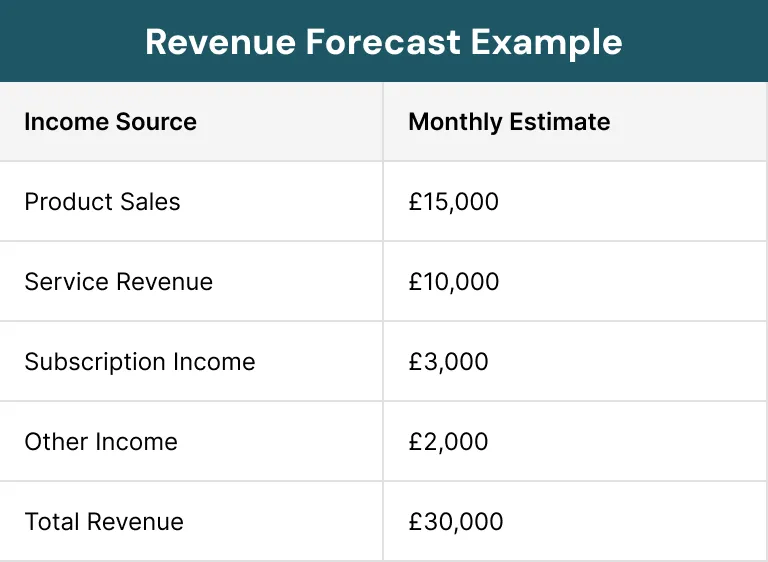
Revenue includes all money expected to enter your business. This may come from product sales, service contracts or other income sources. Past performance can provide you with useful guidance when you are estimating future income. You should remain realistic when you are estimating income.
3. Expenses – Money Going Out
It represents all outgoing payments. These include salaries, rent, utilities, supplier invoices, marketing costs and taxes. When you are preparing a cash flow forecast, it is important for you to include both fixed and variable costs. Fixed costs remain consistent, while variable costs may change based on the activity of your business.
Common business expenses include the following:
- Employee wages
- Rent and utilities
- Inventory purchases
- Marketing expenses
- Insurance costs
4. Net Cash Flow – The Balance
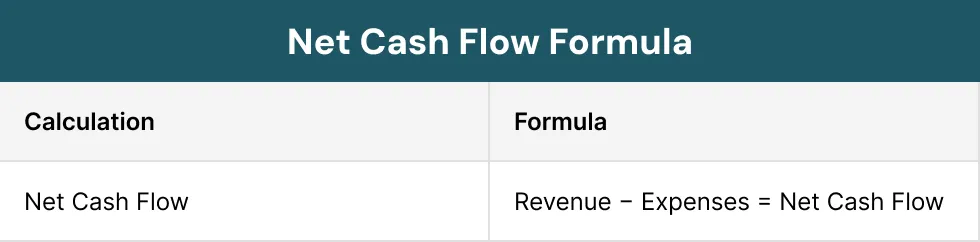
Net cash flow is calculated by subtracting total expenses from total revenue. This figure shows whether your business is generating profit or facing loss. A positive result means more money is coming in than going out. A negative result suggests that right action may be needed to maintain the liquidity.
Your cash flow forecast should clearly show the projected balances for each month. This helps you identify the periods where cost controls may be required.
5. Update Your Forecast Regularly
During economic uncertainty, things can change quickly. Your sales may go down, customers may pay late or business costs may rise. By updating your forecast you can see these changes early and make better decisions.
Review your cash flow forecast every week or every month. Compare it with the money that actually came in and went out. If there are any differences, update your figures so your forecast stays accurate. This gives you a clear picture of your business finances.
Cash Flow Forecasting Strategies During Economic Uncertainty
You can improve the accuracy of cash flow forecasting by using different forecasting methods. These techniques help you prepare for multiple outcomes instead of relying on a single prediction.
Some methods are given below:
1. Rolling Forecasts vs Static Forecasts
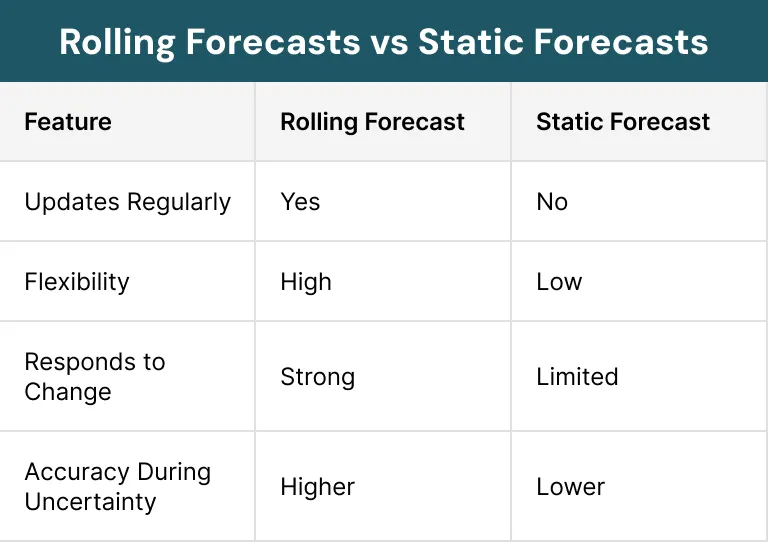
A static forecast remains unchanged after it is created. It covers a fixed period, such as a year. While it is useful for budgeting, it may quickly become outdated. A rolling forecast is updated regularly. New details are added as economic conditions change. This makes it more flexible and responsive.
Many businesses prefer rolling forecasts because they provide a more realistic view of future cash flow. You can combine the rolling forecasts with a detailed cash flow forecast to improve the decision-making process.
2. Scenario Planning and Sensitivity Analysis
Scenario planning helps you prepare for different possible outcomes. For example, management may create best-case, expected-case and worst-case scenarios. While sensitivity analysis shows how changes in key factors, such as sales or costs, affect your cash flow forecast.
These techniques improve cash flow forecasting by helping you understand the potential risks before they occur.
Did You Know?
Many successful companies prepare at least three forecast scenarios to improve resilience during uncertain market conditions.
3. Stress Testing
‘Stress testing’ means how your business would perform under difficult conditions. Examples include sudden revenue declines, major customer losses or cost increases. Stress testing helps you highlight those areas where financial protection may be needed. A strong cash flow forecast becomes even more valuable when combined with stress testing.
Example: Cash Flow Forecast
A small manufacturing company started receiving fewer orders during a difficult economic period. The business owners became worried that he might not have enough cash to cover daily expenses. To understand their financial position, they prepared a cash flow forecast for the next 12 months. The cash flow forecast showed that the company could run short of cash within four months. Because they spotted the problem early, they collected customer payments faster and also negotiated better payment terms with the suppliers. As a result, the business kept a healthy cash balance and avoided financial problems.
This example shows how cash flow forecasting can help you prepare for challenges before they happen.
Conclusion
Economic uncertainty can make it harder to run a business. Sales may go up or down, costs can increase and unexpected changes can affect your finances. A well-prepared cash flow forecast helps you to understand how much money your business is likely to have in the future. It helps you to plan ahead, manage your spending and make better financial decisions.
The more often you review and update your cash flow forecast, the better prepared your business will be for unexpected challenges. Good planning can help you stay financially stable, even during an uncertain economic time.
At Sterling Cooper, our experts help you to create accurate cash flow forecasts, so you can make confident financial decisions.
Want to improve your cash flow forecasting and prepare for economic uncertainty?
Contact us today for expert guidance tailored to your business needs. Our experienced team will help you build accurate forecasts, strengthen your cash flow management and make confident financial decisions for long-term success.
FAQs
A cash flow forecast is a financial tool that estimates future cash coming into and leaving a business. It helps businesses to plan ahead and avoid cash shortages.
Cash flow forecasting helps businesses anticipate potential financial challenges. It allows management to make informed decisions before problems arise.
To do a cash flow forecast, estimate your expected income and expenses over a set period to see how much cash your business is likely to have.
Many businesses update their cash flow forecast monthly. During periods of uncertainty, weekly updates may provide better visibility.
A cash flow forecast typically includes projected sales, customer payments, operating expenses, loan repayments, taxes and planned investments.
Recent Posts

How to Build a Cash Reserve for Business Stability
August 11, 2026
How AI Is Changing Bookkeeping for Small Businesses
August 5, 2026