Posted by:
Admin
Date:
July 7, 2026
Category:
blogs
How to Start Investing: A Step-by-Step Guide
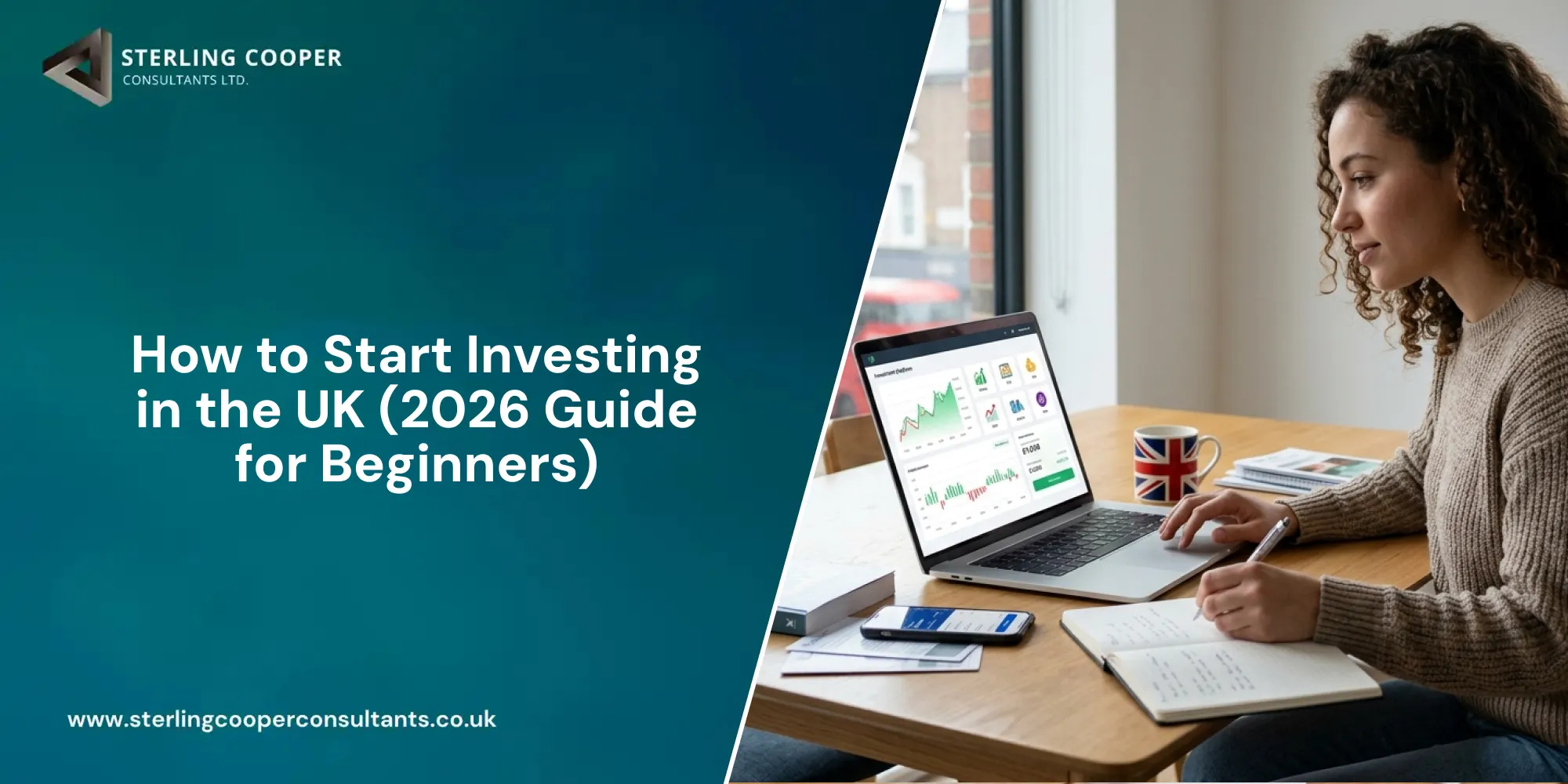
While most people earn money, very few people have an idea of how to make the money grow. Around 58% of the adults in the UK are currently investors, which shows just how common it is. However, many beginners still have no idea how to begin investing or how it works. For those who are new, his blog will help you understand the basics of investing in the UK so you can get started easily.
Key Takeaways
- Investing can grow your money over time, but it also comes with risk.
- Build an emergency fund and set clear financial goals before you start investing.
- Choose simple investments and diversify your portfolio to reduce risk.
- Select the right investment account and be aware of fees that can affect your returns.
- Start early and stay consistent to benefit from long-term growth.
What Is Investing?
Investing is putting money into an investment to make sure that there will be growth in its value in the future. Examples of investments are stocks, funds and property.
Investment is more risky as compared to savings. This is because the value of the investment can vary. So, the value of your investment may go up or down. This means you could lose some of the money you invest.
So, before you invest, ensure you have enough savings to cover unexpected costs. As investing involves risk, it is usually more suitable for long-term goals.
The stock market is a device for transferring money from the impatient to the patient.
Warren Buffett
When Should You Start Investing in the UK?
You should start investing when your finances are stable. This means you have no high-interest debt and you have an emergency fund of 3 to 6 months of living expenses. You should only invest money you do not need for at least 5 years. Starting early is important because it gives your money more time to grow and helps you earn compound growth, which means your money grows on both your original amount and the profit it makes over time. The best investment decisions are made when you are financially ready and focused on long-term goals.
How to Start Investing in the UK Step by Step?
Starting to invest in the UK involves five key steps. First, clear high-interest debt and build an emergency fund. Next, choose a tax-efficient account like a Stocks & Shares ISA. Then pick a regulated platform. Finally, invest in diversified index funds instead of individual stocks.
Below are the detailed steps:
1. Pay Off Debt and Build an Emergency Fund
Before investing, clear high-interest debt like credit cards. The interest on debt is usually higher than investment returns. Build an emergency fund of 3 to 6 months of living expenses. Keep this in an easy-access savings account for emergencies.
2. Choose the Right Account
In the UK, you can invest through different accounts depending on your goals and tax needs. These accounts decide how your money is taxed and how easily you can access it.
The main types of investment accounts are:
Stocks & Shares ISA
It is a tax-free account to invest up to £20,000 per year. You do not pay tax on profits or dividends. It is flexible and good for most beginners.
SIPP (Pension Account)
A SIPP (Self-Invested Personal Pension) is a retirement account with tax relief on contributions. Your money usually stays locked until age 55–57. It is best for long-term retirement savings.
General Investment Account (GIA)
It is a normal investment account with no tax benefits. It is used if you have used your ISA or pension limits. You can withdraw money anytime, but taxes may apply.
3. Pick an Investment Platform
Choose a UK platform that is regulated by the Financial Conduct Authority (FCA). This ensures your money is protected. Look for low fees and easy access to investments. Some platforms also include tools like an investment calculator, which can help you estimate how regular investing may grow your money over time.
Popular platforms include:
- Vanguard Investor (low-cost, simple index based investment).
- Trading 212 (easy app, low fees, beginner-friendly).
- Hargreaves Lansdown / AJ Bell (wide investment options).
4. Select Your Investments
For beginners, individual stocks are riskier than funds. A fund is a mix of many shares or bonds in one investment. It helps reduce risk through diversification. The best investments for beginners are usually low-cost, diversified options like index funds and ETFs.
So, the most common choices are:
Index Funds / ETFs
These are investment funds that track a market index like the FTSE 100 or S&P 500. They are low-cost and simple for beginners. They also give instant diversification.
Global All-Cap Funds
These are investment funds that invest in thousands of companies across the world. They spread your money across countries and industries for wider diversification.
5. Automate and Hold
Start small and invest regularly using a monthly Direct Debit. This helps you invest without thinking about timing. Keep your money invested for at least 5 years and stay consistent.
If you want to get an idea of how your investments will develop in the future, then you should consider making use of an investment calculator. It allows you to calculate your returns based on your monthly deposits, time frame and rate of gain.
Start Simple, Stay Consistent
You don’t need a lot of money to start investing. Even small, regular investments can grow over time if you stay consistent and patient.
What Are the Common Ways to Invest?
Common ways to invest in the UK include stocks, bonds and funds. These help people grow money in different ways depending on risk and goals. Some also use ISAs, pensions, real estate and savings accounts to balance growth and safety.
To understand these better, here are the main types explained:
1. Stocks (Shares)
Stocks represent the ownership of a part of a business. You can buy them and earn if the company grows in value or pays dividends.
2. Funds (ETFs and Mutual Funds)
Funds are investments where money from multiple investors is collected and managed together. The money is then invested across different assets like stocks and bonds. This helps reduce risk through diversification as the investment is spread across multiple companies and sectors.
3. Stocks and Shares ISA
Stocks and Shares ISA (Individual Savings Account) is a tax-free investment account in the UK. You can invest without paying tax on profits or dividends. It is a simple way to invest for long-term investment goals.
If you invest outside an ISA in the UK, you need to pay capital gains tax on your profits.
Read our guide: How to Avoid Capital Gains Tax in the UK?
What Fees Are Involved in Investing?
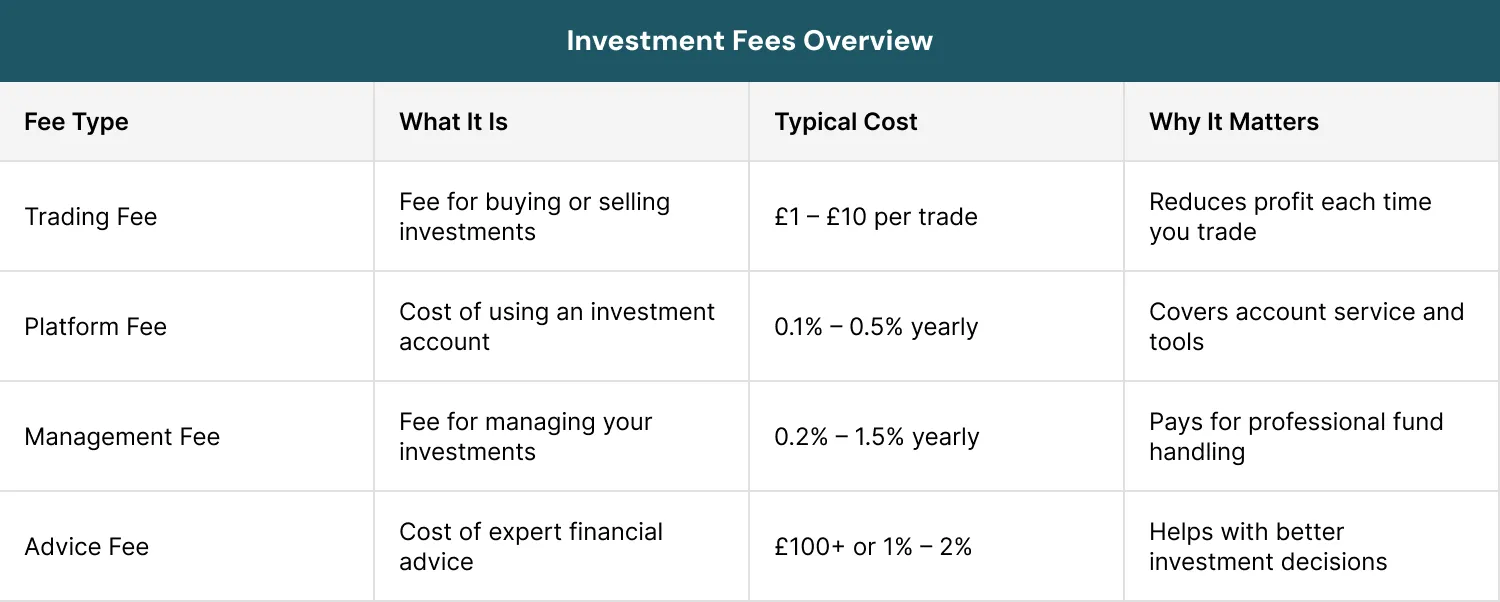
Investing in the UK comes with a few common costs that reduce your overall returns. These fees are usually charged when you trade, use a platform or get professional help.
The main fees involved are:
1. Trading Fee
This is the charge that you pay when you buy or sell an investment. This is charged every time you do a transaction. It costs around £1 – £10 per trade.
2. Platform Fee
This is a normal fee for the use of an investment platform. It is normally charged monthly or yearly. It costs around 0.1% – 0.5% yearly.
3. Management Fee
This fee is paid when you manage your money. This will cover the costs involved in professional fund management. It costs around 0.2% – 1.5% yearly.
4. Advice Fee
This fee applies when you get help from a financial adviser. It covers advice on selecting and handling your investments. It costs around £100+ or 1% – 2%.
What Are the Risks of Investing in the UK?
Investing in the UK involves several risks that can affect the value of your money. These risks come from market changes, inflation and how easily you can access your funds. Understanding them helps you make better long-term decisions. The key risks includes:
1. Market Risk
Market prices may increase or decrease at any time. This shows that the value of your investment can either go up or down.
2. Inflation Risk
The price of goods and services might go up as time progresses. It shows that the value of your money will decrease if the prices go up.
3. Liquidity Risk
Liquidity risk is the risk that you won’t be able to sell an investment without suffering a loss. Some investments cannot be sold quickly when you require money. At that time, it will be hard for you to get your money on time.
4. Emotional Risk
Emotional risk is the risk of making wrong decisions about your investments due to emotions such as fear, panic or excitement. This fear or panic might affect your investment decisions and would cause you to sell or buy at the wrong time.
All investments come with uncertainty at one point. So, the best way to make an investment is to have a long-term strategy.
Read more: How to Assess Your Risk Tolerance Before Investing
Don’t Ignore Risk
All investments carry some level of risk. Prices can go up and down, so always invest money you will not need in the short term.
Case Study
Darktrace is an IT firm in the UK based in Cambridge.
Darktrace was founded in 2013 and developed AI-based systems to identify and neutralize cybersecurity threats. As a result, it became one of the prominent players in the market.
The initial capital raised was provided by venture capitalists. This gave it rapid growth and it expanded into many regions of the world.
As early as 2021, Darktrace was listed on the London Stock Exchange, worth around £1.7 billion. Only by 2024, it was sold at over $5 billion in value, providing good returns to its first-time investors.
Darktrace succeeded due to its advanced technology, rapid growth rates and high demand for AI-related solutions. It shows how investment in technological firms in the UK could be beneficial in the long term.
Conclusion
Investing is an easy process that will ensure you multiply your money, but you have to be patient and make the right decisions. The first thing you need to do is set goals, make good choices and be consistent. But always remember that everything in the market changes.
At Sterling Cooper Consultants, we provide expert help and financial guidance. You can contact us, if you want to support your investment journey with professional advice.
Ready to start investing?
Take your first step today by choosing a simple investment that matches your goals. Start small, stay regular and let your money grow over time with patience. If you’re unsure about investing, reach out to us for guidance on getting started.
FAQs
Investing means putting your money into things like shares, funds or other assets with the goal of growing it over time. Instead of keeping money idle, you let it work for you. The value can go up or down, but the aim is long-term growth.
For beginners, index funds and ETFs are usually the best options. They spread your money across many companies, which reduces risk. Mutual funds are also helpful because professionals manage them for you. These options are easier to understand and less risky than picking single stocks.
You do not need a large amount to start investing. Many platforms allow you to begin with small amounts and invest regularly. Even small monthly investments can grow over time if you stay consistent and invest for the long term.
An investment calculator helps you estimate how your money may grow in the future. You enter details like how much you invest, how long you invest and expected returns. It then shows a simple projection, helping you plan better and understand long-term growth before you invest.
No, Investing is not fully safe because prices can go up and down. This means you can gain or lose money. However, beginners can reduce risk by investing for the long term, choosing diversified options like funds and avoiding emotional decisions during market changes.
Recent Posts