

Posted by:
Admin
Date:
June 9, 2026
Category:
blogs
What Is Employee Retention and Why Does It Matter in 2025?
Have you noticed that employee retention is getting harder in 2025? In the UK, staff leaving early can raise costs and slow down the work. Many firms now find it hard to keep skilled workers for long. Good staff help firms grow and work well. When workers leave frequently, daily work slows and becomes harder to manage. Teams may lose focus and firms spend more time hiring and training new staff. This is why it matters more than before.
Good retention of employees helps managers keep staff longer and avoid frequent hiring. Replacing one employee can cost thousands of pounds. This cost depends on their role and level. This shows the importance of keeping stable teams in the firms.
Key Takeaways
- Employee retention means keeping employees in the company for longer periods.
- High staff turnover can increase hiring, training, and business costs.
- Strong leadership and clear communication help improve employee retention.
- Career growth and employee training increase loyalty and job satisfaction.
- Poor onboarding and work stress are common reasons employees leave early.
- Employee retention tactics help firms build stable and productive teams.
- Flexible work and HR technology are shaping employee retention in 2025.
- UK firms with strong employee retention often see better teamwork and growth.
What is Employee Retention
Employee retention means keeping employees in the firm for a long time. It shows whether employees stay in their jobs or leave the company. In other words, it is all about keeping employees in the firm for a longer time.
The idea of retaining employees goes beyond the HR language. It affects the daily work of a firm. Those employees who remain in the firms for long become experienced in what they are doing. They can complete their tasks better and make fewer mistakes. When employees leave early, firms must spend more time and money hiring and training new staff. This can slow the work down and put extra pressure on existing teams.
Quick Insight:
Employee retention is not just about salary. It is also about trust, growth, and workplace experience.
Why Employee Retention Matters in 2025 for Businesses
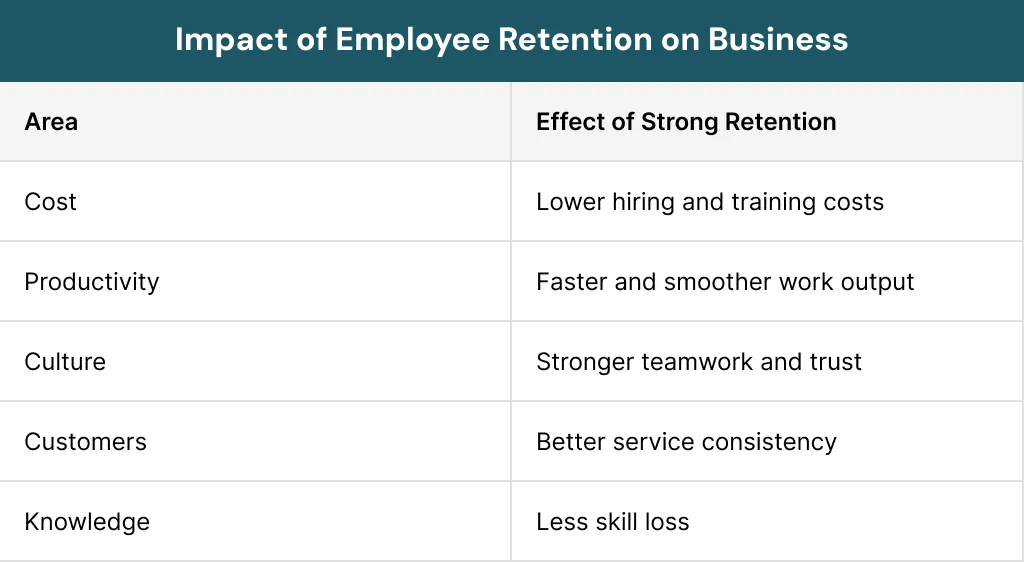
In 2025, UK companies must make sure that their skilled employees stay. Hiring new staff members is costly and takes time. The more often firms lose employees, the harder their growth becomes. Hence, it is important for many firms.
The more employees stay at a company, the more savings they make and the better teams they create. The more employees leave, the more difficulties arise for firms.
As stated in the Gallup report, it takes from 50% to 200% of the annual salary of a worker to replace them. These expenses include recruitment, training and lower work output. Hence, retention of employees can no longer be considered optional.
“Replacing skilled employees costs far more than retaining them,”
by Workplace Research Insight
What Are the Reasons of Low Employee Retention in Firms
Many companies struggle to keep employees, but do not know why. But the reasons are simple and very crucial.
1. Weak Leadership and Poor Communication
Without clear leadership, employees are not sure what to do.
2. Few Growth Chances
People want progress in their careers. If they do not see future growth, they start looking for new jobs.
3. Weak Onboarding Process
It takes time for people to adjust to a workplace. If they do not get proper training, they end up leaving their jobs early.
4. Work Pressure
A workload that is too high can be overwhelming without enough help. It is one of the major factors causing rapid turnover.
Read more: How to File Your Tax Return: A Step-by-Step Guide
Quick Reminder:
Many employees decide to stay or leave within the first 3–6 months of joining.
What Is the Link Between Employee Retention and Employee Turnover
To fully understand what employee retention is, it is necessary to understand why employee retention is important. Employee retention means retaining employees, while employee turnover means that employees are leaving. The two are linked, and they reflect different sides of the same scenario. High retention shows low turnover.
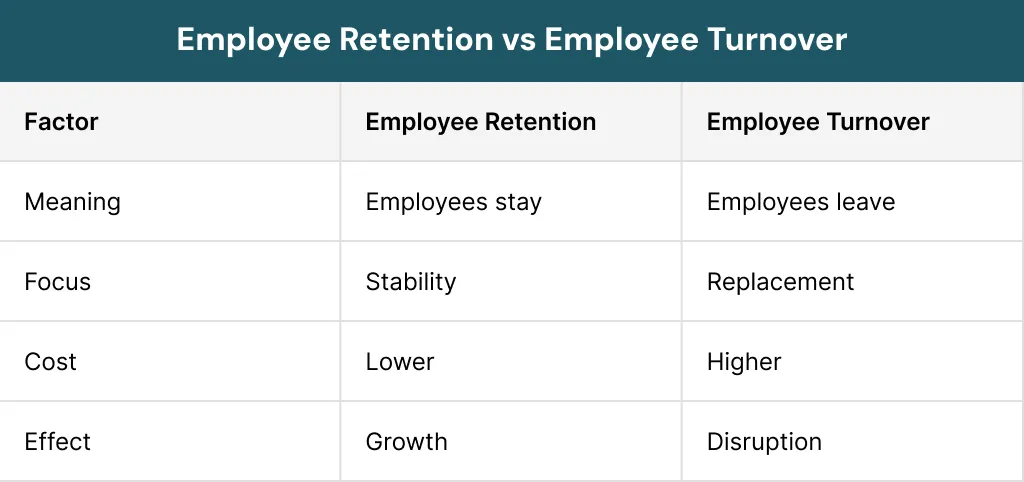
High turnover is a sign of bigger problems within a business. High turnover normally means that there are some issues within the business. These issues can be of leadership, culture or employee experience.
Important Detail:
Most businesses do not lose money only from hiring. They lose it due to lost time and reduced productivity.
Why Do Employees Leave Jobs Early in the UK
Employees usually do not leave their jobs early in the UK. If they do, there could be several reasons as discussed below:
1. Job Reality Does Not Match Expectations
Sometimes employees discover that the job is not what they expected. This results in disappointment.
2. No Help from Managers
Individuals need help in new positions. When they lack it, they feel lost and unsupported.
3. No Growth Path
Employees require knowing their career path. Otherwise, motivation drops fast.
4. Bad Workplace
It involves stress, lack of communication and no recognition of hard work.
“People don’t leave jobs, they leave experiences,”
according to HR behaviour study insight.
What Are the Best Employee Retention Tactics in 2025
In 2025, firms need simple, good methods for the retention of employees. It is not enough for an organisation to use only competent individuals. They have to retain them as well.
Below are some methods that work.
1. Improve Leadership and Communication
Effective leadership sets clear goals. Employees who understand their work feel more confident and loyal. Poor communication results in confusion and high turnover rates.
2. Focus on Employee Growth and Training
All people want to progress in their careers. Giving employees chances to learn and grow makes them more loyal. This is one of the important aspects of developing strategies for retaining employees.
3. Improve Hiring Quality
Good hiring methods are very crucial. Making poor hiring decisions often results in high turnover rates.
4. Strengthen Feedback Systems
Employees always want to be heard. Providing regular feedback creates loyalty. One-on-one sessions with supervisors may build more trust levels.
5. Improve Work-Life Balance
Work stress is a common reason why people quit. Flexible working hours and hybrid work models help reduce stress levels.
Quick Insight:
Employees who feel supported are far more likely to stay for 2+ years.
How Can Employee Retention Strategies Be Implemented Effectively in UK Businesses
These strategies only work when companies apply them clearly and consistently. Many firms know what needs to be done, but they lack consistency in their implementation. In the UK, companies that focus on people tend to keep more employees.
1. Align Leadership With a Clear People Strategy
Consistency is important when communicating a plan. If leaders communicate mixed messages, then employees will be confused. A consistent message ensures trust and consistency.
2. Make Employee Feedback Part of Daily Work
Employee feedback should be an integral part of daily operations. Regular meetings with employees can make them feel valued and listened to. Small talk can prevent potential resignations.
3. Invest in Internal Growth and Promotions
Employees tend to stay in organisations where they can grow. Internal promotions are an effective way to retain employees.
4. Use Data to Track Retention of Employees in Real Time
Modern HR departments analyse employee data. The analysis helps to detect negative behaviour patterns early on. Examples include poor performance or low engagement.
What Are the Key Benefits of Employee Retention for Businesses
There are many benefits of retaining employees for businesses. Let’s take a look at them.
1. Low Costs
It will help reduce costs related to recruitment and training. As there will be no frequent hiring and training of new employees.
2. Increased Efficiency
Experienced employees understand the work better and make fewer mistakes.
3. Improved Work Culture
There will be more trust and cooperation among colleagues.
4. Positive Customer Contact
Customers like dealing with people they recognise. Retention of employees helps keep them. It also keeps a stable work environment.
“Stable teams build stable businesses,”
by Workplace leadership insight
What Mistakes Lead to Low Retention of Employees
Many firms still lose employees because of below management mistakes.
1. Ignoring First-Time Employee Experience
The initial days are crucial. Bad onboarding leaves employees feeling detached right away.
2. No Clear Career Development for Employees
Without growth opportunities, employees tend to get disengaged. In fact, this is one of the leading reasons why employees leave.
3. Poor Managerial Communication
Bad communication leads to chaos. Chaos is what employees don’t want.
4. Failure to Appreciate Employee Hard Work
If hard work is overlooked, motivation decreases. Recognition can even increase loyalty.
Read more: What Is the Employment Rights Bill 2025 and How Will It Affect Workers?
Case Study
A UK retail company with over 300 people faced very high turnover rates in 2023. About 40% of their employees left within one year. The main issues were weak onboarding and poor manager communication. Also, there were no career growth options.
In response, the company introduced training, regular feedback sessions and promotion opportunities. In just one year, turnover was cut down by 18%. They also benefited from more work output and employee satisfaction.
How Is Employee Retention Measured?
Retention is calculated using a simple formula. This allows firms to find out the number of employees retained.
Formula of Employee Retention Rate
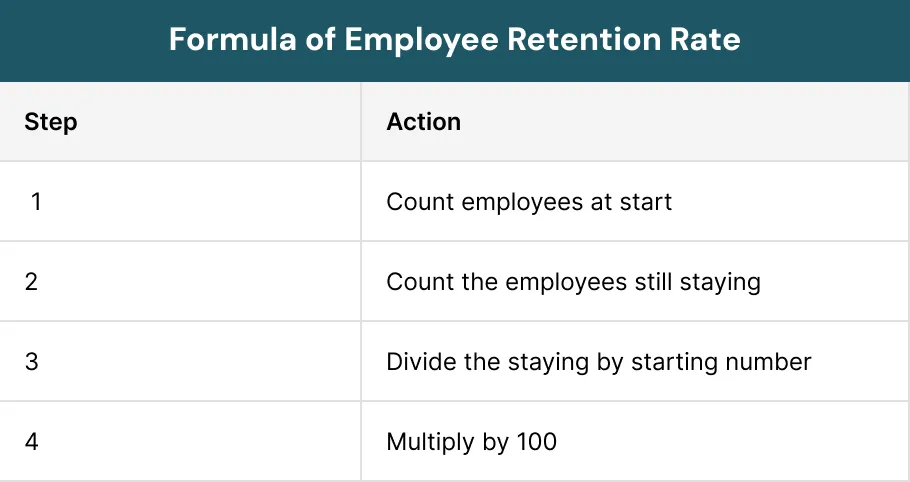
A high percentage shows good retention of employees. Whereas a low percentage shows poor retention of employees.
Quick Tip:
Tracking retention every 6–12 months helps companies fix issues early.
What Does the Future Look Like for Employee Retention in 2025 and Onwards
Trends related to retaining employees in the UK are changing fast. People, rather than production, become the focus.
1. Flexible Working Patterns
Hybrid work will become crucial. Employees want the best combination of working at home and in the office.
2. Smart HR Tools and Technology
Firms use technology tools to track employee satisfaction and the risk of them leaving.
3. Job Growth Plans
Companies now focus on clear career growth for employees. This helps staff learn new skills and stay longer with the firm.
Quick Reminder:
Companies that invest in employee experience will see stronger retention in the long run.
Conclusion
Employee retention is not just a concern for HR people, but it is a key business plan in 2025. After understanding the retention of employee, you can create stronger teams. This retention saves money, improves efficiency and creates a good workplace.
Retaining quality employees is always better than constantly replacing them. At Sterling Cooper Consultants, we know strong teams are key to business growth and long-term success. If you need help to develop an improved workforce plan for your business, feel free to reach out to us.
Struggling with high staff turnover and weak team stability?
At Sterling Cooper Consultants, we help businesses improve workforce planning, employee support, and long-term retention strategies. Our team supports organisations across different industries with practical HR and business solutions.
FAQs
It means how long employees stay in a company before leaving.
It saves cost, improves productivity, and builds strong teams.
Poor leadership, lack of growth, and bad work culture are key reasons.
Developing strategies for employee retention is important because it helps firms keep skilled staff for longer. It reduces hiring costs, improves team stability, and supports long-term business growth.
Employee retention tactics are simple methods used to keep employees in a company. These include better communication, career growth opportunities, training, recognition, and improving work-life balance.
Recent Posts