
Posted by:
Admin
Date:
August 13, 2026
Category:
blogs
Compliance Risk vs Operational Risk: What’s the Difference?
What happens if a business follows every rule but still suffers a costly disruption? Or when a smooth operation leads to a serious compliance breach? This is where the difference between compliance risk and operational risk matters. But a lot of organisations continue to mix up compliance risk and operational risk. This makes it harder to spot gaps and take the right action. As per EU/EEA banks, about 3.9 million operational risk loss incidents occurred in 2025. This shows that operational errors remain a risk for regulated firms.
There are two types of risks involved. First are the risks that disrupt daily business work. Then there are risks that break laws or rules. This blog will explain both types so you can differentiate between compliance risk and operational risk. You will learn how these risks differ, where they overlap and why this matters. It also lists the actions you can take to handle both.
Key Information
- Compliance risk focuses on following laws, regulations and internal rules, while operational risk relates to failures that disrupt daily business activities.
- The difference between compliance risk and operational risk can affect how a business spots, controls and responds to threats.
- Operational risk management helps businesses spot weaknesses in people, processes, systems and external events before they cause problems.
- Compliance risk is often more tactical and prescriptive, while operational risk management takes a broader, more strategic and predictive approach.
- Both risks can overlap, so businesses should manage compliance risk and operational risk together to reduce losses, meet legal duties and improve resilience.
- Effective risk management includes clear policies, employee training, regular reviews, strong controls and collaboration across teams.
What Is the Difference Between Compliance Risk and Operational Risk?
Although they are not the same, operational risk and compliance risk often coexist.
The difference between compliance risk vs operational risk is important. It helps organisations make better choices. It also helps them avoid costly mistakes and build stronger risk management plans.
In simple terms, operational risk is about keeping the business running. Compliance risk is about following the rules.
Consider a manufacturing corporation, for instance.
It is at risk of noncompliance with workplace safety regulations.
A machine is at operational risk if it malfunctions and ceases producing.
Failing to follow legal or regulatory standards is one problem. Failures in daily operations are the source of the other. One sometimes causes the other. A compliance violation can disrupt the operations. And legal requirements may get compromised by an operational failure.
Knowing where each risk comes from makes it easier to stop problems early.
What is Compliance Risk?
Compliance risk is when a company does not follow the rules it is bound by. These include the laws, regulations and internal policies. It can come from old practices, poor checks or unclear rules.
It can show up in the real world as:
- A construction company that is facing fines for ignoring safety standards.
- A hospital breaking privacy laws by mishandling patient data.
- Financial firms facing enforcement action for skipping compliance risk checks.
In each instance, the organisation violates a rule. And then it has to face the consequences. These can include financial fines, legal action, reputational damage or even limited operations.
Firms need good compliance risk management. It makes it easier to keep up with new rules. They can train their employees. They can also reduce compliance risks by using the right controls.
What is Operational Risk?
A disruption in your daily business operations is an operational risk. These happen for four main reasons: people, systems, processes and outside events. This differs from compliance risk. The problem here isn’t breaking the rules. Operational risks come from obstacles that stop operations.
Operational risk can appear in real life as:
- An employee slowing down operations by accidentally deleting customer data.
- An entire production line compromised by broken machinery.
- A supplier missing a delivery, creating delays in the supply chain.
In each of these scenarios, the operations are being stopped. This can cost your business time, money and customer trust.
Operational risk management means taking early action. Look for weaknesses and fix them before they spiral into real problems. You can reduce operational risk by:
- improving your processes
- keeping your equipment in good shape
- training your team
- boosting your cybersecurity
- planning for the unexpected
The aim of operational risk management is to keep work moving even when things go wrong.
Compliance Risk vs Operational Risk: A Side-by-Side Comparison
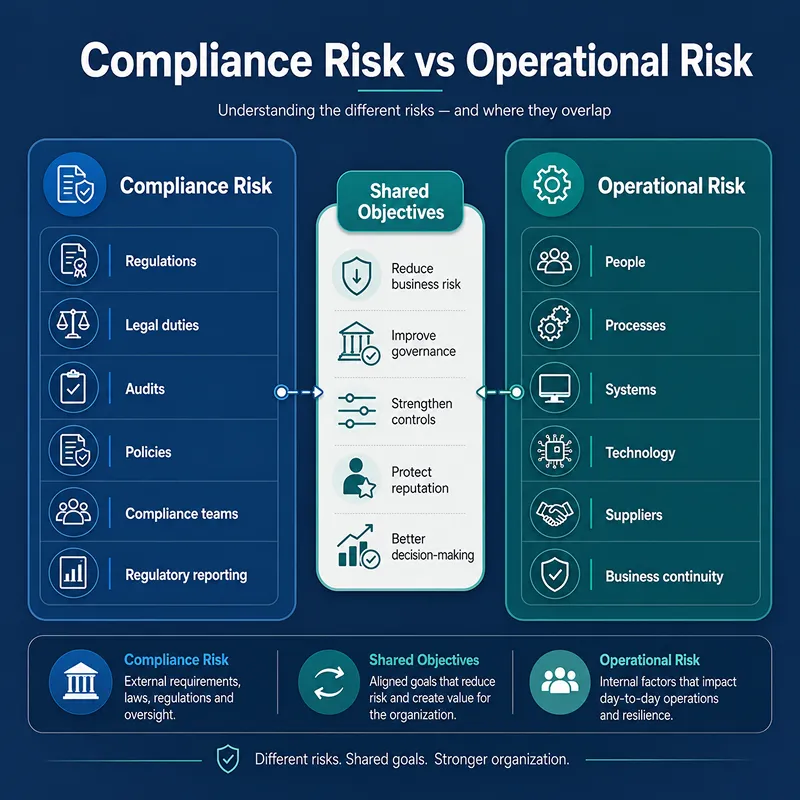
Compliance risk and operational risk are different. But businesses manage them both together. Putting them side by side shows where each fits and why both matter.
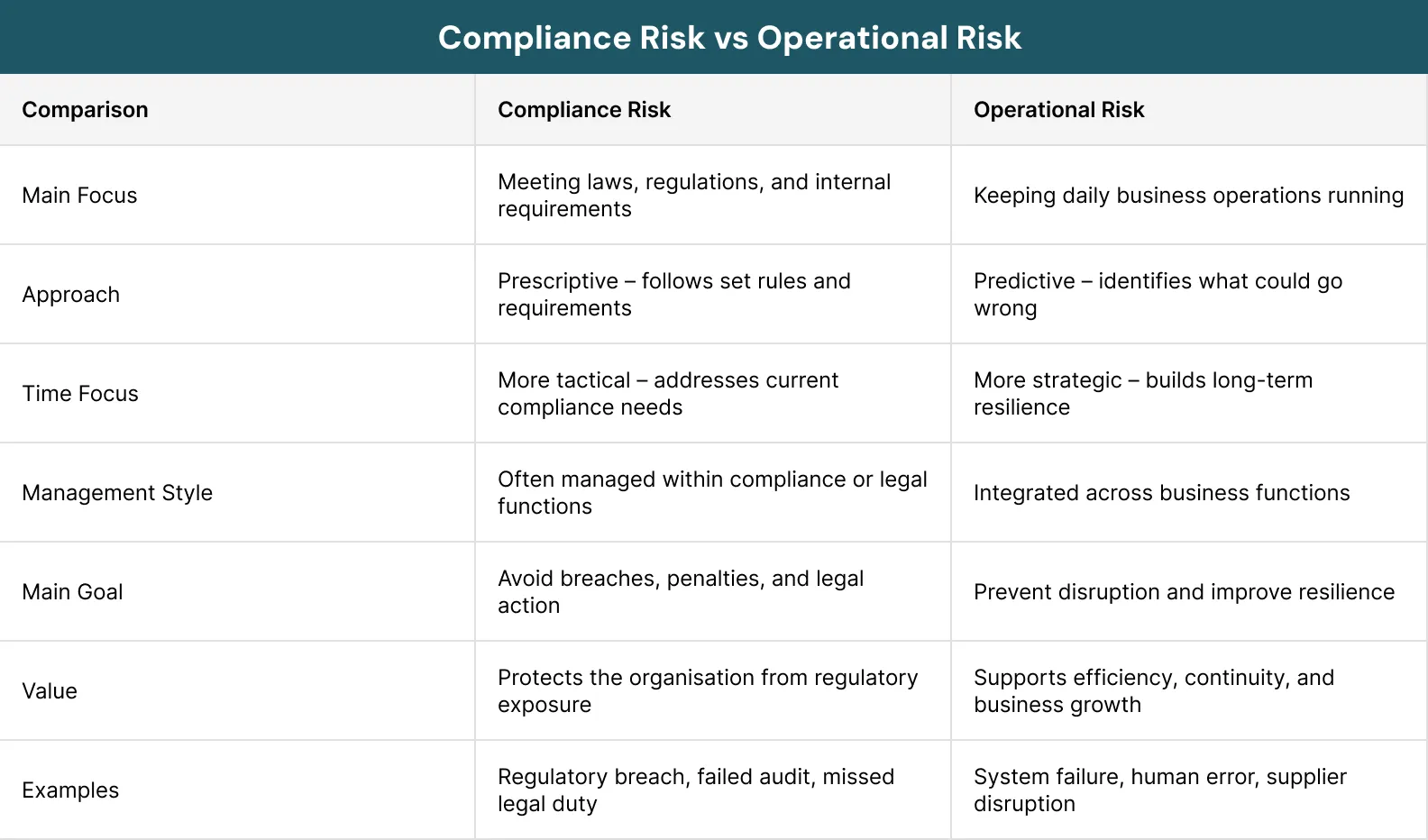
Compliance risk focuses on following laws and regulatory rules. Operational risk focuses on keeping business work running. One asks, “Are we following the rules?” The other asks, “Can we keep work running?”
The comparison below shows the key points.
Prescriptive vs. Predictive
Compliance risk is prescriptive. It comes from rules that organisations must follow. Laws, industry rules and company policies set clear standards. The aim is to meet these rules.
For example, a chemical plant must train staff on safety laws. They are bound to comply. Otherwise they will face fines or court action.
Operational risk is different. It is predictive because it looks ahead. It asks what could go wrong and how to stop it. This is a key part of operational risk management.
For example, a manufacturer notices their equipment is getting old. It could break down and shut down production. People could get hurt too. So they replace it before that happens. Production keeps running and everyone stays safe.
Tactical vs. Strategic
Compliance risk management is often tactical. It focuses on following the law, passing audits, keeping records and meeting new rules.
For example, a food company modifies its safety procedures when food rules change. This helps the company reduce compliance risk and meet its legal duties.
Operational risk management is more strategic. It looks at how well the business works. It aims to improve daily work, prevent problems and support future growth.
For example, the same food company may buy new quality control systems. This can reduce errors and make work faster. It also helps the company deal with operational risk before it causes a major problem.
Siloed vs. Integrated
In the past, teams often managed compliance risk in silos. Legal, compliance and audit teams checked new rules and reported to regulators. They often worked apart from daily operations.
Take the example of a compliance team to understand this. The team may review documents and write reports. But it may have little contact with daily operations. This makes compliance risk harder to manage across the whole business.
Operational risk management works best when integrated throughout the firm. Every team is important because everyone helps to find and manage risks.
This means if a system outage happens, all teams of a corporation have to work together. Operations will stop immediately. IT will resolve the technical issue. Compliance reports the incident to regulators. Finance monitors the expense. All teams work together to get the system back up and running.
This combined approach helps firms manage both operational risk and compliance risk.
Thinking of operational resilience as the outcome we are seeking, and operational risk management as the means by which this is achieved gives a clear focus for investment in both.”
Nick Strange, Bank of England
Risk Aversion vs. Value Creation
The main goal of compliance risk management is to avoid rule breaches. It helps firms avoid fines, legal action, money loss and damage to their reputation.
Consider a financial institution as an example. To reduce compliance risk, it can conduct frequent financial compliance checks. This will ensure that it is in line with anti-money laundering law.
Operational risk management aims to prevent risks and create value. It can make work faster, cut waste and improve service. It can also help a business prepare for future problems.
For example, a shop redesigns its supply chain after spotting delivery problems. As a result, it avoids disruptions and speeds up delivery. This reduces operational risk and increases customer satisfaction.
Strong businesses do not treat these risks as separate goals. They manage both at the same time. Compliance risk management helps them build trust and meet legal obligations. Operational risk management helps them improve work and deal with future problems.
Why Does the Difference Between Compliance Risk and Operational Risk Matter?
The difference between compliance risk and operational risk matters. It helps you spot problems early. It also helps you choose the right response.
A company can either only focus on following the law and ignore the operational flaws. Or, it can improve its operations regardless of whether it meets legal standards.
For example, a logistics company may speed up deliveries to increase efficiency. The new procedure saves delays. However, it breaches the new driving safety regulations. They improved operations but created a compliance risk. This will cause fines and legal issues.
It can also go the opposite way. A company may have all the proper legal procedures in place. However, if employees do not understand how to follow them, work will still fall apart. On paper, they look good. But they are facing operational risk in real life.
Knowing the difference between compliance risk vs operational risk helps you spot each one. You can then take the right steps to prevent problems. You can meet legal duties while keeping work on track. Teams can also work better together. This can cut losses, fines and work pauses.
The truth is that compliance risk and operational risk are not at odds. They work as one. Seeing their similarities and differences, you may create stronger strategies to stop them. This lets you ensure that work flows even as rules and practices change.
Common Pitfalls When Managing Compliance Risk vs Operational Risk and Their Solutions
You can make mistakes even with effective risk management procedures. That is why learning to identify these common errors is essential. It allows you to avoid extra expenses, regulatory issues and operational delays.
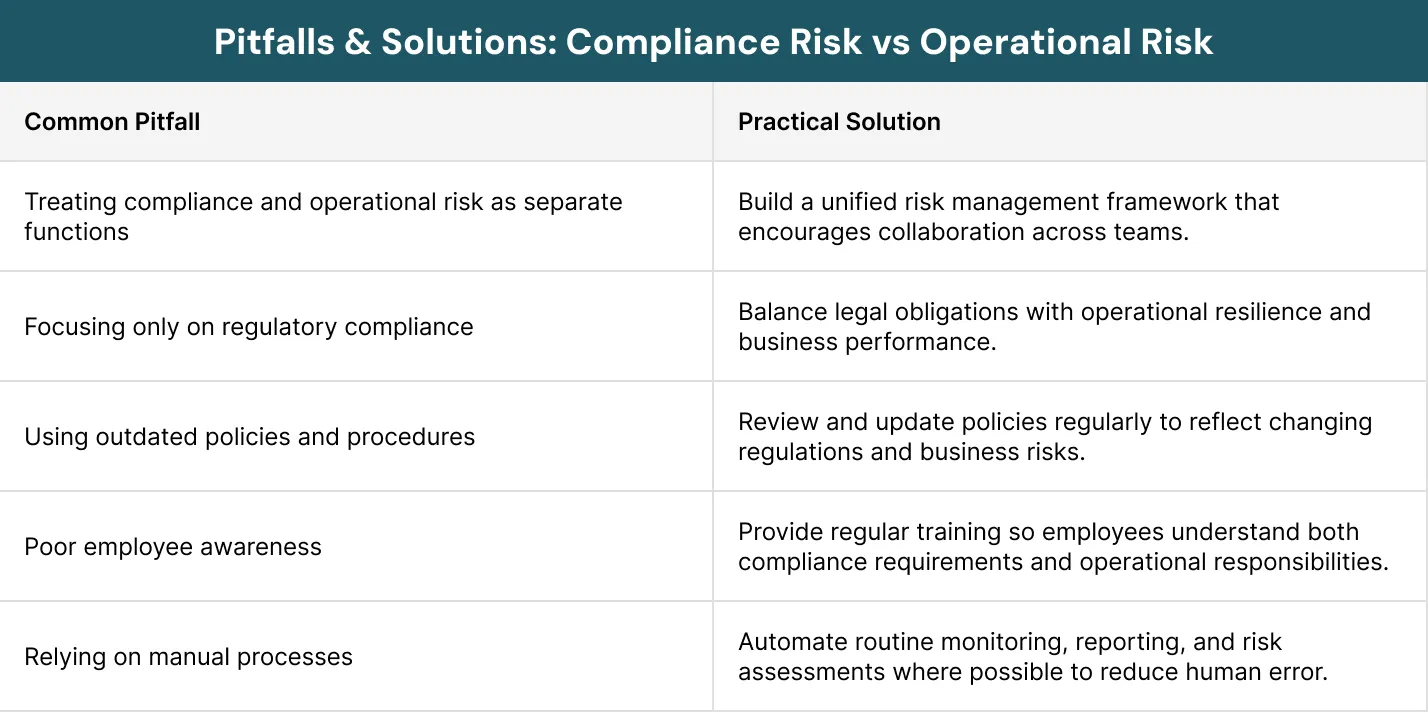
The table above listed the mistakes you need to avoid when managing compliance risk vs operational risk. By doing so, your business can improve response time. This shows a shift toward proactively managing risks.
Conclusion
Compliance and operational risk are not alike. Compliance risk focuses on meeting legal duties. The purpose of operational risk is to avoid disruptions that harm corporate operations.
When you know the difference between compliance risk vs operational risk, you can deal better with threats. You can take proper safeguards and build both legal and professional strength. Addressing both risks together solves your problems. As a result, your businesses reduce legal risk. They also end work breaks and make better choices.
Good operational risk management needs regular reviews. It also needs staff training and the right tools. Good compliance risk management helps businesses follow laws and rules. Together, these steps can help your business stay strong and ready for change.
Struggling to Manage Compliance and Operational Risks?
Don’t wait for a compliance breach or operational failure to expose weaknesses in your business. Our experts have helped businesses identify risk gaps, improve compliance and strengthen operational resilience. Talk to Sterling Cooper Consultants today.
FAQs
Compliance risk relates to failing to follow laws, regulations or internal requirements. Operational risk relates to failures in people, processes, systems or external events that disrupt business operations. A business can face both risks at the same time.
Examples of compliance risk include failing to meet health and safety requirements, breaching data protection laws, missing regulatory deadlines and failing to complete required compliance checks. These issues can result in fines, legal action and reputational damage.
Common examples of operational risk include human error, system failures, equipment breakdowns, cyber incidents and supplier disruptions. These problems can interrupt business activities, reduce productivity and cause financial losses.
Businesses can manage compliance risk by monitoring regulatory changes, reviewing policies, training employees and carrying out regular compliance checks. Clear controls and accurate records can also help identify and address potential breaches.
Operational risk management is the process of identifying, assessing and controlling risks that could disrupt business operations. It involves improving processes, strengthening controls, training staff and preparing for events that could affect business continuity.
Yes. Compliance risk and operational risk can overlap when an operational failure causes a regulatory breach or when a compliance issue disrupts normal business activities. Managing both together can help businesses reduce losses, meet their legal obligations and improve resilience.
Recent Posts