Posted by:
Admin
Date:
June 18, 2026
Category:
blogs
Is DIY Accounting Still Worth It in 2026?
Doing your own accounts may feel like a good way to save money but is it costing your business more?
DIY accounting is when you manage your own financial records instead of employing a professional. A lot of sole traders, freelancers, landowners and small business owners in the UK do it.
With the latest DIY accounting software, it is easier than ever to write down money coming in and track expenses. It is also beneficial to send invoices and prepare for tax.
For example, some business owners use this strategy to save money and manage finances more effectively. Cloud tools can link to your bank, save receipts and make reports seamlessly. This approach leads to simpler daily bookkeeping.
You have to understand that accounting in 2026 is not as simple as it used to be. From 6 April 2026, sole traders and landlords with incomes above £50,000 must keep online records. They must also utilise technology that aligns with HMRC’s Making Tax Digital (MTD) regulations. This means you have to keep correct records the whole year and report more frequently.
In addition, growing companies have more transactions, VAT laws, workers to pay and other duties. What worked well at the beginning may become tougher as the company grows.
However, some business owners still handle their money well and like the hold that DIY accounting provides them.
So whether DIY accounting is still worth it in 2026 depends on how large your company is. It also depends on how complex your finances are and how much time you have.
In this blog, you’ll learn if DIY accounting is still useful in 2026 and how MTD affects basics. You will also explore the hidden expenses and risks and when professional help might be needed.
Key Takeaways
- DIY accounting can work well for sole traders and small firms with simple finances, but it becomes harder as tax rules, reporting needs, and business activity grow
- DIY accounts need accurate records, regular checks, and a clear understanding of HMRC rules to avoid errors, missed tax reliefs, and costly penalties
- DIY accounting software can automate tasks such as invoicing, bank feeds, and tax updates, but it cannot replace expert judgement, tax planning, or business advice
- DIY accounting UK requirements have changed with Making Tax Digital, meaning many business owners now need digital records, approved software, and more frequent reporting
- Understanding how to use diy accounting starts with separating business finances, choosing the right software, tracking income and costs correctly, and knowing when professional support adds value
What Is DIY Accounting?
DIY accounting is the practice of managing your own business money records without regular assistance from an accountant.
This can consist of monitoring income, saving receipts, tracking expenses, sending invoices and checking bank payments. This also involves preparing tax returns and keeping proper records for HMRC.
Some people use spreadsheets and some use digital tools. However, many now use DIY accounting software to make the work faster and easier.
This can be adequate for a very small business. Your paperwork may be simple if you only have a few sales and costs each month. This way, you may read your numbers clearly and may only need a basic system and a steady pattern.
However, there is one essential point. Even if software assists you, you are still liable for your records. The reason is that if something is incorrect, the mistake belongs to the business owner, not the app.
That is why DIY accounts can feel simple at the beginning but tougher later.
Hire an accountant when you’re spending more time on bookkeeping than growing your business, as their expertise typically saves more money through tax deductions and compliance than their fees cost.
Jotika Teli, Certified Public Accountant
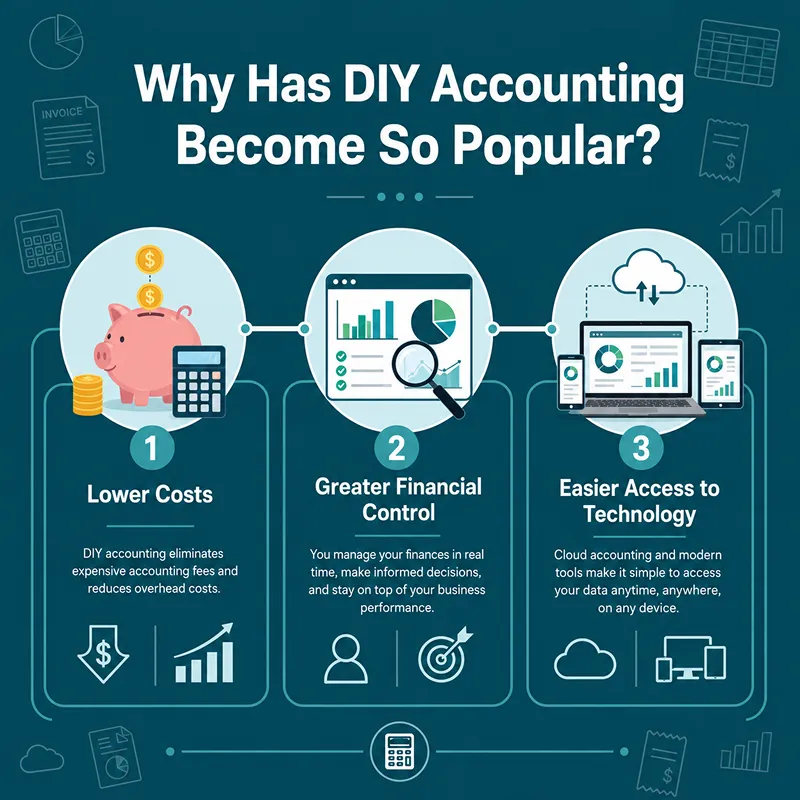
Why Has DIY Accounting Become So Popular?
DIY accounting has developed because it looks simple, inexpensive, and flexible. A long time ago, bookkeeping often seemed tough because business owners required paper files, manual records or costly desktop systems.
However, the responsibilities seem less complex these days due to cloud technologies. Owners choose this system for three main reasons:
Related: 5 ways cloud accounting can save your time and money
1. Lower Costs
Price is the most significant reason. Many small business owners do not want to pay monthly accounting fees.
A software subscription can look much less expensive than recruiting an accountant. This can make sense for a new company and even every pound is important when sales are still low.
However, the cheapest option is not always the highest value. Time, pressure, missed tax savings and errors can also cost money.
2. Greater Financial Control
Some owners choose to be close to their finances. They want to see cash flow, sales, expenses, unpaid invoices and tax forecasts themselves.
This can be a good aspect because when you understand your accounts, you can make better decisions. Besides this, you can spot late payments, cut the waste and plan for the future.
This is one reason many entrepreneurs like handling DIY accounts in the early days because it helps them feel in control.
3. Easier Access to Technology
Advanced tools have made bookkeeping much less terrifying. They can retrieve bank data, match payments, scan receipts, send invoices and generate reports.
This has assisted in making people who are not finance specialists feel more confident. However, software only works well when the information is accurate. If an expense is put in the incorrect location, the report turns out to be wrong.
Is DIY Accounting Easier Than Ever in 2026?
In many ways, DIY accounts are less difficult than ever in 2026. DIY bookkeeping is easier now because software does more of the necessary work.
With the help of this, bank accounts can bring in transactions and receipt tools can save evidence of spending. You can also create your reports in seconds. Some platforms use AI to suggest groups and find uncommon items. This can save time and can also help owners stay organised.
1. How Latest Accounting Software Helps
Good applications can assist with daily tasks. It can record income, track costs, submit invoices, store receipts, monitor cash flow and generate profit reports.
DIY accounting software can also be helpful with online records for MTD. It keeps information in a single location and makes regular reporting simpler. This approach can be very useful for simple firms.
2. Where Software Falls Short
Software is not the same thing as expert guidance. It is developed to process data, automate tasks and prepare reports but it cannot understand the context behind business decisions.
It can keep track of a cost but it may not know if the cost is refundable. It can display a profit but it may not explain why profit has gone down. The same way, it can estimate tax but it may not recommend the best tax plan.
DIY accounting software performs routine tasks, while an accountant offers insight and expert judgement that software alone cannot. This difference becomes more important as a business grows.
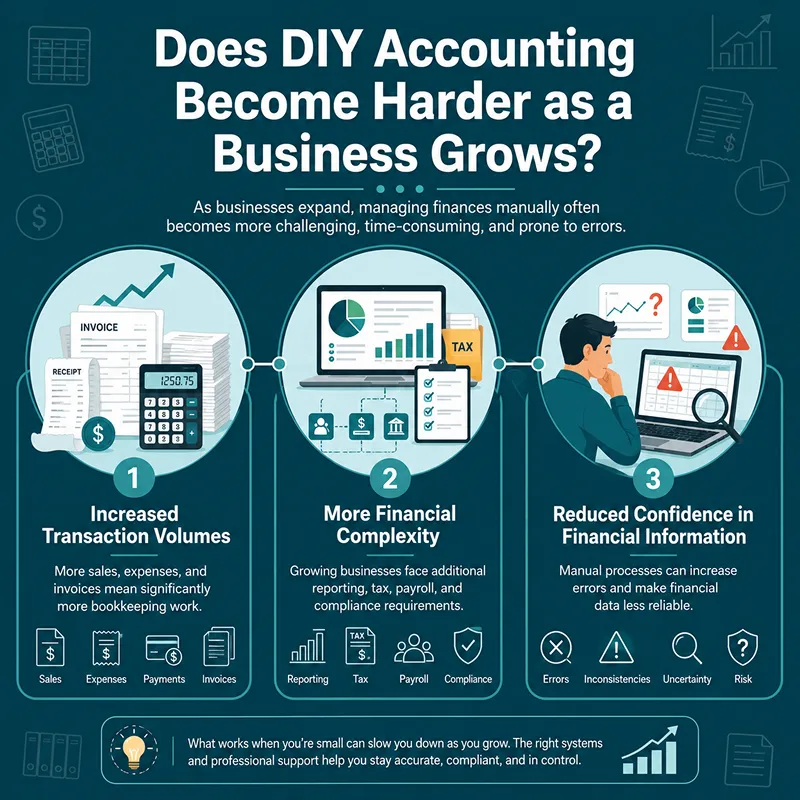
Does DIY Accounting Become Harder as a Business Grows?
DIY accounting frequently works well at the initial stage, then becomes harder over time. A new company may have limited clients, a few costs and no staff. The proprietor may be able to revise records once a week.
As a business grows, the volume and complexity of tasks increase, creating new duties across sales, billing, suppliers and compliance. There may be more sales, more invoices, more suppliers, more payments and more regulations. A system that worked in the starting years may not work after two or three years.
The issues below explain why many business owners find DIY accounting harder as their business expands:
1. Increased Transaction Volumes
If sales are high, there will be more records and more records mean more chances for errors. You may need to monitor card charges, refunds, unpaid invoices, supplier bills, stock fees and different payment methods. This can transform a quick weekly task into a long managerial job.
2. More Financial Complexity
When your business grows, it can also bring VAT, salary, pensions, loans, finance agreements or earnings from different places. Each newly created part takes on more duties. At this stage, DIY bookkeeping often becomes complex and lengthy.
3. Reduced Confidence in Financial Information
Reports may become more difficult to trust as the company gets more complex. You will encounter many situations where you may be unsure if VAT is right. Also, you may not know if costs are in the proper place. You may see profit in books or on screens but still not know what it means.
When you do not trust your financial records, it gets harder to make right decisions.
Can DIY Accounting Software Replace an Accountant?
DIY accounting software does not fully replace an accountant. Software can substitute for some office work. It can help with invoices, documents, receipt storage, tax estimates and online records. However, it cannot replace expert experience.
What Software Can Do
DIY accounting software is helpful for everyday jobs. It can speed up bookkeeping, decrease paper records, display basic reports, support MTD and notify you about unpaid invoices. For a small business with simple budgets, this may be adequate for a period of time.
Keep in Mind!
Accounting software can automate data entry, invoicing, and tax submissions, but it cannot provide tax planning advice, explain complex rules, or help you make strategic business decisions.
What Accountants Provide
Accountants do much more than just record finances; they help clarify what your figures actually mean. They can also help you plan tax and spot risks. Besides this, they can support VAT, payroll, cash flow, company structure and HMRC questions.
They also know common errors which can help you avoid issues before they become expensive.
What Are the Hidden Costs of DIY Accounting?
The apparent cost of DIY accounting is usually the software expense. However, that is not the full price because there are also hidden costs too. These include:
1. Time Costs
Bookkeeping is a time-taking system. In the same way, checking records, chasing receipts, fixing errors and preparing reports also take time.
You are not putting those hours into sales, customers, service or growth if you spend hours a week on accounts. For some proprietors, lost time expenses are more than the accountant fee they wanted to prevent.
2. Missed Tax Deductions
Many business owners overlook ordinary costs for which they are eligible to a refund. These may include fuel, home office costs, transport, insurance, training, professional fees and other business costs. Failure to submit valid claims can result in paying more tax than needed.
3. Cost of Correcting Mistakes
You may have to pay more costs for mistakes. A faulty VAT return, missing receipts or incorrect records may need to be corrected. In some scenarios, an accountant may need to clean up old books. That can end up costing more than getting help earlier in the process.
4. Stress and Mental Pressure
It can be stressful to manage money. Tax dates, regulations, receipts and HMRC documents can create tension. This pressure can impact your focus and your decisions.
Quick Insight!
Many business owners start with DIY accounting to save money, but the highest cost is often time. Hours spent on bookkeeping, tax returns, and compliance could be spent winning new clients or growing the business.
What Compliance Risks Come with DIY Accounting?
Being faithful to the regulations is known as compliance. In accounting, this refers to tax, VAT, payroll, pensions and record-keeping. When you handle everything alone, it is sure that you can miss something.
Some of the most common compliance risks are given below:
1. MTD Compliance
MTD requires digital records, compatible software, regular updates and clear time frames. If your documents are weak, your revisions may be wrong.
2. VAT Compliance Challenges
VAT can be challenging because there are different rates, registration limits, zero-rated items, excluded supplies and special rules. If you get a VAT return wrong, It can lead to higher tax, fines and time spent fixing mistakes.
3. Payroll and Employment Obligations
If you hire staff, you may need to run PAYE, report wages to HMRC, handle pensions and keep employee records. Accounting errors can have an impact on your staff as well as your company.
When Does DIY Accounting Usually Stop Working?
DIY bookkeeping often quits working when it takes too much time, causes too much doubt or adds too much risk. It’s simple to detect common warning signs.
In most situations, you fall behind on bookkeeping, do not grasp your reports and have concerns about VAT or payroll. Besides this, you are unsure what to claim, spend free time fixing records and feel stressed before tax deadlines.
These indications mean your system may no longer suit your business. For many owners, DIY accounts become more difficult to handle at this point.
Here are some common indicators that DIY accounting may no longer be enough:
1. Growing Transaction Volumes
More sales and costs lead to more admin tasks. If bookkeeping keeps getting postponed, mistakes become more frequent.
2. Lack of Financial Visibility
A report is only helpful if you fully comprehend it. You might need more guidance if your accounting doesn’t help you make decisions.
3. Increased Compliance Pressure
A single person cannot handle MTD, VAT, payroll and tax deadlines because it becomes too difficult. As your business expands, there are more rules to follow and more dates to keep in mind.
Missing a due date or making a mistake can create extra work and may even lead to fines. It can get exhausting and stressful to keep up with everything.
4. More Time Spent on Administration
Accounting may no longer be saving money if it takes time away from growth. Many company owners start by putting in a few hours of work each month on their accounts.
However, as the business expands, those hours can very quickly turn into days. The more time you devote to documents, the less time you have to serve clients, win new deals and grow your company.
5. HMRC Investigations and Reviews
HMRC can ask you to show your paperwork. In that case, you need detailed reports, receipts and proof of transactions. Besides this, good records make this easier and poor records make it stressful.
Why Do Companies Prefer Support Over DIY Accounting?
Today, many UK firms choose a hybrid system. They utilise accounting software while also relying on a bookkeeper or accountant for help. This gives them more precise records, concise advice and extra time to focus on their business.
1. Better Accuracy
Accountants and bookkeepers are familiar with how to check finances thoroughly. They can catch errors and make reports more understandable.
2. Greater Compliance Confidence
Experts assist companies in keeping up with regulations. They make sure forms, deadlines and questions for HMRC are dealt with properly.
3. Access to Professional Advice
A qualified accountant can help with tax planning, cash flow, costs, business structure and growth decisions. This knowledge can be worth more than routine bookkeeping.
4. More Time to Focus on Growth
Owners get more time due to outsourced services. Instead of organising receipts at night, they can focus on clients, sales and better service.
How Is IT Altering DIY Accounting?
Technology will continue to have an impact on the accounting field. AI and automation can generate dashboards, inspect receipts, align payments and detect unusual items. These softwares are helpful for entrepreneurs in maintaining a firm and simplifying everyday tasks.
AI in Accounting
AI can be beneficial for routine activities. It can speed up written materials, spot trends and classify data. For small enterprises, this strategy makes DIY bookkeeping more accurate and helpful.
Human Expertise Still Counts
AI is not familiar with your entire business structure. It cannot always figure out tricky tax issues and does not grasp your aims in the same way that a real person can. In most cases, the best approach is for people and software to work together.
How Has MTD Changed DIY Accounting?
MTD is one of the most significant reforms for UK company owners and landlords. Many independent people and landlords will need to keep documents digital. They must use approved software, send updates and submit a final report each year.
This transforms a tax from a yearly task into a periodic expense. It also means DIY accounting needs a more robust process.
New MTD Requirements
The main standards of MTD are clear. According to these conditions, keep online records, use software that works with HMRC systems and send updates throughout the year. You must also complete a final statement after the tax year is over.
More people will enroll in MTD later as the earnings limits fall. This implies that DIY accounts must be kept up to date all of the time. Putting off everything until the end of the year is no longer a wise strategy for numerous taxpayers.
MTD Made Good Bookkeeping More Vital
Quarterly revisions mean your records need regular attention. If earnings are ignored, costs are incorrectly listed or receipts are lost, the issue can grow over time.
MTD does not imply that software will do everything for you. Rather, it means your records must be on the web, timely and precise.
Related: MTD for income tax
Case Study: How an Accountant Supported a Small Business
A small business owner in the UK had aid from an accountant with annual accounts and tax documents.
Everything turned out to be satisfactory at first. However, different due dates meant the owner had to deal with accounting jobs many times during the year. This used so much time and caused pressure.
The owner was utilising too much time on documents instead of managing the company. To assist, On The Spot Tax developed a less complex strategy. They had meetings with the owner, inspected the business regularly and carried out important accounting work at the suitable times.
Instead of interacting with accounts multiple times, the owner could finish everything in a more structured way.
As a result, there were fewer emails, a decrease in delays and reduced stress. The owner was also aware of future tax payments earlier, making it easier to organise business financial affairs.
This case points out that doing your own accounting may be beneficial when a business is small. However, as tasks become complex, expert help can save time, minimise stress and let business owners focus on business growth.
Final Thoughts
DIY accounting is still a practical option for self-sufficient small-scale business owners. With today’s software, it can help save money and make monitoring income and expenses easier.
However, the financial aspect becomes more stressful as a business develops. It takes more time and effort to carry out tasks like filing taxes, making payments to employees and maintaining records. Even small accounting errors can lead to serious financial issues and sudden losses.
Sterling Cooper helps firms stay organised, keep precise records and make better economic decisions because it recognises these challenges. As a result, business owners have more time to work on expanding their company.
Contact us today to discover how we can help you stay on top of your financial affairs and focus on what counts most.
Spending too much time on DIY accounting and worried about compliance?
Our team helps businesses stay compliant, reduce admin, and gain clear financial insight.
We have helped hundreds of businesses improve their accounting processes and financial management. Reach us today.
FAQs
DIY accounting in the UK can work well for sole traders and small businesses with simple finances. However, as transactions, tax obligations, and compliance requirements increase, professional support may help reduce risks and save time.
To learn how to use DIY accounting, start by keeping accurate digital records, separating business and personal finances, and using suitable accounting software. Regular reviews and understanding HMRC requirements are also important for staying compliant.
The biggest accounting trends in 2026 include greater use of AI, automation, cloud-based software, and Making Tax Digital compliance. Businesses are increasingly using technology to automate bookkeeping tasks while relying on accountants for strategic advice, tax planning, and financial decision-making.
Some of the most widely used accounting software platforms in the UK include Xero, QuickBooks, Sage, and FreeAgent. Each offers features such as invoicing, expense tracking, bank feeds, and tax reporting, making them popular choices for sole traders, landlords, and small businesses.
Excel spreadsheets can be used to record income, expenses, invoices, and cash flow in one place. Small businesses should update records regularly, use separate categories for transactions, and reconcile spreadsheet data with bank statements to help maintain accurate financial records.
Recent Posts