Posted by:
Admin
Date:
January 12, 2026
Category:
blogs
Late Tax Return Penalties: What to Expect and How to Avoid Them
Missing a tax return deadline can happen more easily than many business owners expect. A busy period, missing records or a problem with an online account can all lead to a return being filed late. The key is to act quickly once the deadline has passed, because a late return can result in more than one charge.
For Self Assessment, HMRC can issue an initial £100 penalty as soon as a return is late. If the return remains outstanding, further charges can build up, including daily penalties and additional penalties after six and 12 months.
Knowing the rules before a deadline arrives can save both money and stress. This guide explains the penalties for late tax return submissions, what to do if you have already missed the deadline and when you may be able to appeal a tax penalty.
Key point:
A late tax return and late tax payment are separate issues. You can face a filing penalty even when no tax is owed, so filing on time still matters.
Key Takeaways
- The initial late tax return penalty for Self Assessment is £100.
- Further penalties can apply when a return is more than three, six or 12 months late.
- Late filing and late payment are separate, so both can result in charges.
- You may be able to appeal a tax penalty if you have a reasonable excuse.
- Tax evasion penalties are different from penalties for filing a return late.
- Filing early and keeping accurate records can help you avoid unnecessary HMRC penalties.
What Is a Late Tax Return Penalty?
A late tax return penalty is a charge from HMRC when a tax return is submitted after the required deadline. For people who file through Self Assessment, the usual deadline for an online return is 31 January following the end of the tax year. Paper returns generally need to be submitted by 31 October. Deadlines can vary in some circumstances, so it is important to check the date that applies to your return. Missing it can lead to an HMRC late filing penalty, even if the return is only slightly late. For example, a sole trader may have all the information needed to complete their return but delay filing it because of other business commitments. If the deadline passes, the return can still attract a penalty, even if the final tax bill is £0.‘Completing a tax return often requires time, organisation and detailed information, all of which are harder to manage under last-minute pressure.’ Alice Haine, Personal Finance Analyst at Bestinvest
What Is the HMRC Tax Filing Deadline Penalty?
The initial penalty for filing a Self Assessment tax return late is £100. If the return remains outstanding, further penalties can apply. Here is how HMRC late tax return penalties increase over time: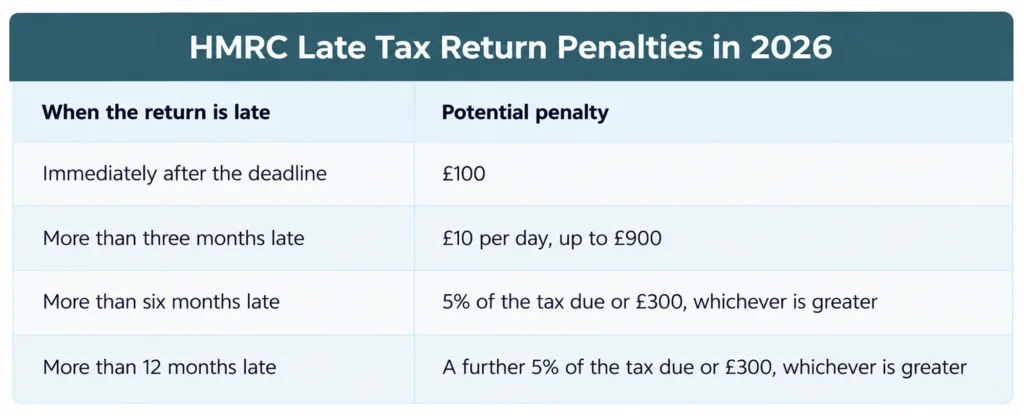
These are the standard Self Assessment late filing penalties. Higher penalties may apply in certain cases involving deliberate withholding of information.
The penalties can build up over time. Delaying a return because the initial £100 penalty seems manageable can therefore result in a much larger bill later.
Does the £100 Penalty Apply If No Tax Is Due?
Yes. The initial late filing penalty can apply even if you have no tax to pay. That is why filing your return on time remains important, even when you expect little or no tax to pay. A return can still be late and attract a penalty based on the filing deadline.What Happens If a Tax Return Is Very Late?
The longer a return remains outstanding, the more the penalties can increase. After three months, daily penalties of £10 may apply for up to 90 days. Further charges can then arise after six and 12 months. As a result, a return that was only slightly late can become much more expensive if it is left unresolved. If your return is already overdue, submitting it as soon as possible can help prevent further late filing penalties from accumulating.Late Filing and Late Payment Are Different
HMRC treats late filing and late payment separately. A late return can lead to filing penalties, while unpaid tax can lead to late payment penalties and interest. Someone who files their return late and also fails to pay the tax due may therefore face charges for both issues.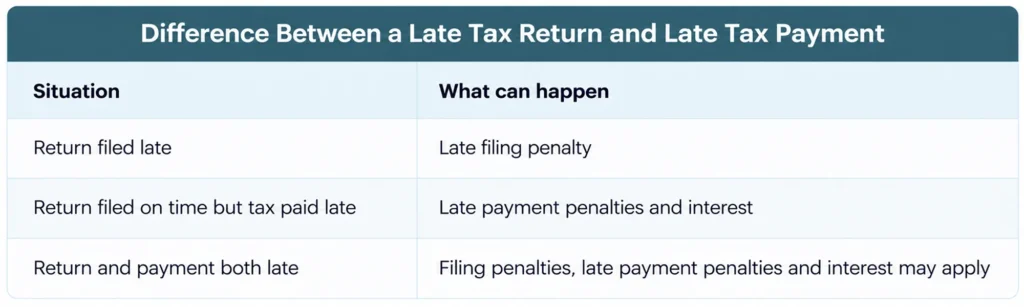
Understanding this distinction is important because resolving one issue does not automatically resolve the other.
What Are the Penalties for Late Tax Return Filing and Late Payment?
The penalties for late tax return filing depend on how long the return remains outstanding. Late payment follows a separate set of rules.
For Self Assessment, late payment penalties can apply when tax remains unpaid 30 days after the payment deadline, with further penalties at six and 12 months. Interest can also be charged on unpaid tax.
It is therefore useful to deal with both issues separately. Filing the return tells HMRC what is owed, while paying the amount due helps prevent further payment-related charges.
You can check the current rules in the official HMRC Self Assessment penalties guidance.
What Should You Do If Your Tax Return Is Late?
A late return does not mean the situation cannot be corrected. The most important step is to deal with it rather than allowing more time to pass.
1. File the Return as Soon as Possible
Submit the outstanding return as soon as you can. Waiting longer can lead to additional penalties, so there is usually little benefit in delaying the filing.
2. Check How Much You Owe
Once the return has been submitted, check the tax due and any penalties that have already been added to your account.
If you cannot pay the full amount immediately, contact HMRC rather than ignoring the debt. In some circumstances, payment arrangements may be available.
3. Check Whether You Have a Reasonable Excuse
If something outside your control prevented you from filing or paying on time, you may be able to appeal a penalty.
Examples of possible reasonable excuses can include serious illness, an unexpected hospital stay, the death of a close relative, certain computer or software problems and problems with HMRC’s online services.
However, simply having insufficient funds or forgetting the deadline will not usually be enough. HMRC considers the circumstances of each case, so an appeal is not guaranteed to succeed.
You can read the official guidance on appealing a Self Assessment penalty.
How Can You Avoid Penalties for Late Tax Return Filing?
Avoiding a late tax return is mainly about having a process in place before the deadline arrives.
Keep a Tax Calendar
Record the relevant filing and payment dates in a calendar. Set reminders well before each deadline so you have enough time to collect records and deal with any problems.
Keep Records Throughout the Year
Do not wait until January to start gathering financial information. Keeping records up to date as transactions happen makes the tax return easier to prepare and reduces last-minute pressure.
Put Money Aside for Tax
If you expect to owe tax, set money aside throughout the year. This can make the payment easier to manage when the deadline arrives.
Get Help Before the Deadline
If your return is complex or your records are incomplete, getting professional help early can reduce the risk of missing the deadline.
This is particularly useful for business owners with several income sources, expenses, investments or other tax matters to report.
Pro tip: File your return even if you cannot pay the tax straight away. Late filing and late payment are treated separately, so filing on time can help you avoid late filing penalties even if you still owe tax.
A Simple Example of a Late Tax Return
Imagine a sole trader needs to submit an online Self Assessment return by 31 January. They miss the deadline and submit the return two months later.
The initial £100 late filing penalty may apply. Because the return was submitted before it became more than three months late, the additional daily late filing penalties would not normally apply.
Now consider a different situation. The same person submits the return on time but does not pay the tax due by the payment deadline. In this case, late payment penalties and interest may apply instead.
These examples show why filing and payment need to be treated as two separate responsibilities.
Final Thoughts: Stay Ahead of HMRC Penalties
A late tax return penalty can start at £100 and become much higher if the return remains outstanding. The longer the delay, the greater the potential cost.
Filing early, keeping accurate records and checking payment dates can make a significant difference. If a genuine problem has already caused a delay, acting quickly and checking whether you have grounds to appeal can also help.
Keeping up with tax deadlines can be difficult when you are also managing a business. Sterling Cooper Consultants can help with tax returns, accounting and wider compliance requirements, making it easier to manage your financial responsibilities and stay on top of important deadlines.
Professional support can also help you identify potential issues before they lead to unnecessary penalties.
Need Help Staying on Top of Your Tax Deadlines?
Get in touch with our team to discuss your tax and accounting requirements.
FAQs
The initial Self Assessment late filing penalty is £100. Further penalties can apply if the return remains outstanding for more than three, six or 12 months
Yes. You may be able to appeal if you had a reasonable excuse for filing or paying late. Your appeal should explain what happened, why it prevented you from meeting the deadline and what steps you took to address the problem.
A late filing penalty can still apply even if there is no tax to pay. Having a £0 tax bill does not necessarily remove the requirement to file your return on time.
No. Late filing and tax evasion are different matters. Tax evasion involves deliberate actions such as hiding income or providing false information to reduce tax. It can result in more serious consequences than an ordinary late filing penalty.
File the return as soon as possible, check what tax and penalties are due, and consider whether you have a reasonable excuse that could support an appeal. If you are unsure how to proceed, seek professional advice promptly.
Recent Posts