Posted by:
Admin
Date:
September 26, 2026
Category:
How Much Does an Accountant Cost in the UK?
The cost of an accountant in the UK varies according to the size and structure of your business, the complexity of its finances and the level of support required. A sole trader with simple income and expenses may only need help with an annual self-assessment return, while a growing limited company may require bookkeeping, VAT, payroll, statutory accounts, corporation tax and ongoing financial advice.
Current market benchmarks suggest that small UK businesses can pay roughly £25–£150 a month for standard accounting support, while more comprehensive work can cost more. In addition, one-off self-assessment services are commonly quoted at around £150–£600, depending on complexity. Remember that these are market benchmarks, not government-set costs.
In this guide, we explain the typical UK accountant costs, what affects their fees, tax return pricing, costs for specific accounting tasks and how to choose the right accountant for your business.
In this guide, we explain the typical cost of hiring an accountant in the UK, the factors that influence accounting fees, pricing for common accounting services and how to choose the right accountant for your business needs.
Key Takeaways
- There is no fixed UK-wide accountant fee. Accountants set their own prices according to the work involved.
- Current 2026 market benchmarks put many sole-trader packages at around £39–£89 per month and micro-limited-company packages at around £83–£227 per month.
- A straightforward self-assessment return may cost around £150–£600, with complex returns potentially costing more.
- Fixed monthly packages can make accounting costs easier to budget, but businesses should check exactly what is included.
- The best comparison is total annual cost versus the scope, expertise and support provided, rather than the cheapest headline price.
How Much Does an Accountant Cost in the UK?
In the UK, there is no official average accountant fee published by HMRC or Companies House. However, a 2026 benchmark places typical small-business accountant fees at £25–£150 per month, with limited-company packages commonly around £50–£150 per month for specified compliance services. Another 2026 UK benchmark places sole-trader packages at approximately £39–£150 per month and micro-limited-company packages at £83–£227 per month.
These figures should not be treated as a universal price list. The actual cost can change substantially according to transaction volume, bookkeeping requirements, VAT, payroll, business structure and the level of advice you required. Here are some costs to consider:
Monthly Fees
For small businesses, monthly accounting fees can start from £50, depending on the services required. Sole traders may typically pay around £39–£150 per month, while start-up businesses may incur £300–£400. More established businesses with greater accounting needs can expect fees of around £500–£1,000 per month.
Hourly Rates
UK accountants commonly charge between £35 and £100 per hour for small business accounting services. However, cost can range from around £15 to £150 or more, depending on the accountant’s experience, specialisation, location and complexity of the work.
Tax Return Costs
The cost of preparing an annual self-assessment tax return typically ranges from £150 to £300. The final fee depends on factors such as the number of income sources, expenses, property income, investments and other tax considerations.
Other Costs to Consider
Several factors can influence the overall cost of accounting services. These include the complexity and volume of financial transactions, the number of accounts that need to be managed, the level of bookkeeping required and the accountant’s experience and location.
What Affects the Cost of an Accountant?
The cost of an accountant is mainly driven by the complexity of your finances, the volume of your transactions and the scope of the services you require. The following factors can have a significant impact on the final quote.
Business Structure
Business structure is one of the first things an accountant will consider. A sole trader generally reports business profits through self-assessment. A private limited company has additional responsibilities, including statutory annual accounts and a company tax return. For a private limited company, annual accounts are normally due at Companies House nine months after the company’s financial year ends, while the company tax return is normally due 12 months after the end of the corporation tax accounting period. That additional compliance work helps explain why limited-company accounting fees are generally higher than simple sole-trader packages.
Type of Services Required
Accountants offer a wide range of services, including bookkeeping, payroll, tax returns, VAT, year-end accounts and business advisory support. Some small businesses may only need help with payroll or annual accounts, while others may require a complete accounting package. Many firms therefore use service-based pricing, allowing businesses to pay only for the services they need.
Frequency of Services
How often accounting support is required can also affect the overall cost. A business that needs daily or weekly bookkeeping will generally pay more than one that only requires annual accounts and tax returns. Ongoing services such as payroll, VAT returns and regular financial reporting may be charged monthly or quarterly.
Level of Experience and Specialisation
An accountant’s experience and specialist knowledge can influence their fees. An accountant with a strong understanding of your industry can provide more relevant tax guidance, financial planning and compliance support. For example, a limited company may benefit from an accountant experienced in Corporation Tax, statutory accounts and company compliance, particularly when the business has more complex financial needs.
Firm Size and Location
The size and location of an accounting firm can also influence its pricing. Firms in London and the South East often charge 20% to 30% more due to overhead. Larger firms may charge higher fees because they have larger teams, broader expertise and greater resources. Smaller or local practices may offer more competitive rates and personalised support for small businesses.
How Much Do Accountants Charge for Self-Assessment Tax Return?
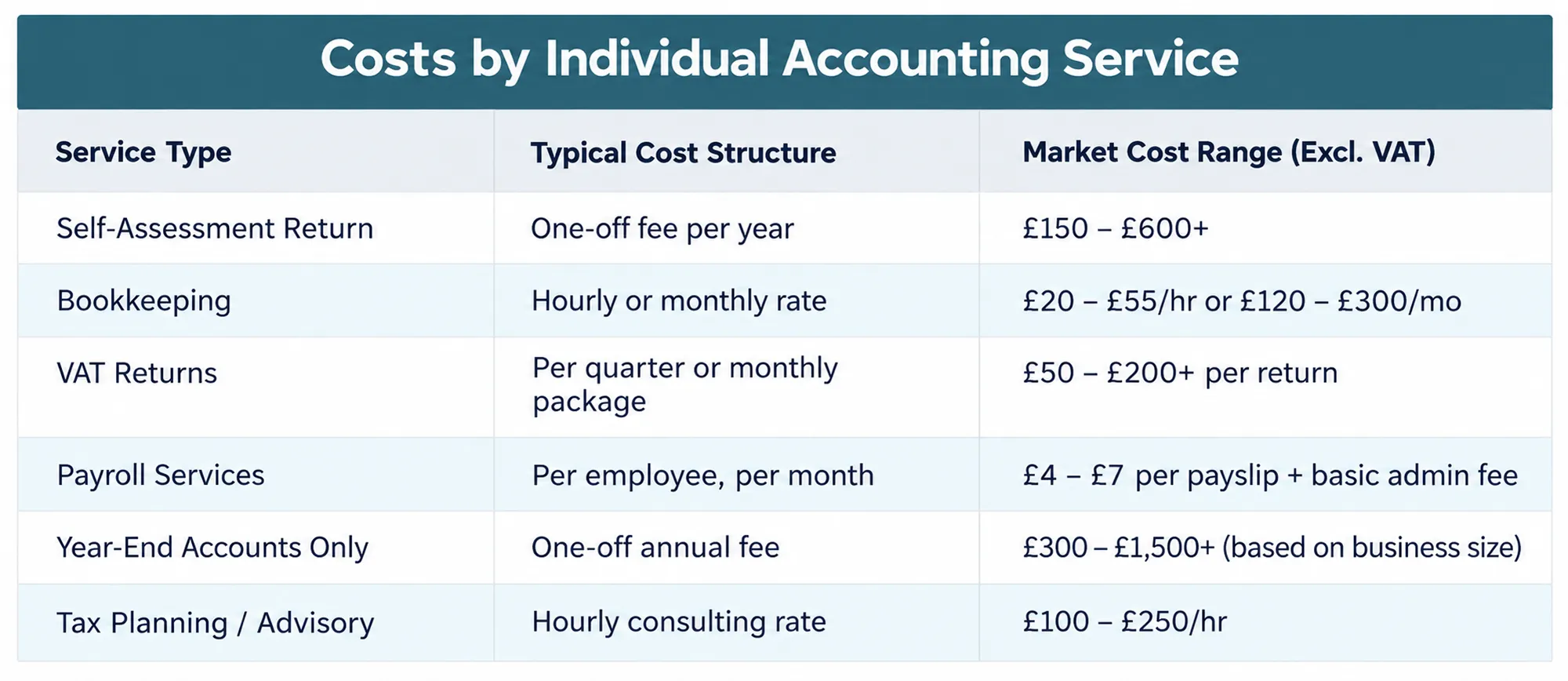
An accountant will typically charge a one-off fee for preparing and submitting an annual self-assessment tax return, which can range from £150 to £600 or more, depending on the complexity and the level of support you require. However, basic self-assessment services may cost around £200, while returns involving self-employment, property income, investments, capital gains or multiple income streams may require significantly more work.
How Much Do Accountants Charge for Specific Tasks?
Accountant fees vary depending on the services you required, the complexity of your finances and the accountant’s experience. The best way to understand how much an accountant will charge for the work you need is to speak with an accountancy firm like Sterling Cooper and request a tailored quote based on your business needs and ongoing requirements.
Accountants Charge for VAT Returns
VAT return fees can range from £50 to £200 or more, depending on the size and complexity of the business. A quarterly VAT return with accurate bookkeeping is likely to cost less than one involving high transaction volumes, multiple sales channels or complex VAT treatment.
Accountants Charge for Year-End Accounts
The cost of preparing year-end accounts varies according to the business structure, quality of financial records and level of work required. For sole traders, fees may start at around £300–£1500 or more. For limited company accounts, fees can range from £500 to £3,000 or more, where the service also includes corporation tax returns, Companies House filings, director loan account reviews and salary or dividend planning.
Costs by Individual Accounting Service
If you choose a menu-based or one-off billing approach rather than a monthly package, here is what specific individual services cost on average across the UK:
How to Choose the Right Accountant for Your Business?
You should look for an accountant who understands your business structure, industry and financial goals. Compare their experience, services, pricing and communication style and check exactly what is included in the quoted fee. A good accountant should not only handle your accounts and tax obligations but also provide practical guidance that supports better financial decisions and sustainable business growth.
Sterling Cooper as Your Accountancy Firm
FAQs
Recent Posts