
Posted by:
Admin
Date:
September 25, 2026
Category:
What’s the Difference Between Management and Financial Reporting?
For every successful business, numbers tell a story. However, business owners need to understand which numbers matter and how they should influence decisions. This is where financial reporting and management reporting play important roles.
Financial reporting presents a business’s financial position and performance. It helps stakeholders assess financial health and understand compliance with reporting requirements. In contrast, management reporting provides internal insights to support better decisions. It helps business owners improve operations, control costs and growth plan.
For growing UK businesses, understanding the difference between these reporting approaches supports better financial control, informed decisions and a clearer growth strategy.
Key Takeaways
- Financial reporting presents a business’s financial results, while management reporting supports internal decision-making.
- Financial reports serve external stakeholders and internal users, whereas management reports primarily support internal decision-makers.
- Financial statements follow the applicable accounting framework, while management reports can be tailored to business needs.
- Management reports can combine financial data with operational insights and forecasts.
- Using both helps businesses assess financial performance and identify opportunities for improvement.
What Is Financial Reporting?
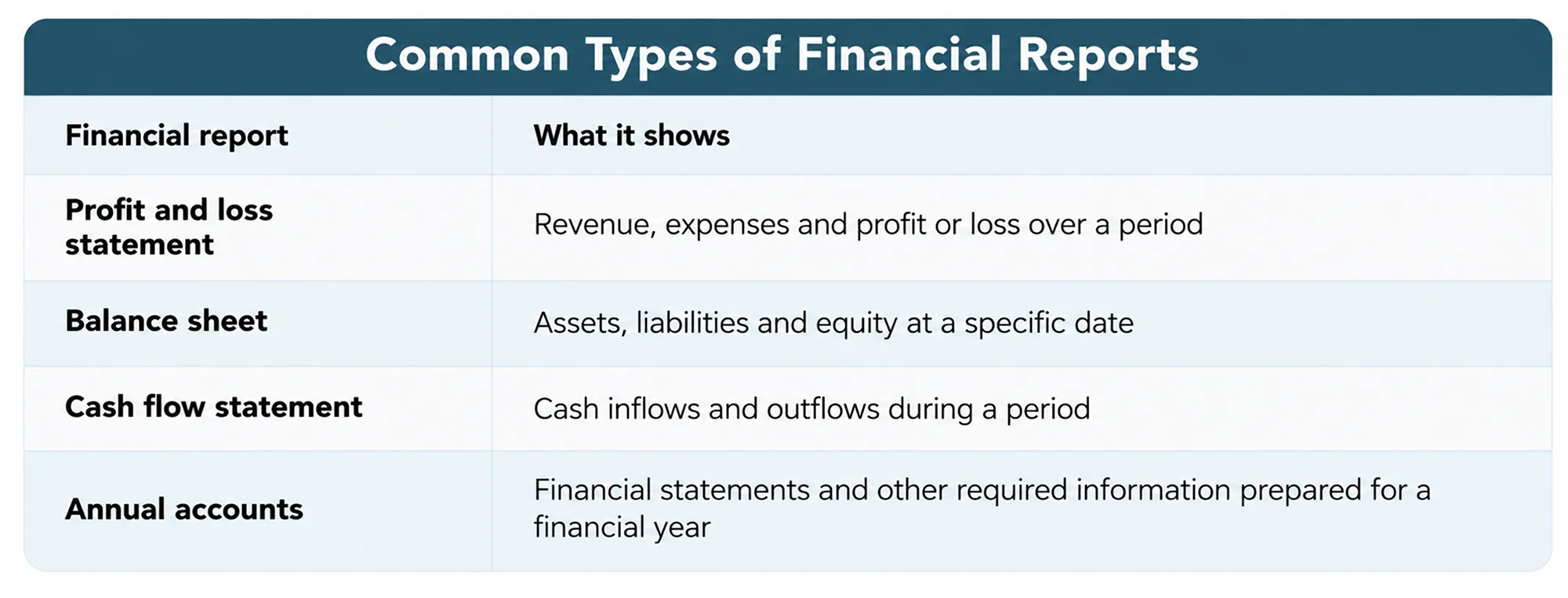
Financial reporting is the process of preparing financial statements that communicate a company’s financial performance and position over a specific period. The primary purpose of financial reporting is to provide reliable and consistent financial information to stakeholders who need to evaluate the performance, stability and financial strength of a business:
What Is Management Reporting?
Management reporting involves preparing internal reports that help business owners and managers plan, monitor operations and make informed decisions. These reports are tailored to the needs of internal decision-makers. Their main purpose is to turn raw business data into meaningful insights:
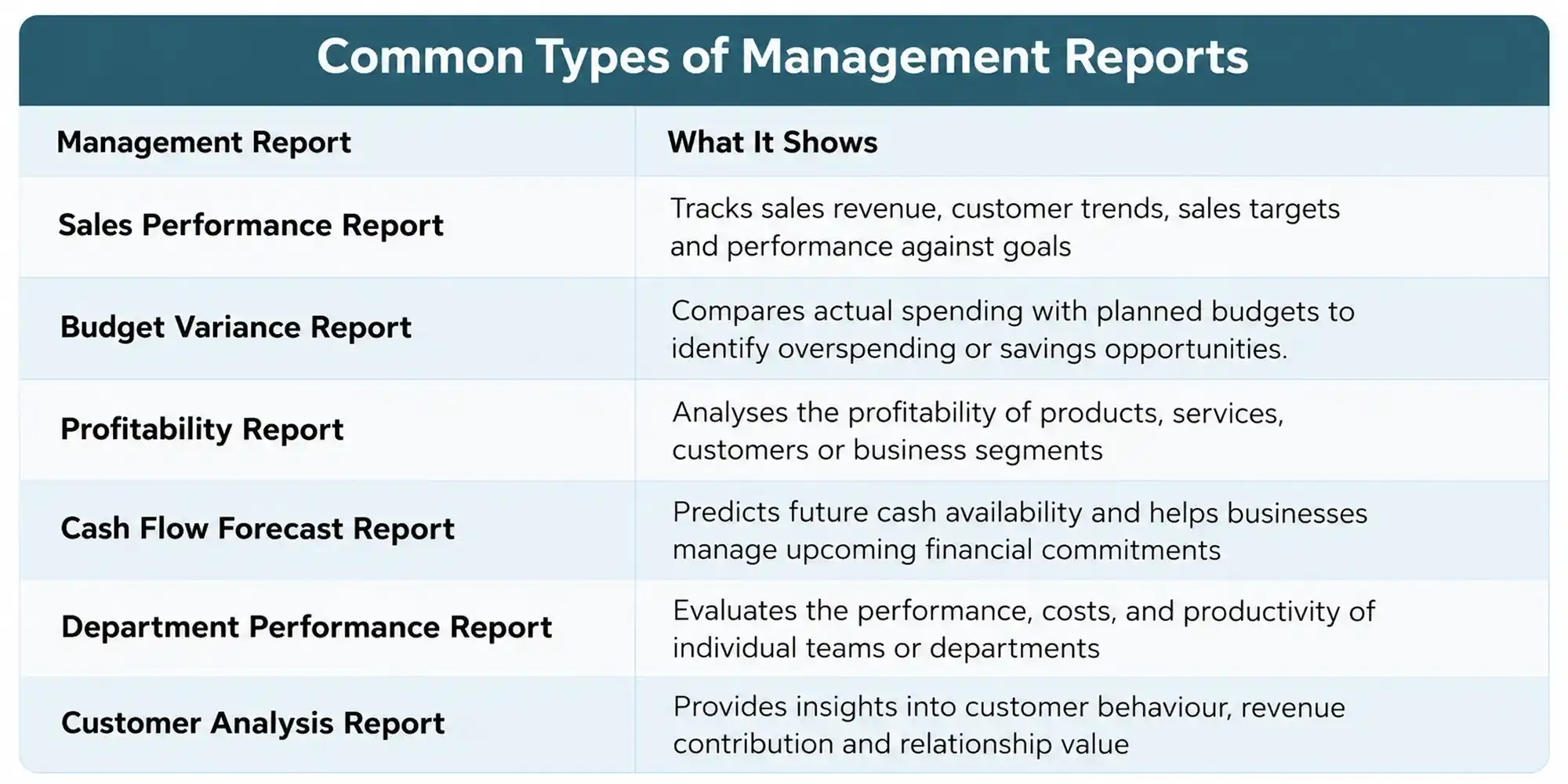
These reports help businesses identify underperforming areas, allocate resources effectively and respond to changing conditions.
Key Differences Between Management and Financial Reporting
Management reporting and financial reporting both use business data, but they serve different purposes. The key differences relate to their objectives, audiences, reporting focus and use in decision-making:
Purpose and Objectives
The main difference between management and financial reporting is their purpose. Financial reporting provides a clear view of a business’s financial position and performance. It helps stakeholders assess its financial health and supports transparency.
In contrast, management reporting helps internal decision-makers improve business performance. It goes beyond presenting figures by providing explanations and insights that support business decisions.
Primary Audience
Another key difference is who uses the information. Financial reports serve both internal and external users, particularly those who need to assess a business’s financial performance. External users include shareholders, investors, banks, lenders and other relevant stakeholders.
Management reports are primarily prepared for people within the organisation who make business decisions. These users include business owners, managing directors, finance teams and department managers.
Reporting Focus
Financial and management reporting also differ in their focus. Financial reporting presents the overall financial position and performance of a business. It covers revenue, expenses, profitability, assets, liabilities and cash flow. It helps users assess financial results over a specific reporting period.
Management reporting focuses on understanding business performance in greater detail. It examines department performance, customer profitability, sales trends, operational efficiency and budget performance. It may also include forecasts to help managers identify issues and plan future actions.
Data and Information Used
The types of data used also differ between the two reporting methods. Financial reporting primarily uses accounting data recorded in financial systems. This includes sales transactions, expenses, payroll costs, assets, liabilities and other financial information.
Management reporting uses a broader range of information. Alongside financial data, it may include customer behaviour, sales pipeline data, employee performance, market trends, operational metrics and project performance.
Reporting Frequency
Reporting frequency depends on the purpose of each report. Financial statements are generally prepared annually to meet reporting requirements and provide stakeholders with an overview of the business’s financial position and performance. Some businesses also prepare monthly or quarterly financial reports.
Management reports are prepared according to business needs. A growing business may review them weekly, monthly or quarterly. More frequent reporting can help managers identify issues sooner and make timely decisions.
Rules and Standards
Financial and management reporting also differ in their reporting requirements. Financial statements must follow the applicable accounting framework. In the UK, this may include UK-adopted international accounting standards or UK Generally Accepted Accounting Practice (UK GAAP), depending on the reporting requirements. These frameworks promote consistency and comparability in financial reporting.
Management reports do not generally follow the same prescribed format. Businesses can tailor them to their needs and objectives. For example, a professional services firm may focus on client profitability, staff utilisation and project margins.
Level of Detail and Customisation
The level of detail is another important difference. Financial reports follow applicable reporting requirements and provide information about a business’s financial position and performance. The level of detail depends on the reporting framework and the type of report.
Management reports can provide more detailed analysis tailored to specific business needs. They may include department-level performance, individual project analysis, service profitability, cost breakdowns and forecast scenarios. This helps business owners identify areas for improvement.
Impact on Decision-Making
Both reporting methods support decision-making, but they do so in different ways. Financial reporting helps users assess profitability, financial stability and overall business performance. This information can support decisions about investment, lending and business planning.
Management reporting supports day-to-day operations and strategic planning. It helps business owners control costs, allocate resources, improve efficiency, identify growth opportunities and manage risks.
How Management and Financial Reporting Work Together
Financial and management reporting are most effective when used together. Financial reporting provides reliable information about a business’s financial position and performance. Management reporting builds on this information by analysing results and identifying opportunities for improvement.
For example, a financial report may show that profit decreased by 12% over the year. A management report can help explain why. It may reveal that customer acquisition costs increased, a particular service became less profitable, operating expenses exceeded targets or sales declined in a specific market.
Together, these reports help business owners move beyond reviewing financial results to making informed decisions that improve business performance.
How Sterling Cooper Helps with Management and Financial Reporting
At Sterling Cooper, we help UK businesses understand their financial performance through accurate reporting and practical insights. Our accounting expertise and management reporting support help businesses assess profitability, monitor costs, identify financial risks and plan for growth.
Whether you need more reliable financial reporting or detailed insights into business performance, we can help you strengthen financial control and make informed decisions.
Need a clearer picture of your business finances?
FAQs
No, management reporting is not generally a statutory requirement. However, it helps businesses monitor performance, control costs and plan ahead.
No. Financial reporting presents financial results, while management reporting provides detailed insights to support business decisions.
Many businesses prepare management reports monthly, while others may need weekly reports depending on their operational needs.
Financial reports show business performance, while management reports help explain results and guide decisions. Together, they support better financial control and planning.
Recent Posts