Posted by:
Admin
Date:
September 23, 2026
Category:
What Do Accounting and Bookkeeping Services Include?
Every business needs accurate financial records, clear reporting and proper compliance to make informed decisions and manage its finances effectively. Professional accounting and bookkeeping services help businesses achieve this by keeping financial records organised and turning them into useful insights.
Although the terms accounting and bookkeeping are often used interchangeably, they serve different purposes. Bookkeeping involves recording and organising daily financial transactions, while accounting uses these records to analyse performance, prepare financial reports, manage tax obligations and support business growth.
This guide explains what accounting and bookkeeping services include, how they differ, what they typically cost and how to choose the right services for your business.
Key Takeaways
- Bookkeeping services cover transaction recording, bank reconciliation, invoicing and expense tracking.
- Accounting services include financial reporting, tax preparation, forecasting and business advice.
- Both services support accurate financial records and compliance with relevant reporting obligations.
- Service costs depend on transaction volume, business size, complexity and scope of work.
- Choosing a provider involves assessing expertise, software, fees and ongoing support.
What Does Accounting Services Mean?
Accounting services help businesses understand their financial position. They involve analysing financial data, preparing reports and supporting tax compliance. Bookkeeping focuses on recording and organising daily transactions. Accounting uses these records to assess performance, support financial planning and guide business decisions.
What Do Bookkeeping Services Mean?
Bookkeeping services involve recording, organising and maintaining a business’s financial transactions. These include sales income, supplier payments, expenses, payroll and bank transactions. Accurate bookkeeping keeps financial records organised. It also provides a reliable foundation for accounting reports and tax returns.
What Are the Core Bookkeeping Services?
Bookkeeping services help businesses maintain accurate, organised financial records. The exact services depend on the business’s size and needs. Common tasks include recording transactions, tracking cash flow, managing invoices, maintaining payroll records and preparing financial information for an accountant. Some providers also offer payroll processing and tax-related support.
Tax Records and Compliance Support
Bookkeeping helps businesses maintain accurate records for tax reporting. Bookkeepers categorise transactions, organise receipts and keep supporting documents. Accountants can then use these records to prepare tax returns and calculate tax liabilities. Some bookkeeping providers also offer tax return support, depending on their services and qualifications.
Monitor Cash Flow
Bookkeepers track money coming into and going out of a business. They record customer payments, supplier costs, operating expenses and outstanding invoices. These records help businesses identify potential cash shortages and payment delays.
Pro tip:
Review cash flow reports regularly. This helps you identify payment issues before they affect your finances.
Process Payroll
Payroll services help businesses maintain accurate employee payment records. Depending on the provider, support may include recording wages, calculating deductions, preparing payslips and processing payroll reports. Some providers also handle PAYE calculations and submissions to HMRC.
Employers remain responsible for meeting their payroll obligations, even when they outsource the work. Accurate records help them meet these requirements and resolve discrepancies.
Manage Accounts Payable
Accounts payable refers to money a business owes its suppliers. Bookkeeping services help track supplier invoices, payment deadlines and outstanding balances. This makes it easier to manage expenses and avoid missed payments.
Manage Invoices and Accounts Receivable
Accounts receivable refers to money customers owe a business. Bookkeepers may prepare and send invoices, record customer payments and track overdue balances. They may also help follow up on late payments. These tasks support timely collections and help businesses monitor cash flow.
Prepare Financial Reports
Bookkeepers organise financial data and may prepare basic reports. These can include income and expense summaries, cash flow reports and information for balance sheets. The reports help business owners review financial performance. Accountants may use the records to prepare formal financial statements, depending on the business’s needs.
Record Financial Transactions
Recording transactions is a core bookkeeping task. This includes sales, customer receipts, supplier invoices, bank payments and business expenses. Accurate records help businesses track their income and spending. They also provide a reliable basis for financial reporting.
Prepare Records for an Accountant
Bookkeepers help prepare financial records for an accountant. This may involve reconciling bank accounts, categorising transactions, organising receipts and checking for missing information. Well-maintained records reduce the time accountants spend resolving discrepancies and preparing accounts.
What Are the Core Accounting Services?
Bookkeeping focuses on recording and organising financial transactions. Accounting services go further by analysing financial data and supporting business decisions. They can also help businesses meet tax and reporting obligations. These services become increasingly valuable as businesses grow and their finances become more complex.
Tax Planning and Preparation
Tax planning helps businesses manage their tax liabilities within the law. Accountants review financial records, identify available tax reliefs and assess tax-saving opportunities. They may also prepare Corporation Tax returns, Self Assessment returns and VAT returns, depending on the business’s needs.
Tax preparation involves calculating tax liabilities and completing the required returns. Careful planning and accurate reporting help businesses meet HMRC requirements and avoid unnecessary tax costs.
Financial Reporting and Analysis
Financial reporting shows a business’s financial position and performance. Accountants prepare and analyse reports using financial records. These reports can highlight revenue trends, profit margins, operating costs and cash flow.
This analysis helps business owners identify problems and assess performance. It also supports informed decisions about spending, pricing and future growth.
Budgeting and Forecasting
Budgeting and forecasting help businesses plan for the future. A budget sets out expected income and expenses for a specific period. A forecast estimates future financial results using current data, past performance and business assumptions.
Accountants can help businesses prepare realistic budgets and forecasts. These plans help owners assess whether they can afford to hire staff, invest in equipment or expand operations.
Business Advisory Services
Business advisory services use financial information to guide business decisions. Accountants may review profitability, assess operating costs and identify opportunities for improvement. They can also advise on pricing, financial processes and growth plans.
This support helps business owners understand their options. It also helps them assess the financial impact of important decisions.
Compliance and Regulatory Support
Businesses must meet relevant tax and financial reporting requirements. Accountants can help prepare annual accounts, submit tax returns and manage VAT reporting. They may also support businesses with Making Tax Digital (MTD) requirements.
The exact support depends on the business and its obligations. For example, limited companies generally file annual accounts with Companies House and submit Corporation Tax returns to HMRC.
Accountants can also help businesses maintain accurate records and meet filing deadlines. However, business owners remain responsible for meeting their legal obligations.
How Much Do Accounting and Bookkeeping Services Cost?
The cost of accounting and bookkeeping services varies by business. Key factors include transaction volume, business size and financial complexity. The level of support you need also affects the price. Typical costs for UK businesses are outlined below:
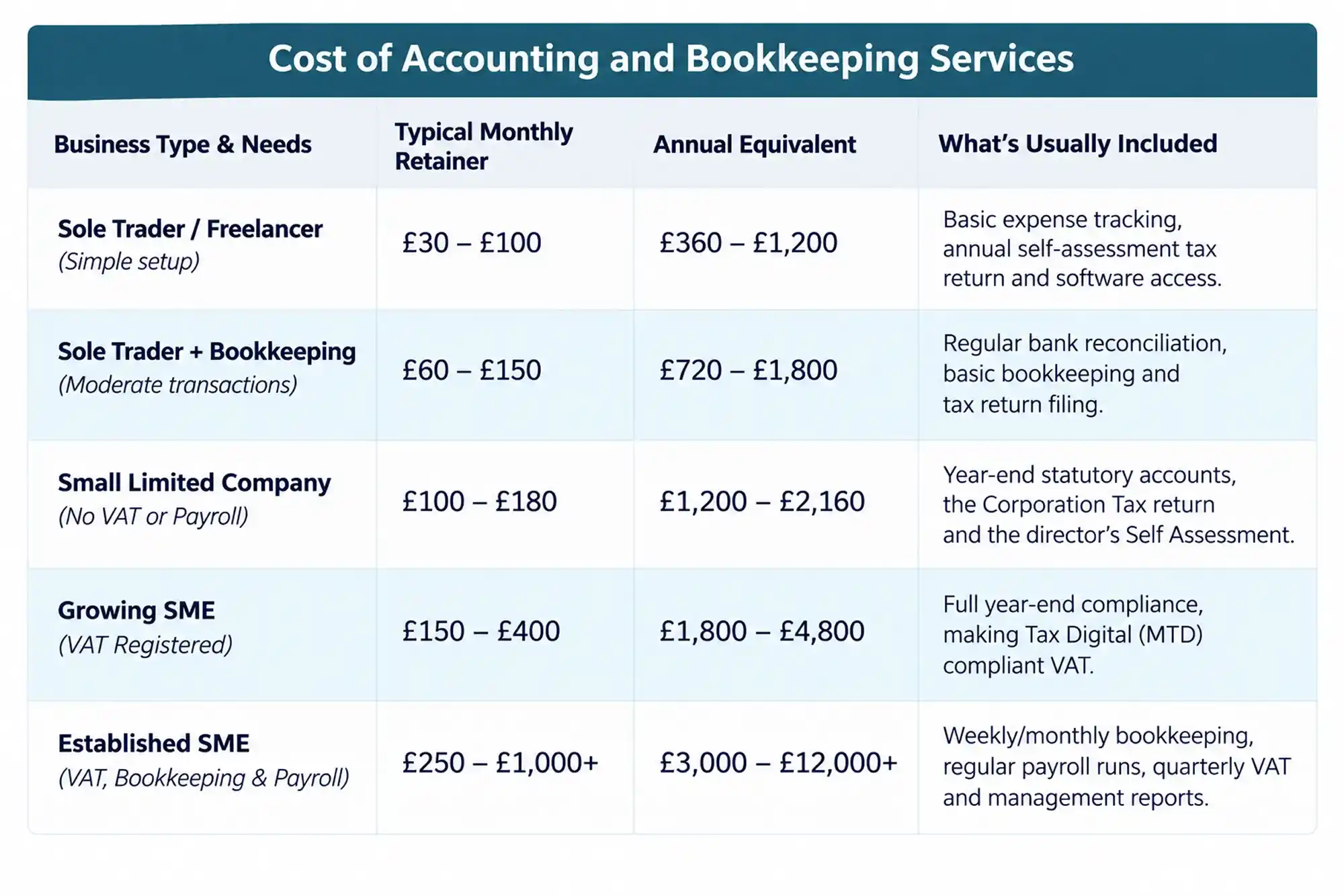
These figures are estimates, not fixed fees. Actual prices depend on the provider and services included.
How to Choose the Right Accounting and Bookkeeping Service for Your Business
Choosing the right accounting and bookkeeping service helps you maintain accurate records and meet your financial obligations. It can also support better planning and business decisions. Providers such as Sterling Cooper may help you save time and manage your finances more effectively.
However, services and expertise vary between providers. Consider your business needs, industry requirements and future plans before making a choice.
Conclusion
Accounting and bookkeeping services help businesses maintain accurate financial records and manage their finances effectively. Bookkeeping focuses on recording daily transactions, while accounting involves analysing financial data, preparing reports and supporting tax compliance. Together, these services help businesses meet their reporting obligations and make informed financial decisions.
Are you spending too much time managing your business finances?
FAQs
Recent Posts