
Posted by:
Admin
Date:
August 4, 2026
Category:
blogs
Audit Exemption UK: Rules Explained for Companies
Research shows that audit exemption saves small businesses an average of 1,000 to 5000 pounds in 2015. This cost saving helps small business owners to invest more in growth. If you are running a small business in the UK, then understanding the audit exemption UK rules is very important for you. It helps you to know when your company needs an audit and when it does not. Many owners miss this and end up spending extra time and money.
The rules of audit exemption in the UK are designed mainly for small and medium size companies. They allow eligible businesses to avoid full audits. This makes financial reporting simpler and also less costly. In this guide, we will explain everything in simple words. You will learn who qualifies, who does not and how the system works under audit exemption in the UK rules.
Key Takeaways
- Meet the two-of-three test: A company qualifies as small if it meets at least two of these conditions: turnover up to £15 million, balance sheet total up to £7.5 million and 50 or fewer employees.
- New thresholds from April 2025: The turnover and balance sheet limits increased on 6 April 2025, while the employee limit remained unchanged at 50.
- Two-year qualification rule: Companies must meet the small company criteria for both the current and previous financial year, although transitional rules apply for accounting periods starting on or after 6 April 2025.
- Exemptions depend on company structure: Audit exemption may also apply to dormant companies, qualifying subsidiaries and some small groups, but group size and regulated entities can affect eligibility.
- Not all small companies are exempt: An audit may still be required if shareholders request one, company rules or agreements require it or if the business is a public company, bank, insurer or another ineligible entity.
What is Audit Exemption for UK Companies?
Audit exemption in the UK is the relief from audit for small businesses under certain criteria. It helps you to focus more on the growth of a business instead of heavy compliance tasks.
Many audit exempt companies in the UK benefit from this system. They still prepare the accounts but do not need a full audit review. Overall, audit exemption in the UK helps to make financial reporting easier and more practical for small firms.
What Are the Audit Exemption Rules for UK Companies?
If you want to qualify under audit exemption in the UK, you must meet the established criteria and conditions. These include turnover, assets and staff limits. Many audit exempt companies qualify by staying below these thresholds. If you cross any two of these three limits for two consecutive years, then you lose the rights of the exemption.
The Three Criteria for Audit Exemption
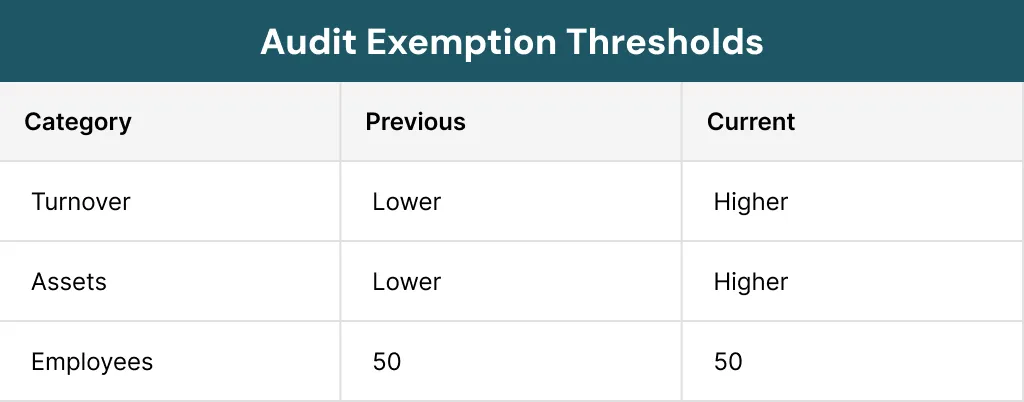
SMEs in the UK have to meet certain criteria to qualify for audit exemption. These three criteria are designed to ensure that actual small businesses get the relief for which audit exemption is designed. The three criteria are as follows:
Annual Turnover: Gross income of your company from all business activities must not exceed £15 million.
Assets: The value of gross assets of your company must be more than £7.5 million.
Employee: Your business must employ 50 people or fewer on average throughout the year.
The “Two-Year” Rule
The two-year rule means a company must exceed the size limits for two years in a row before it loses its audit exemption.
For a new company, the audit exemption applies in its first financial year if it meets the qualifying conditions. For an existing company, going over the size limits once does not automatically remove the exemption. The company normally loses its small company status only if it exceeds the limits for two consecutive financial years. This gives the business extra time to prepare for the changes and plan for the cost and process of a statutory audit.
“Qualifying for an audit exemption does not reduce a director’s responsibility for preparing accurate financial statements. Companies must still maintain proper accounting records and comply fully with the Companies Act.”
— Michael Izza CBE, Former Chief Executive, ICAEW
Who Is Exempt from Audit in the UK?
Under the rules of audit exemption in the UK, a selected few companies are exempt from audit. These include small, dormant and some group companies.
Most audit exempt companies fall under the size-based rules. If they stay within financial limits, they qualify automatically. This helps to reduce the pressure on small business owners.
The following audit exemption criteria are operational in the UK for different companies.
1. Audit Exemption for Dormant Companies
Dormant companies are usually businesses that are inactive or do not trade. Under audit exemption in the UK rules, they often qualify for exemption. These audit exempt companies have little or do not have any financial activity. This makes audits unnecessary for them.
As long as they remain dormant, they can continue to enjoy the exemption.
2. Audit Exemption for Individual Small Companies
Small companies are most likely to get audit exemption under the UK rules. They qualify if they meet the limits of employee size, turnover and balance sheet. You are deemed as a small company if you meet at least two of the three criteria stated above.
All audit exempt companies fall into this category because of their low turnover and size. This helps you to reduce the costs related to compliance.
3. Audit Exemption for Small Members of a Small Group of Companies
Group companies also benefit from audit exemption in the UK rules. This applies when the entire group is small. Some audit exempt companies operate within larger structures but they still qualify because they follow staff limits.
Did you know?
Group size plays an important role in eligibility.
4. Audit Exemption for Subsidiary Companies
Subsidiary companies may qualify under the UK rules of audit exemption if they are supported by a guarantee of a parent company. Many audit exempt companies use this rule in corporate groups. This helps them to reduce the duplication of audits within the same group.
Why Some Businesses Are Not Eligible for Audit Exemption?
Businesses are ineligible for audit exemptions if they operate in high-risk, regulated sectors (like banking or insurance), exceed size thresholds or fail to meet governance requirements.
The following businesses are ineligible for audit exemption:
- A public limited company, unless it is dormant
- A subsidiary company, unless it meets the specific exemption rules
- An authorised insurance company or involved in insurance market activities
- A banking services company
- An electronic money (e-money) issuer
- A MiFID investment firm (regulated investment business)
- A UCITS management company (fund management business)
- A company that has exceeded the audit exemption thresholds set by law
- A company with shares traded on a regulated stock market
- A pension scheme trustee, especially master trust pension schemes
- A special register body (regulated or listed organisations)
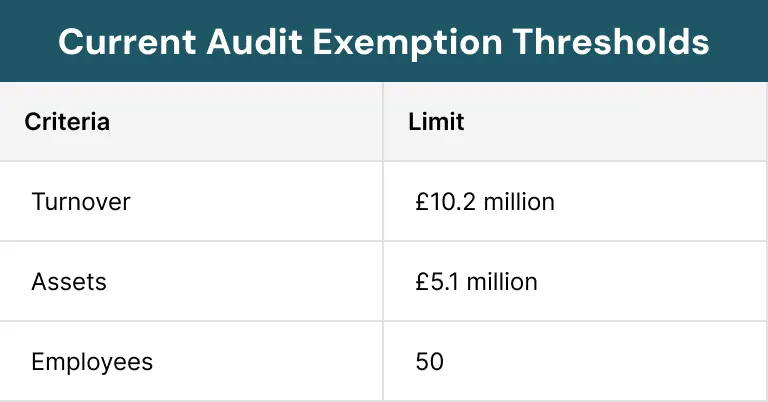
Have the Audit Exemption Thresholds Increased?
The rules of audit exemption in the UK have been updated over time. These changes affect the eligibility for old and new companies alike. More companies now qualify for the exemption due to higher limits. This supports the growth for small businesses.
Case Study: Audit Exemption in the UK
A UK based company, SwiftTech Solutions Ltd was expanding its client base and handling more contracts each year. Even though the company was still classed as small, it continued to undergo an annual statutory audit.
This caused a few challenges:
- Audit fees were becoming a financial burden
- The audit process slowed down the year-end reporting
- Staff had to spend extra time to preparing documents for auditors
Solution
The company reviewed the UK audit exemption rules under the Companies Act 2006. After they reviewed the rules, they found that:
- It was a private limited company, not publicly listed.
- It was not part of a regulated financial sector.
- It met the small company criteria for turnover, assets and staff numbers.
After evaluating the criteria, the company learned about its eligibility for audit exemption. ‘
Result
After switching to audit exemption:
- Year-end accounts were prepared more quickly.
- Internal teams focused more on client projects instead of audit work.
- The business improved its overall financial efficiency.
Conclusion
Understanding the audit exemption in the UK rules can help you save both time and money. If your company meets the eligibility criteria, you may not need to go through a full statutory audit each year. This helps to reduce admin work and allow you to focus more on business growth.
However, it is important to check the latest thresholds and make sure your company still qualifies for the exemption. By understanding the rules, you can stay compliant while making the most of the benefits that audit exemption offers.
At Sterling Cooper, our experts review the eligibility of your company and guide you throughout the process of audit exemption.
Not sure if your company qualifies for audit exemption?
Contact us today and let our experts assess your eligibility and guide you through the process.
FAQs
A company can usually claim audit exemption if it meets at least two of these three conditions: annual turnover of up to £15 million, a balance sheet total of up to £7.5 million, and an average of 50 or fewer employees.
In most cases, no. A company must normally meet the qualifying conditions for both the current and the previous financial year, although transitional rules apply for accounting periods beginning on or after 6 April 2025.
Yes. A company may still need an audit if its articles of association, shareholder agreements, or lender requirements demand one, or if shareholders holding at least 10% of the shares request an audit.
Yes, many small companies in the UK are exempt from a statutory audit if they meet the legal eligibility criteria. Generally, a company must satisfy at least two of the three small company thresholds and comply with the relevant audit exemption rules
Yes, some subsidiaries can qualify for audit exemption if they meet the relevant legal requirements, such as being covered by a qualifying parent company guarantee under the applicable UK regulations.
Recent Posts