Posted by:
Admin
Date:
June 1, 2026
Category:
blogs
Missed the Self Assessment Deadline? Here is a Complete Guide
Missing the self assessment deadline can be stressful, especially when you start worrying about the penalties of HM Revenue and Customs (HMRC).
Many taxpayers miss the deadline every year due to their busy schedules or personal issues. The good news for you is that missing the self assessment deadline does not mean serious trouble.
According to HMRC in the 2024/25 tax year, around 1 million taxpayers missed the Tax Self Assessment deadline after the filing date which was 31 January 2026.
In many cases, working quickly and understanding the HMRC rules can help you to reduce penalties.
Whether you are self-employed, freelancer or someone with untaxed income, It is important for you to know what steps to take next.
This guide explains everything in simple terms, including penalties, late payments and how to submit your tax return.
Key Takeaways
- Missing the 31 January filing deadline can result in an automatic £100 HMRC penalty, even if no tax is owed.
- Late tax payments can lead to additional penalties and daily interest charges, making the overall debt much higher over time.
- HMRC may not charge penalties if you have a reasonable excuse such as serious illness, bereavement, or technical issues.
- Registering late but paying all tax owed before the payment deadline may reduce or remove certain failure to notify penalties.
- A Time to Pay agreement can help taxpayers spread their tax bill into monthly installments if they cannot pay in full.
- Keeping accurate financial records, setting reminders, and filing early can help avoid stress and future HMRC penalties.
What Is Self Assessment and Why Does HMRC Require It?
Understanding the self assessment deadline is important to avoid penalties from HMRC.
Self Assessment is the system HMRC uses to collect Income Tax. It is mainly used by self-employed workers, freelancers and people with extra untaxed income.
This system helps HMRC to understand how much income you earned during the tax year. You must report your earnings, expenses and other taxable income correctly to avoid penalties.
Many people think Self Assessment only applies to business owners. But in reality, anyone with untaxed income may need to complete a tax return.
Filing your Tax Return on time is important because HMRC can charge penalties due to late filing. To avoid this you must have to stay organised throughout the year.
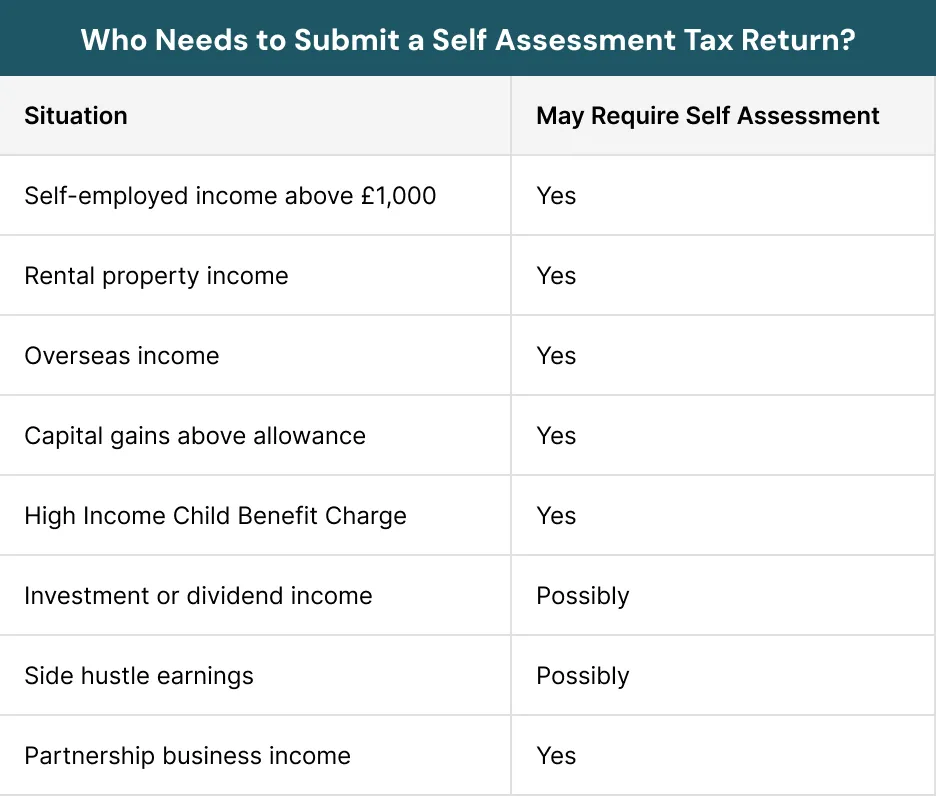
Who Needs to Submit a Self Assessment Tax Return?
People with untaxed income should stay aware of the self assessment deadline each year.
If you are self-employed and earn more than 1,000 pounds before expenses then you usually need to file a Self Assessment return. Business partners may also need to file the tax returns each year.
People with foreign income, capital gains or investment income may also follow the Tax Self Assessment deadline rules.
Some other people who may need to file the Self Assessment include:
- Self-employed
- Freelancers and contractors
- Landlords with rental income or overseas income
- Company directors with untaxed income
What are the Common Types of Untaxed Income?
Untaxed income can come from many different sources.Freelance work, rental income and overseas earnings are common examples that you must have to report to HMRC.
Online selling platforms and gig economy jobs are also examples of untaxed income. Many people now earn extra money through apps, marketplaces and social media platforms.
Even small amounts of side income can become taxable if they go above HMRC limits. Keeping proper records throughout the year can help you to understand your tax position.
Pro Tip:
If you are unsure whether your income is taxable, speaking to an accountant can save time and prevent future issues with HMRC.
HMRC Self Assessment Deadline for 2025/26
Deadlines of HMRC are very important because missing them can lead to automatic penalties. If you want to prepare your documents properly then you should know the dates in advance.
Many people leave their tax return until January and then rush through the process. This increases the chance of errors.
Knowing the self assessment deadline in advance can help taxpayers stay organised. Planning early helps to reduce stress and gives you time to deal with unexpected problems.
Keep reminders on your phone or calendar to stay organised throughout the tax year.
1. Registration Deadline
If you need to complete a Self Assessment for the first time, you must have to register with HMRC by 5 October 2026 for the 2025/26 tax year.
For the 2025/26 UK tax year which ends on 5 April 2026, for paper returns the Self Assessment deadline is 31 October 2026 and 31 January 2027 for online filing and tax payments.
Key 2025/26 Self Assessment Deadlines:
- Registration Deadline: 5 October 2026 (for new registrations).
- Paper Return Deadline: 31 October 2026
- Online Return Deadline: 31 January 2027.
- Payment Deadline: 31 January 2027 (including balancing payments and first payment on account).
Pro Tip:
You should not leave registration until the last minute. HMRC needs time to issue your Unique Taxpayer Reference number and online account details.
2. Paper Return Deadline
You must submit the Paper Tax Returns by 31 October to HMRC. This deadline is earlier because paper forms take time for HMRC to process.
Paper returns are still useful for some taxpayers who prefer traditional methods. However, online filing helps to provide quicker confirmation.
If you miss the paper deadline then you must submit your return online.
3. Online Filing Deadline
The deadline of online filing is 31 January 2027 for the 2025/26 tax year. If your return is late even one day then HMRC can issue the penalty of £100 . The fine applies even if no tax is owed.
January is often a busy month for accountants and HMRC systems. But if you are filing early then it can help you to avoid technical problems.
Submitting your tax return early also gives you more time to arrange payment if you owe tax.
4. Tax Payment Deadlines
The deadline to pay your tax bill is also 31 January 2026. This includes both your first payment on account and balancing payment.
A second payment on account is due by 31 July 2027. If you miss the payment deadlines then it can lead to additional penalties.
Missing those Tax self assessment deadlines may lead to additional penalties and interest charges.
The best way to avoid financial pressure when tax deadlines arrive, is to manage the money throughout the year.
What Happens If You Miss the Registration Deadline?
Missing the registration deadline does not mean you will receive an immediate penalty.
But if you delay registering then you may face a difficult situation. HMRC may also question why the delay happened.
Taking action quickly is very important. Registering late but filing and paying on time can help to reduce penalties.
Failure to Notify Penalties Explained
Failure to notify penalties are based on how much tax remains unpaid.The penalty depends on something HMRC calls “potential lost revenue”.
This means the amount of tax HMRC believes was unpaid because you failed to register.
The penalties can become much higher If HMRC believes that you intentionally ignored your responsibilities.
When HMRC May Not Charge a Penalty?
If no tax was actually owed then HMRC may not charge a penalty. This can happen when you register late but still pay everything on time.
If you had a reasonable excuse and contacted HMRC without unnecessary delay then you may also avoid penalties.
Reasonable excuses include serious illness or unexpected events outside your control but still evidence may be required to support your case.
Pro Tip:
It is always better to contact HMRC early rather than wait for them to contact you first.
What are Late Filing Penalties?
When your return tax is submitted after the deadline then late filing penalties must be applied. But remember these penalties are separate from late payment penalties.
Many taxpayers are surprised to know that they can still receive penalties even if they already paid their tax on time.
Late filing penalties increase when the self assessment deadline is ignored for a long time.
The longer your return tax remains due, the larger penalties you face. This is why filing as soon as possible is important.
In many cases, HMRC applies penalties automatically. Appeals are possible, but you must have to provide the right evidence.
1. The Initial 100 pounds Fine
If your return tax is late, even by one day then HMRC charges an automatic £100 penalty. This applies whether tax is owed or not.
The fine is fixed and does not depend on your income level. Many people receive this penalty because they forgot the deadline.
This first penalty is often the beginning of bigger problems. After missing the deadline you should submit your return tax quickly to stop further penalties.
2. Daily Penalties After Three Months
After three months if your tax return is still late then HMRC will charge daily penalties. The charge is usually £10 per day for up to 90 days.
Many taxpayers underestimate how quickly penalties can grow. Delays can eventually become very expensive. That’s why filing your tax return as soon as possible helps to stop these daily penalties.
3. Six-Month and Twelve-Month Penalties
After six months HMRC adds another penalty of £300 or 5% of the unpaid tax. After twelve months if the tax return is still outstanding then another similar penalty may apply again.
Long-term delays of tax return may also increase the chance of HMRC investigations or enforcement action.
Late Payment Penalties and Interest Charges
When tax is not paid till the deadline then late payment penalties apply but HMRC also charges interest on unpaid balances from the first late day. Interest can continue increasing until the full amount is paid.
Some taxpayers focus only on filing the return and forget about payment deadlines. Both you have to think that filing and payment are equally important.
If you contact theHMRC early then it can help to reduce pressure and avoid further enforcement action.
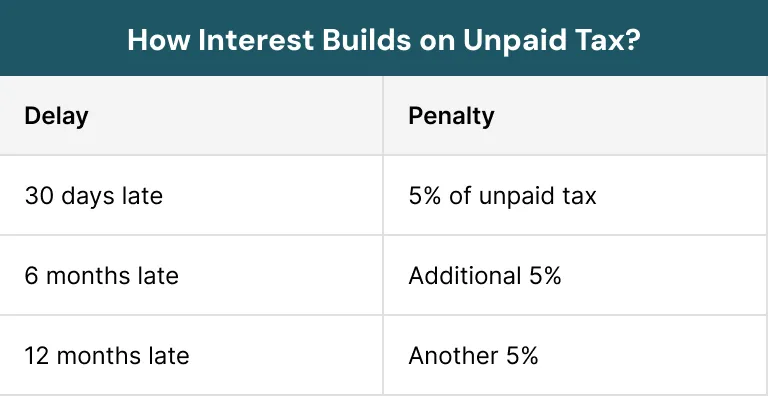
How Interest Builds on Unpaid Tax?
HMRC can charge the interest daily on overdue tax bills. This means your debt will slowly increase by every single day until you make payment.
You should have to understand that Interest charges are separate from penalties, so both can apply at the same time.
The combined cost of penalties and interest can become difficult to manage if tax remains unpaid for months.
Payments on Account
Payments on account are advance payments towards your next tax bill. Many self-employed people are shocked by these payments during their first few years of the business.
You are usually asked to pay half in January and the other half in July. Saving money on a monthly basis for tax can make payments on account much easier to manage.
What are the Reasonable Excuses Accepted by HMRC?
HMRC understands that emergencies can prevent you from meeting self assessment deadlines. This is why reasonable excuses rules exist.
If you have a reasonable excuse, you can appeal against a Self Assessment for late filing penalty. There are some excuses accepted by HMRC following:
- Serious illness or hospital stay
- Death of a close relative
- Technical issues with HMRC systems
- Unexpected disability-related delays
- Major personal emergencies
Which Excuses HMRC Usually Reject?
HMRC normally rejects excuses such as forgetting the self assessment deadline or being too busy with work. Problems like poor planning or lack of knowledge about the system are also rejected.
Blaming an accountant or another person does not remove your responsibility as the taxpayer. You should have to set reminders and stay organised to avoid these situations.
There are some excuses which HMRC rejects including:
1. Financial Excuses
- I couldn’t afford to pay the tax
- My cheque bounced or payment failed
- I was too busy with work
- I didn’t receive a reminder letter
- I didn’t know the deadline
- I forgot to file
2. Technical and Practical Excuses
- I found the HMRC online system too difficult to use
- I couldn’t get a file to upload
- I left it to my accountant and they didn’t do it
How to Appeal a Self Assessment Deadline Penalty?
If you believe that penalty is unfair then you have the right to appeal a Tax self assessment deadline penalty. In this case HMRC provides a formal process for taxpayers to explain their situation.
One more thing is that if you miss the self assessment deadline, you should act quickly to appeal penalties.
When you give strong evidence and clear explanations then your appeals get more successful results. Ignoring a penalty notice is not a good idea because deadlines for appeals are very strict.
Did you know?
Getting advice from an accountant can improve your chances of a successful appeal.
What is the 30-Day Appeal Window?
Most Self Assessment deadline penalties must be appealed within 30 days of the notice being issued. Missing the appeal deadline can make it harder to challenge in future.
You have to understand that HMRC may still accept late appeals in special circumstances but approval is not guaranteed. Acting quickly helps you to resolve the issue successfully.
Which Evidence You May Need for Appeal?
HMRC may ask for documents which support your appeal. This could include medical records, screenshots or official letters.
Good evidence helps you to prove that your excuse was genuine and outside your control. Clear explanations and organised paperwork also improve the outcome of appeals.
Remember if you provide incomplete or unclear information then it can make your case weak.
What to Do If You Cannot Pay Your Tax Bill?
If you can not pay your tax bill then the important thing is to contact HMRC rather than ignore the problem. If you explain your situation honestly, HMRC may be willing to discuss payment options with you.
Waiting too long can cause high penalties, interest and also enforcement action. But speaking to an accountant can help you to understand the best way forward.
What is Time to Pay Agreements?
A Time to Pay agreement allows taxpayers to pay the tax on monthly installments. This can help to manage the large tax bills.
if you contact HMRC before missing the payment deadline then HMRC is more likely to approve an agreement
What HMRC Will Ask About Your Finances?
HMRC may ask detailed questions about your income, spending, savings and also household costs. Before agreeing to installment payments they want to understand your financial position.
During these discussions you should give honest and accurate information for agreement approval.
If you have bank statements and also financial records then it can help to make the process easier.
Read more: New HMRC Interest Rates Explained
How does HMRC Enforcement Action work?
HMRC has strong powers to recover unpaid tax when taxpayers ignore the warnings. Most cases do not reach this stage but it can happen.
Enforcement action is usually more serious when large debts remain unpaid for long periods. In this case HMRC may take money directly from bank accounts or use court action in several cases.
Remember that business owners may also face bankruptcy if debts continue growing.
How to Submit a Late Self Assessment Tax Return?
If your tax return is already late then the best thing you can do is submit it as quickly as possible.
The first step is to register for Self Assessment if you have not registered.Once registered then you can complete your return online through your HMRC account.
If you keep the records organised it can make late filing much easier and also reduces mistakes.
In some cases some taxpayers may need professional help if several years of tax returns are outstanding.
In this case an accountant can help to calculate penalties, correct errors and also communicate with HMRC on your behalf.
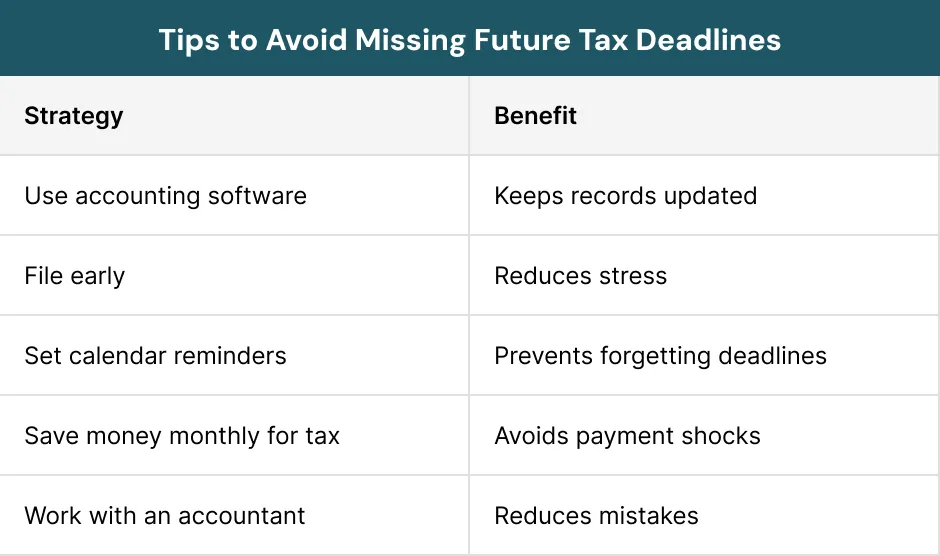
Practical Tips to Avoid Missing Future Tax Deadlines
The easiest way to avoid tax problems is that you should keep your records organised. This simple habit can save a lot of money.
Many taxpayers miss self assessment deadlines because they leave everything on the last day. That’s why filing early can help to give you more time to prepare documents and plan for payments.
In this process using reminders and accounting software can make the process much simpler.
Did you know?
Creating a separate savings account for tax is also a smart idea.
Conclusion
Self Assessment deadlines are very important because if you miss them then it can lead to penalties and interest charges.
Registering on time, filing correctly and paying tax before the deadline can help you to avoid problems. Even if you miss a deadline, acting quickly can often reduce penalties.
Proper planning can help taxpayers avoid missing the Tax self assessment deadline in future.
Remember that HMRC is usually more supportive when taxpayers communicate honestly with them.
If you ignore warnings then it can create bigger financial problems in future. Staying organised and keeping proper records can help to make Self Assessment much easier.
At Sterling Cooper, we know the importance of the Self Assessment deadline. Our team is available to help you throughout the process.
Missing the Self Assessment deadline can lead to penalties and stress.
Contact us today and let our professionals help you complete the process smoothly.
FAQs
You must usually register by 5 October following the end of the tax year in which you earned taxable income.
HMRC normally charges an automatic £100 penalty, even if you do not owe tax.
Yes, you can appeal if you have a reasonable excuse such as illness, bereavement, or technical problems.
A Time to Pay agreement allows you to pay your tax bill in installments instead of one large payment.
Yes, HMRC charges daily interest on unpaid tax until the full amount is paid.
The first payment on account deadline is 31 January, and the second payment deadline is 31 July each year.
Recent Posts