

Posted by:
Admin
Date:
April 14, 2026
Category:
blogs
How Financial Planning Helps You Achieve Financial Freedom
Does it feel overwhelming when you don’t save anything by the end of each month?
Paying bills month after month takes a toll on your earning. It also affects your long term goals and financial freedom. This is where financial planning plays a vital role. It allows you to understand the current financial conditions and how to fulfil your plans.
The UK Office for National Statistics published a report in 2023, stating about 16% of adults could not save at all. This shows how financial pressure keeps on increasing with time.
Key Takeaways
- Financial planning gives structure and direction to your money
- Financial freedom is about control, not just wealth
- Small and consistent actions lead to long term results
- Managing risk and debt is key to protecting your progress
- Reviewing your plan regularly keeps it effective
- A clear plan reduces stress and improves decision making
Financial Planning Explained
Financial planning means using your money to get to your life objectives. Earning enough money is one thing and managing it wisely is another. Picture it as a roadmap, which will lead you to financial freedom more efficiently. It includes:
- Budgeting
- Saving
- Investing
- Preparing for risks
What Financial Freedom Looks Like
Financial freedom is different for different people. The key point is control. Financial planning advice helps you gain that control step by step. For some, it means:
- No debt
- Stable savings
- Flexible work choices
For others, it may mean:
- Early retirement
- Business independence
- Vacation trips
Financial Freedom Feeling Difficult
Lack of a financial framework for financial management causes the financial freedom out of reach. Many rely on income alone and others save without a goal. Some invest without understanding risk.
These issues build over time. Even a good income may not result in financial stability without direction. These gaps cause misunderstanding and postpone progress. Common challenges include:
- Irregular saving habits
- Poor budgeting
- Lack of long term goals
- Unknown expenses
- Limited understanding
- Poor planning and analysis
Financial Planning for Life Goals
Planning works best when it lines up with what you actually want out of life, not just your bank account. It comes down to your values and what matters most to you. It is not all about making more money. It involves creating a life that feels meaningful and balanced. You can focus freely on what truly matters, like:
- Spending more time with family
- Having flexibility in your career
- Enjoying life experiences rather than just collecting assets
The Key Elements of a Financial Plan
A strong financial plan is built on a few simple parts.
1. Budgeting
Budgeting helps you stay on top of your spending. It shows you exactly what you make and how you are spending it. If you do not have clear budgeting procedures, it is easy to overspend.
2. Saving
If you save money it helps you with unexpected expenses such as car repairs and medical problems. It is like making a safety net for oneself. Even small savings might add up over time.
Do not save what is left after spending, but spend what is left after saving.
– Warren Buffett, Chairman and Former CEO of the Conglomerate Berkshire Hathaway
3. Investing
Investing carries some risk, but it can also provide significantly higher returns than simply conserving your money. Understanding risk is an important aspect of planning which helps to grow savings.
4. Risk Management
Risk management ensures that one setback does not undo your progress and protects your finances. Risk management includes:
- Life insurance to support your family financially
- Health insurance to manage medical costs
- Income protection to cover loss of earnings
- Disability cover for long term financial security
5. Tax Planning
Tax planning helps you use more of your income for yourself. Applying UK tax rules correctly can help avoid unwanted payments.
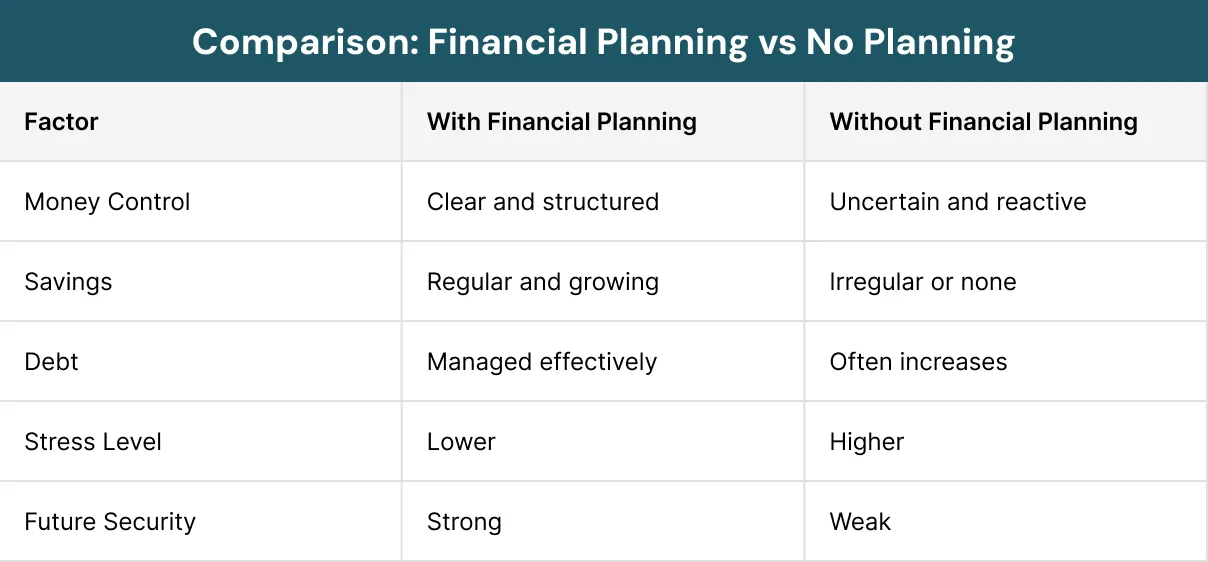
Financial Plan Review
Regular reviews keep your financial plan effective. If a financial plan is not checked regularly, it may become a mess. A good approach is to review:
- Monthly: Check spending and budget
- Quarterly: Review savings and investments
- Yearly: Adjust long term goals
Major life events require changes as well, such as:
- Starting a business
- Buying a home
- Changes in income
Inflation and Financial Plan
Inflation eats away at your money’s value as time goes on. If you do not pay attention to it, reaching financial freedom gets harder. It is one of the biggest reasons why investing is part of planning. To manage inflation, one must:
- Review savings regularly
- Consider long term investments
- Adjust your budget as costs rise
Managing Debt
Having debt is not always a bad thing, but you really need to handle it carefully. Paying off your debts sooner will generally put you in a better financial spot in the long run.
High interest debt can slow financial progress. It reduces your ability to save and invest. Good planning helps you to:
- Prioritise debt repayment
- Avoid unnecessary borrowing
- Balance debt with savings
Staying Consistent
Small habits create long term results. Missing one step is not a failure but stopping completely is one. Many people put off financial planning advice because they are waiting to create the perfect plan.
But in reality, just sticking with it is way more important than trying to make it perfect. Simple actions can lead you to financial freedom like:
- Saving monthly
- Reviewing expenses
- Adjusting goals
Finances Affecting Mental Health
Not knowing what to do with your money can really cause worry and financial stress can affect your everyday life. If you do not have a plan, even little costs can feel huge. Financial planning gets better when you:
- Create clarity
- Reduce uncertainty
- Build confidence in decisions
When your finances are organised, your stress levels often reduce. Research from the Money and Pensions Service UK shows that financial wellbeing is closely linked to mental wellbeing.
Life Stage and Financial Planning
In your early career, the focus is usually on budgeting and saving. Later, investing and asset growth become more important. As retirement approaches, protecting wealth becomes the priority.
Your planning approach changes as your life evolves. Understanding this helps you apply your plan more effectively. Each stage requires a different strategy such as:
Initial Stage
One should build the habits early in life. These small steps lay the foundation of a better future. This includes:
- Budgeting
- Avoiding unnecessary debt
- Persistently saving little sums
Mid Stage
Your financial responsibilities expand in tandem with your work advancement. This stage frequently includes:
- Family planning
- Property ownership
- Increased investment
Asset growth, risk management, and long-term financial stability are now the primary focus.
Later Stage
In the later stages, the focus changes to protecting what you have created. This includes:
- Protecting wealth
- Planning for retirement
- Controlling medical expenses.
The goal is to maintain financial security while generating a continuous revenue stream.
Financial Planning Helps to Stay in Control
Good planning gives you a clear structure. When you do it right, you do not have to guess where your money is going. You start making decisions with purpose instead of pressure and it helps you to:
- Track where your money goes
- Set your financial goals
- Reduce unnecessary spending
- Build savings steadily
- Prepare for future risks
This approach improves decision making and you start planning ahead. Financial planning and analysis help you understand your financial data. It involves:
- Tracking income trends
- Analysing expenses
- Forecasting future outcomes
When to Get Financial Planning Advice
Grave mistakes can be avoided if you take the advice early on. You might want to think about getting financial planning advice help when:
- You feel unsure about managing money
- Your income increases
- You start a business
- You plan for retirement
- You face complex financial decisions
How to Start
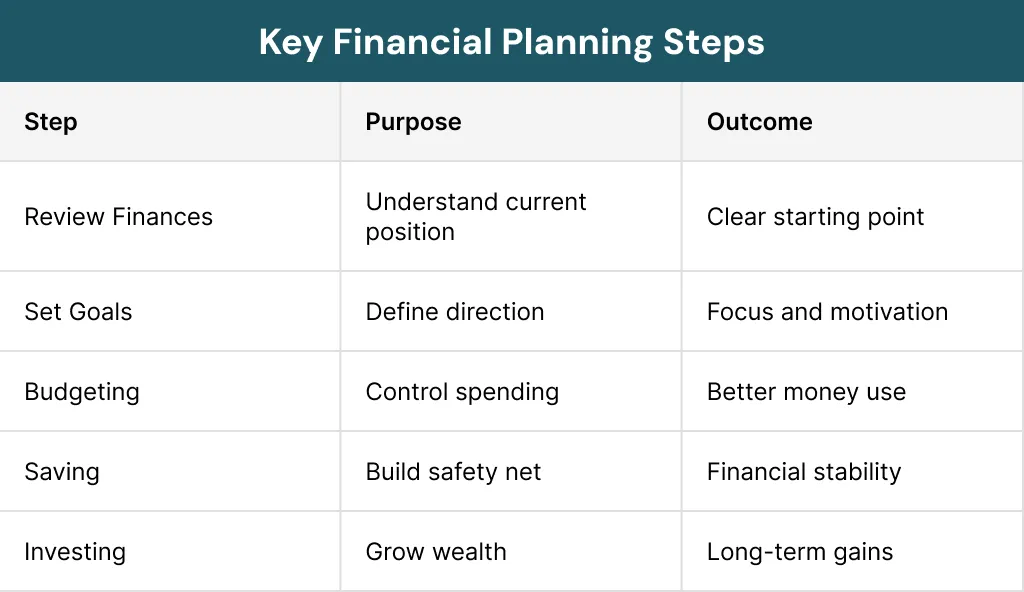
The first step in any planning is always difficult. Dividing your idea into smaller steps makes it much easier to execute. You can follow these steps such as:
1. Assess Your Current Situation
You can begin by reviewing your finances, which provides a clear beginning point. Look at your:
- Income sources
- Monthly expenses
- Existing savings
- Debts
2. Setting Your Financial Goals
Clear goals make financial planning more effective. You should understand what financial freedom is to you. Your goals may include:
- Buying a home
- Building retirement savings
- Starting a business
- Becoming debt free
3. Create a Smart Budget.
Create a simple budget based on your income and avoid the unnecessary spendings. Focus on:
- Essential expenses
- Savings allocation
- Discretionary spending
4. Keep an Emergency Fund
This really cuts down on money worries and keeps your plan safe. You should put aside money for things that pop up unexpectedly. Ideally, enough to cover three to six months of your living costs.
5. Start Investing Slowly
Learning slowly improves long term outcomes. Avoid rushing and begin with small investments. Understand:
- Risk levels
- Investment timelines
- Expected returns
6. Review and Change on a Regular Basis
Financial planning is not a one time effort. It requires regular reviews and adjustments every 3 to 6 months. It should also be updated after a big life event as well.
Mistakes to Avoid
Progress towards financial freedom is affected by common mistakes. Avoid issues such as:
- Ignoring budgeting completely
- Saving without clear goals
- Taking high risks without understanding them
- Delaying financial decisions
- Relying only on income growth
Limitations to Planning
Planning reduces risk, but it cannot remove it completely. Some limitations include:
- Market risks affecting investments
- Unexpected life events
- Changes in income
- Economic conditions
Signs Your Plan Works
Things might appear to go slowly at first. But if you stick with it, you will start to see actual effects. You will know your strategy is effective when:
- You are saving regularly
- Your debt is reducing
- Your investments are growing steadily
- You feel more in control of your finances
Digital Tools That Help
Thanks to technology, financial planning has gotten a lot simpler. These tools help you be more accurate and save a ton of time. They also make financial planning and analysis more accessible for beginners.
You can now track, save and invest using simple tools. Common tools include:
- Budgeting apps
- Investment platforms
- Expense trackers
- Tax calculators
Case Study
In 2008, Ford Motor Company showed its recovery from financial challenges during the crisis.
Before the crisis hit fully, Ford was already facing serious financial pressure. The costs were high and the company was at risk of running out of cash due to low sales. Many expected Ford to follow other car manufacturers into collapse.
However, Ford took a different approach. Under the leadership of Alan Mulally, the company focused heavily on structured financials. They introduced clear financial strategies such as:
- Strict cost control across operations
- Selling non core brands like Jaguar and Land Rover
- Focusing on fewer, more profitable car models
- Improving cash flow management
- Building strong financial reserves early
One of their smartest moves was getting secure by funding before the crisis got worse. That gave Ford a financial safety net when the market took a dive. As a result Ford:
- Avoided bankruptcy
- Did not require a government bailout unlike competitors
- Returned to profitability within a few years
- Improved investor confidence significantly
This situation clearly shows that planning is not just for individuals. The essential ideas remain the same whether it is a large organization or a single person.
A shaky financial spot might start feeling steadier when steps are laid out ahead of time. Good moves follow once timing improves.
Financial Freedom in a Nutshell
Financial planning helps lay the groundwork for becoming financially independent. As time goes on, taking these steps gives you independence.
Being financially free does not mean you are super rich. It just means you have control over your money and the choices you make with it. It allows you to:
- Live within your means
- Save consistently
- Invest wisely
- Handle financial risks
Key Point:
Financial freedom starts with small, consistent financial decisions.
Conclusion
Financial planning is not only about managing the numbers. It helps you to take better control of:
- Your money
- Future goals
- Better choices
- Ease of mind
A path laid out ahead keeps steps steady when everything else shifts. Staying at the helm grows simpler with direction in sight. Though money independence might need years, moving forward steadily through planning brings it closer without force.
Finding your way toward financial freedom grows easier when persistence meets knowledge, minus the weight of constant pressure.
Sterling Cooper helps both individuals and businesses manage their money clearly. Their services focus on:
- Structured planning
- Tax efficiency
- Business growth strategies
- Practical financial advice
Contact us today to make practical financial decisions.
If managing your finances feels confusing or overwhelming, it may be time to take a structured approach.
Get in touch today to build a financial plan that helps you stay organised, reduce stress and move closer to financial freedom.
FAQs
No, financial planning is useful for everyone. It helps manage money better regardless of income level and supports both small and large financial goals.
It is a good idea to review your plan every few months or when your income or expenses change. Regular reviews help keep your plan relevant.
Yes, many people start on their own using simple methods. However, professional guidance can help if your finances become more complex.
The first step is understanding your current financial situation. This includes your income, expenses, debts and savings.
Results depend on consistency. Some changes can be seen within a few months, while long-term goals may take years.
Recent Posts