Posted by:
Admin
Date:
April 9, 2026
Category:
blogs
Essential Bookkeeping Tips Every Small Business Should Follow
Struggling to track your business finances? Good bookkeeping brings clarity and control.
It is exciting yet challenging to run a small business. You may deal with customers or offer products or services. There is always work to do. Bookkeeping needs your attention.
Accounting is key to business stability and success. However, it often feels like a routine admin task. Small business bookkeeping practices are helpful in managing your finances.
Good bookkeeping is more than recording numbers. Understanding small business bookkeeping tips early can help you avoid costly mistakes. It helps you:
- Stay clear about your money
- Make better decisions
- Keep your business healthy
It turns confusion into clarity when done properly. This guide is all about practical bookkeeping for small business owners. It helps you feel confident now and plan ahead.
In the United Kingdom, more than 99% of all businesses are small businesses. This means millions of owners rely on good money management.
These tips help you manage your money. If you are wondering how to do accounting for a small business, this guide covers the essentials.
Key Takeaways
- Build consistent small business bookkeeping habits by recording transactions daily, reviewing weekly and generating monthly reports to stay accurate and stress free.
- Separate business and personal finances and record every transaction to maintain clear, reliable financial data for better decision making.
- Use accounting software to streamline small business bookkeeping, automate tasks and reduce errors while keeping real time visibility of your finances.
- Track cash flow, expenses and invoices closely to ensure steady income, avoid missed payments and maintain financial stability.
- Prepare for taxes early and review reports regularly to stay compliant, avoid penalties and use financial insights to grow your business.
Understanding the Role of Bookkeeping
Bookkeeping means recording and organising your money. This includes tracking:
- Money coming in
- Money going out
- Accurate records for reporting
Bookkeeping stores your financial data. Accounting uses this data to make decisions. You cannot have accurate accounts without good bookkeeping.
It gives you a clear view of your finances. Small business bookkeeping ensures accuracy and control. You can see how much you earn and spend. It also tells whether you make a profit or a loss.
This helps you make better decisions. That is why bookkeeping for small businesses is more than just record keeping.
Why Bookkeeping Matters for Small Businesses
Bookkeeping is key to financial health. A business runs in the dark without it. Effective small business bookkeeping keeps your business financially visible.
Good bookkeeping helps you to:
- Monitor cash flow
- Make sure you have enough cash
- Track profits and losses over time
- Prepare for taxes and meet legal requirements
- Identify trends and opportunities for growth
- Find errors or fraud
Following basic bookkeeping tips for small businesses helps avoid these risks. If you ignore your books, problems can grow quickly. You might miss bills or understate expenses. This could lead to an unforeseen tax liability. You may face fines for failing to file taxes.
Good record keeping brings you relaxation. It lets you focus on your business. It keeps your records accurate and up to date.
Keep Records Regularly and Consistently
Consistency is one of the most important small business bookkeeping tips. If you delay entries, the work becomes harder. This leads to more errors.
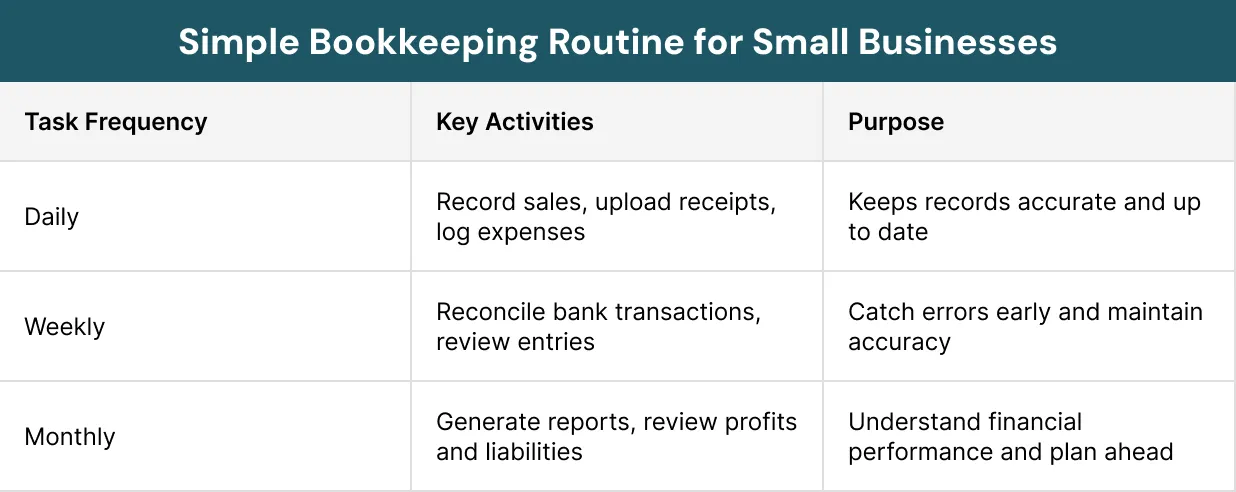
A better approach is to form a routine:
1. Daily tasks
Record or upload receipts as they happen.
2. Weekly tasks
Review and reconcile bank transactions.
3. Monthly tasks
Generate reports and review financial performance.
Spending a little time each week improves your bookkeeping. Give it the same attention as your clients.
This keeps your records accurate and avoids last minute stress. Good bookkeeping for small businesses relies on regular updates.
Record Every Transaction
Record every transaction, no matter how small. This includes income, costs and transfers. Accuracy in small business bookkeeping depends on recording every detail.
Each record should include:
- The date of the transaction
- The amount
- The purpose or description
Accurate records help you track your money and check past transactions. They also provide proof for tax claims and compliance.
Small transactions may seem unimportant, but they add up over time. These can affect your overall financial position. Recording everything in detail will help avoid errors.
Separate Business and Personal Finances
Many small business owners make the mistake of using personal funds for business. It can cause confusion, errors and problems when you prepare financial reports or tax returns.
Keep your accounts like your conscience: clear and honest
– Benjamin Disraeli, former prime minister of the UK
Open a dedicated business bank account. This is a basic rule of small business bookkeeping. This allows you to:
- Clearly track business transactions
- Make reconciliation easier
- Keep accurate records
- Present a more professional image
If you use personal money, record it properly and pay yourself back. You should separate your personal and business finances to stay organised.
Choose the Right Accounting Method
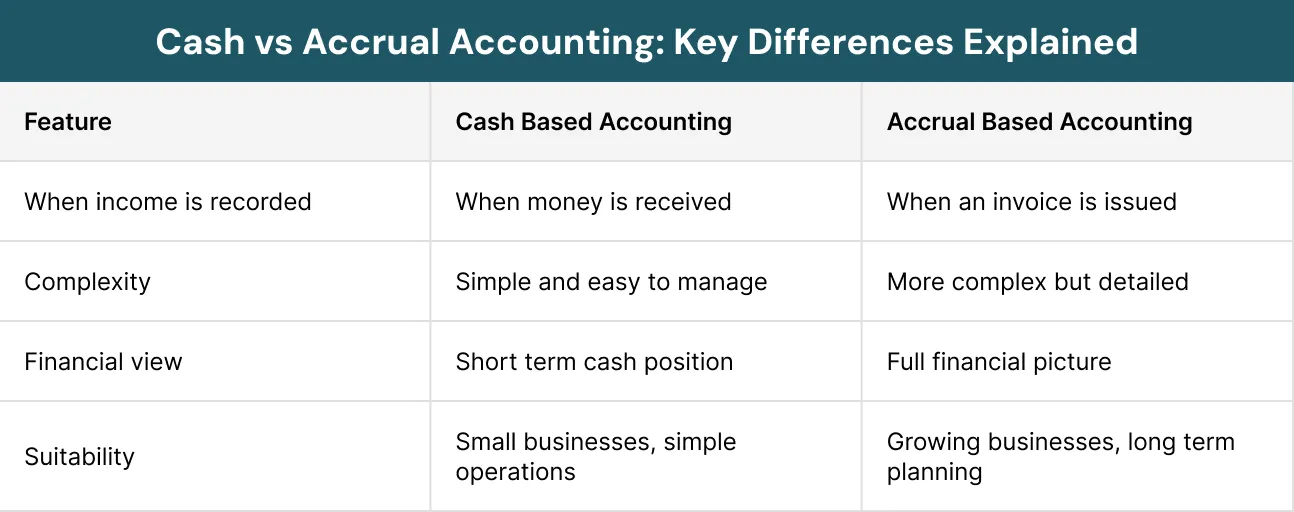
The small business bookkeeping system depends on the method you choose. The two main methods are:
1. Cash Based Accounting
This approach involves recording income and expenses when they happen. This system is simple and shows your cash flow clearly. It suits small businesses.
2. Accrual Based Accounting
This method records income when you issue an invoice. It records expenses when they occur, even if you have not paid yet. It gives a complete picture of your finances but is more complex.
The business size, structure and goals help in choosing the right accounting method. Choose early, as switching later may be challenging. This decision directly affects how well you manage bookkeeping for small businesses.
Read more on accounting and bookkeeping: What is the difference between bookkeeping and accounting?
Use Accounting Software and Technology
Technology makes modern bookkeeping much easier. Modern tools are transforming small business bookkeeping. Accounting software can automate tasks and reduce mistakes.
The main benefits of using software include:
- Automatic bank feeds
- Real time financial updates
- Invoice tracking
- Expense classification
- Financial reporting
Cloud based systems let you access your data at any time. They also keep your records up to date.
Software makes the process simple and even with tools, you still need to review your records. You should regularly review your records to make sure everything is correct.
Stay on Top of Expenses and Invoices
Managing invoices and expenses helps you maintain healthy cash flow. This is one of the most practical small business bookkeeping tips.
1. Expense Tracking
- Record all expenses as they occur
- Keep receipts as proof for tax purposes
- Sort expenses clearly
- Track mileage and other claimable costs
2. Invoice Management
- Send invoices promptly
- Include clear payment terms
- Monitor due dates
- Follow up on late payments
Sending out invoices on time ensures that payments come in quickly. Timely follow ups save you from long delays in payment.
Quick Fact:
Small costs add up. Track every penny or lose profit.
Reconcile Your Accounts Regularly
Reconciliation means matching your records with your bank statements. Regular checks are essential in small business bookkeeping.
Reconciliation should be done regularly; weekly or monthly is best. It helps you:
- Identify errors or missing transactions
- Detect duplicate entries
- Ensure accuracy in your records
Skipping reconciliation can cause errors and financial issues.
Create Financial Reports
Regular reports show how your business is doing. These are key outcomes of effective bookkeeping for small businesses. You need to have at least:
- Profit and loss statement: Shows income, expenses and profit
- Balance sheet: Shows assets, liabilities and overall financial position
These reports help you understand how well your business is doing. They help identify areas that require improvement. Regular review of these reports helps you make good decisions for the future.
Manage Cash Flow Effectively
Cash flow is the lifeblood of any business. Poor cash flow can hurt even profitable companies.
To maintain good cash flow:
- Monitor incoming and outgoing payments
- Chase overdue invoices promptly
- Pay bills on time
- Plan for upcoming expenses
Understanding your cash flow helps you cover your expenses.
Quick Tip:
Cash flow matters more than profit. Your business needs cash to survive day to day.
Prepare for Tax Obligations Early
The most critical part of bookkeeping is tax compliance. Good small business bookkeeping makes tax work easier. There can be stress, errors and penalties if you leave tax preparation to the last minute.
To stay prepared, you should:
- Keep all records organised and up to date
- Estimate your tax liabilities regularly
- Set aside funds for tax payments
- Be aware of deadlines
UK small businesses spend about £25 billion per year on tax compliance. Each firm spends about 44 hours every year on tax related matters.
Good bookkeeping makes it easier to fill out your tax forms and reduce errors. It also ensures that all available reliefs are claimed.
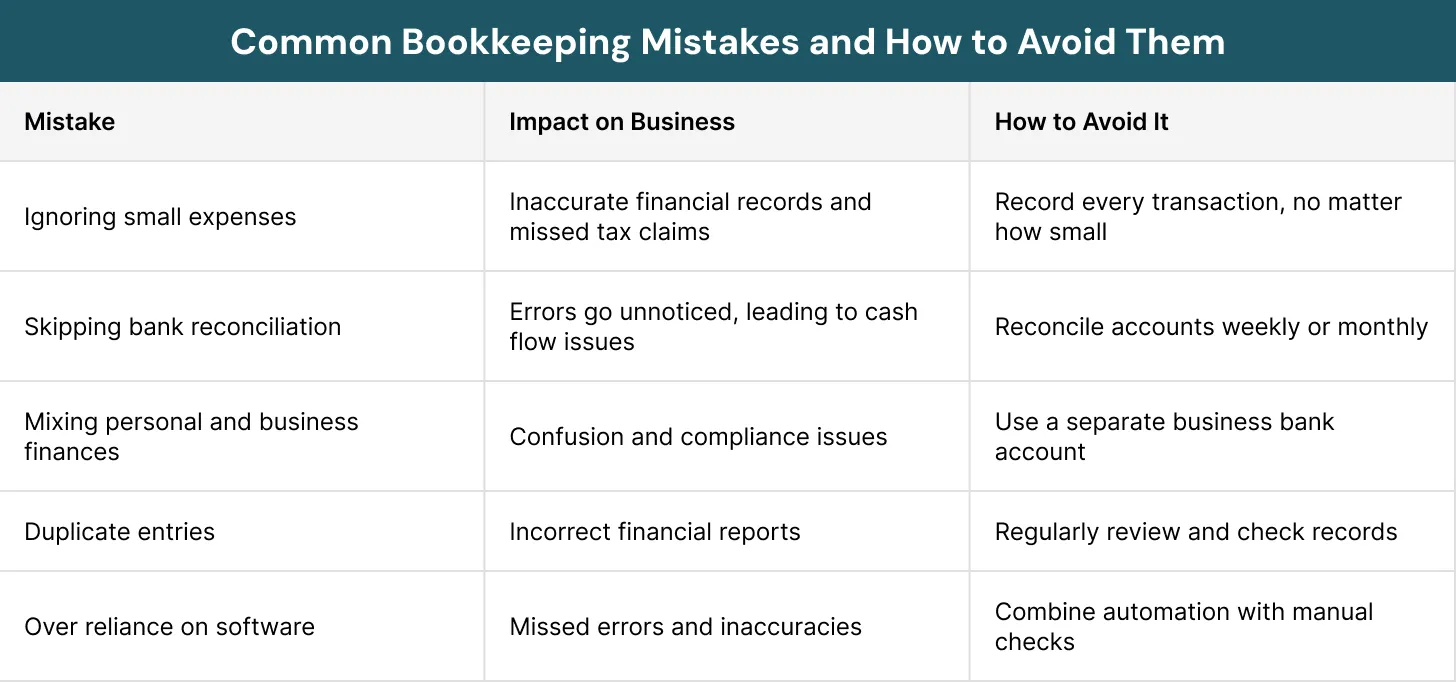
Avoid Common Bookkeeping Mistakes
The books may be inaccurate due to the following common errors:
- Ignoring small transactions
- Failing to reconcile accounts
- Entering data incorrectly or twice
- Mixing personal and business finances
- Relying entirely on software without review
Fix these errors early to keep your records accurate.
Build a Routine That Works for You
Set up small business bookkeeping processes that suit you.
Pro Tip
Review your numbers weekly, not yearly. Small checks prevent big problems.
A good routine should:
- Fit into your schedule
- Be easy to maintain
- Cover all essential tasks
Consistency is better than complexity. The record keeping process can remain simple even if a small amount of time is allocated weekly.
Know When to Outsource
Bookkeeping can become complex as your business grows. You may need to outsource at this point.
A professional can:
- Save time
- Reduce errors
- Provide expert insights
- Ensure compliance
Outsourcing allows you to focus on your work while experts manage your finances.
Use Financial Data to Make Decisions
Small business bookkeeping is not just about recording transactions. It is about using that information to improve your business.
Your data helps you:
- Identify profitable areas
- Spot underperforming activities
- Plan investments
- Set realistic goals
Study your records to make better decisions. This supports growth and long term success.
Real Life Example
A small retail business in the United Kingdom struggled to manage its money. The business had several credit cards and one bank account. It also used PayPal. The company’s books were mixed up.
Some invoices were missing or entered incorrectly. This made VAT returns inaccurate. Supplier files had many duplicate entries. Poor organisation made the data unreliable.
The business hired a bookkeeping service for the daily management of accounting tasks. All bank accounts were reconciled and the team corrected supplier mistakes. They also properly added PayPal into the system.
They also developed an automatic tool that captures supplier invoices and expenses. This greatly reduces errors and saves time. This means the firm can now:
- Regain proper financial visibility
- Prepare VAT returns accurately
- Make better decisions based on accurate data
This enables the business owner to focus on growth, instead of searching for invoices or fixing errors.
Conclusion
Small business bookkeeping may not be exciting, but it is essential for long term success. It supports stability and growth.
You can make bookkeeping a powerful asset by ensuring that:
- You keep proper records
- You have a regular schedule
- You have appropriate tools
- You audit your records periodically
Good bookkeeping gives you control, less stress and more time to grow your business.
Good bookkeeping is more than a task. It supports your decisions and helps your business grow with confidence.
Using these small business bookkeeping tips will help you stay organised and ready to grow.
At Sterling Cooper Consultants, we know it can be hard for small firms to manage their accounts. Get in touch with us for advice.
Struggling to manage your bookkeeping?
Sterling Cooper Consultants help you stay organised, compliant and in control with expert support. Contact us today for reliable and accurate financial management.
FAQs
The best way is to stay organised and consistent, using cloud accounting software like Xero or QuickBooks. Keep personal and business finances separate, reconcile regularly and track income and expenses in real time. This ensures accurate records and informed business decisions.
Common mistakes include mixing personal and business finances, failing to record every transaction, missing tax deadlines and neglecting regular reconciliations. These errors can lead to cash flow issues and inaccurate financial reporting.
The golden rule of bookkeeping is to always record every transaction accurately and on time, ensuring your books reflect the true financial position of your business. This helps in making informed decisions and staying compliant with tax regulations.
For small business bookkeeping, keep personal and business accounts separate, track every transaction and reconcile accounts regularly. Use suitable accounting software and set a weekly routine. Outsource or consult an accountant when needed to ensure accuracy and make informed financial decisions.
To do accounting for a small business, start by recording all income and expenses accurately using accounting software or spreadsheets. Choose a suitable accounting method, cash or accrual and reconcile your accounts regularly. Generate monthly reports to track cash flow, profits and liabilities and seek professional advice when needed to ensure compliance and informed decision making.
Recent Posts

How to Build a Cash Reserve for Business Stability
August 11, 2026

How to Forecast Cash Flow During Economic Uncertainty
August 6, 2026