
Posted by:
Admin
Date:
February 11, 2026
Category:
blogs
What Is Workforce Analytics and Why Is It Essential for Modern HR?
HR teams have access to more workforce data than ever, from recruitment and turnover to employee performance and engagement. This data can reveal what is happening across an organisation, but collecting it is only the first step. The real value comes from understanding what the data means and using it to make better decisions.
This is where workforce analytics comes in. Workforce analytics helps HR teams turn employee data into useful insights, identify trends and make more informed decisions about people and planning. As businesses face changing skills needs, shifting employee expectations and evolving workforce demands, data can provide a stronger basis for HR decisions.
So, what is workforce analytics and why is it essential to modern HR? This guide explains how it works, where it can support HR teams and how organisations can use workforce data more effectively.
Key Takeaways
- Workforce analytics turns workforce data into insights that support HR and business decisions.
- Descriptive, diagnostic, predictive and prescriptive analytics answer different workforce questions.
- Analytics can support recruitment, retention, workforce planning and employee development.
- Reliable and consistent data is essential for producing useful workforce insights.
- Clear business goals help HR focus analytics on meaningful questions and measurable outcomes.
- Privacy, data quality and potential bias should be considered when using workforce analytics.
What Is Workforce Analytics?
Workforce analytics is the process of collecting and analysing workforce data to understand how people, teams and workforce processes perform. It uses information from areas such as recruitment, attendance, performance, engagement, retention, skills, and workforce costs to give HR teams a clearer view of their workforce.
Rather than simply reporting figures such as turnover, absence or time to hire, workforce analytics helps HR explore what those figures may indicate. By identifying patterns and trends, HR teams can use data to investigate workforce issues, support planning and make more informed decisions.
The type of analysis used depends on the question HR needs to answer. This is where the different types of workforce analytics come in.
Types of Workforce Analytics
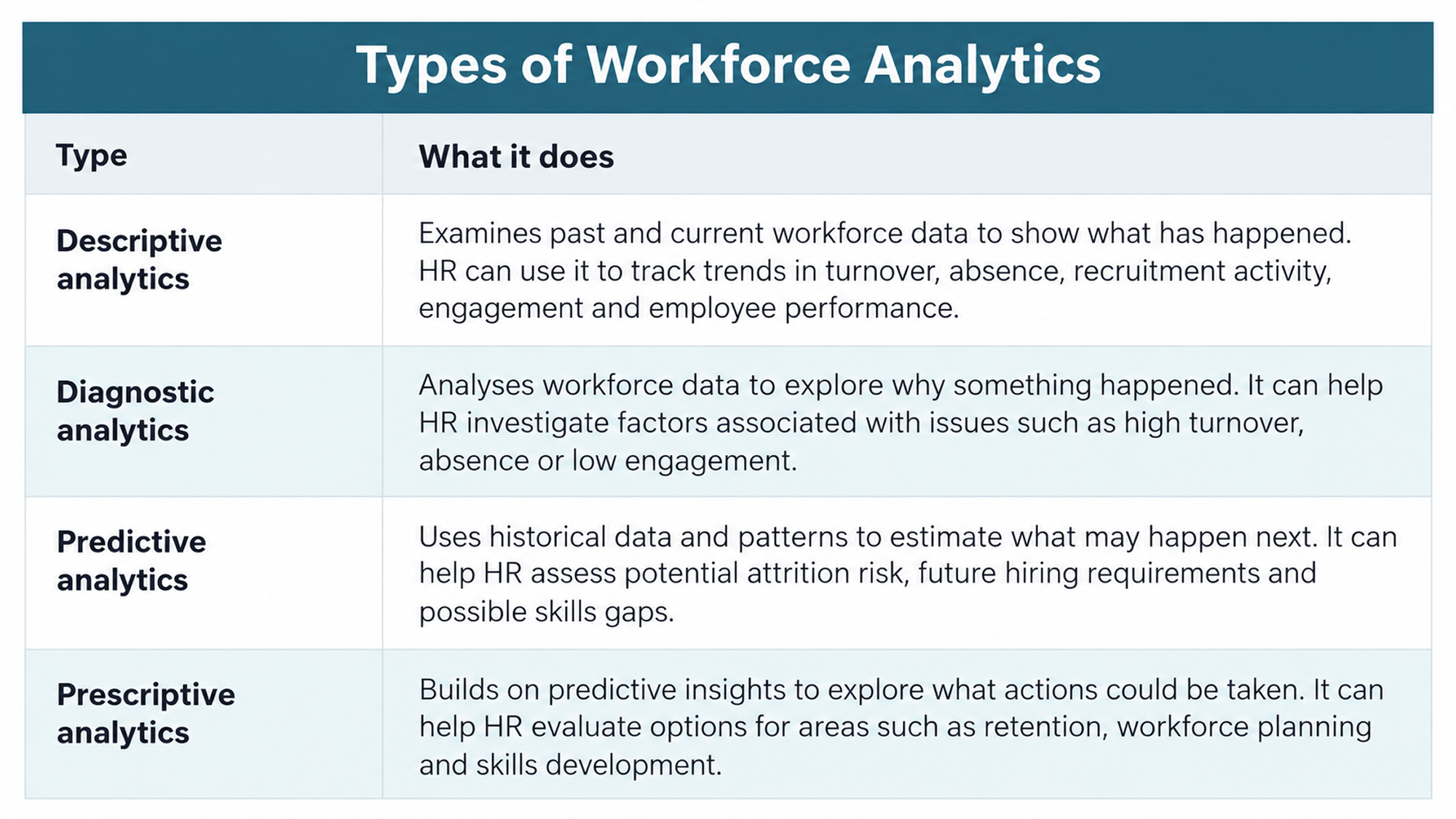
Workforce analytics can be categorised into four main types, each providing a different level of insight. Together, they help HR teams understand what has happened, why it happened, what may happen next and which actions they can take. These insights come from a wider process of collecting, analysing and applying workforce data:
How Workforce Analytics Works
Workforce analytics starts with a clear HR or business question, such as why employee turnover is increasing or whether the organisation will have the skills it needs in the future. HR then gathers relevant information from sources such as HR systems, payroll, recruitment platforms, performance reviews and employee surveys.
The data may need to be cleaned, combined and analysed to identify relevant patterns and trends. HR can then interpret the findings, use them to inform decisions and monitor whether the actions taken produce the intended results.
The process can therefore be viewed as a continuous cycle:
Define the question → collect and prepare data → analyse patterns → interpret insights → take action → review results.
Quick Tip:
Workforce analytics is most valuable when HR connects data to a clear business question. Tracking more metrics does not necessarily lead to better decisions.
Why Is Workforce Analytics Essential for Modern HR?
Workforce analytics gives HR teams a clearer view of workforce trends and helps connect people data with business decisions. It can support decisions across the employee lifecycle, from recruitment and retention to workforce planning and development. The following points show why workforce analytics is important for modern HR teams.
Improve Recruitment and Hiring Decisions
Workforce analytics can help HR assess recruitment channels, time-to-hire, candidate trends and hiring outcomes. These insights can show which parts of the recruitment process are working well and where changes may improve efficiency or help attract suitable candidates.
Strengthen Employee Retention and Engagement
Keeping the right people is just as important as hiring them. Analysing turnover, engagement, absence and other workforce data can help HR identify patterns associated with higher employee turnover. This allows teams to investigate potential causes and address issues before they contribute to further employee retention problems.
Support Strategic Workforce Planning
Workforce analytics can help organisations understand current workforce capacity, identify potential skills gaps and estimate future staffing requirements. These insights can support workforce planning as business priorities and skills needs change.
Improve Employee Performance
Workforce data can help HR identify development needs and understand patterns in employee performance. These insights can inform training, development programmes and other forms of employee support.
Support Fair and Data-Driven HR Decisions
Analytics can give HR a stronger basis for consistent, evidence-based decisions. It can also highlight patterns in areas such as pay, progression and representation, helping organisations identify potential gaps and respond to them.
However, analytics does not automatically remove bias. HR teams should consider data quality, methodology and potential sources of bias when using workforce insights to inform people decisions.
How to Use Workforce Analytics Effectively
Using workforce analytics effectively requires more than collecting data. HR needs clear objectives, reliable information and a process for turning findings into action. A practical approach is to build analytics into the way HR sets priorities, makes decisions and evaluates results.
Align Analytics With Business Goals
Start with a clear business or HR objective. This could include reducing employee turnover, improving recruitment efficiency or identifying future skills gaps. Then select the data and metrics that can help measure progress towards that objective. This keeps the analysis focused on decisions that matter to the organisation.
‘People should make people decisions, and analytics merely exists to arm decision-makers with the most reliable insights.’
— Vibhas Ratanjee, Gallup
Use Reliable Workforce Data
Accurate and consistent data is essential for useful workforce insights. Information from HR systems, payroll, recruitment platforms and employee surveys should be reviewed for errors, duplicate records and missing information. Organisations should also use consistent definitions for metrics such as turnover, absence and time to hire so that results can be compared reliably.
Sensitive employee information should be handled securely and in line with applicable privacy and data protection requirements.
Turn Insights Into Action
Insights only create value when they lead to action. Use findings to address issues such as high turnover, skills gaps or recruitment delays. Keep complex findings simple so managers can understand them and respond effectively. Track the results to see whether changes are working.
Review and Improve Results
Regular reviews can show whether HR initiatives are achieving their intended outcomes. Compare results with the original objectives, identify areas for improvement and adjust the approach when necessary. This creates a continuous cycle of analysis, action and review.
Case Study: How Landmark Improved HR Visibility With Better Data
Landmark, a UK commercial real estate business with 30 centres in London and 10 more across the UK, relied on disconnected HR systems and manual spreadsheets. Payroll processing could take up to three weeks of a team member’s time each month, with the process also contributing to payroll errors.
After moving to an integrated HR and payroll system, Landmark reduced payroll processing from three weeks to three days and gave managers better access to workforce information through dashboards. The HR team could then spend more time on areas such as learning, development and career planning.
The example highlights the importance of connected workforce data. When HR information is accurate, accessible and available through appropriate reporting tools, teams can spend less time managing data manually and more time using it to support workforce decisions.
Make Better Decisions With Better Workforce Insights
Effective workforce analytics is not about collecting more data. It is about having reliable information, asking the right questions and turning workforce insights into informed action. With the right approach, organisations can better understand workforce trends, address current challenges and plan for future needs.Ready to Make Better Use of Your Workforce Data?
Give your HR strategy the expert guidance it needs. Speak to Sterling Cooper Consultants to explore how workforce insights can support smarter planning, stronger people management and more informed HR decisions.
FAQs
Workforce analysis means examining data about an organisation's workforce to understand what is happening across areas such as employee turnover, recruitment, absence, performance and workforce costs. It can help HR identify trends and support workforce planning and decision-making.
The terms are often used interchangeably, but they can have slightly different focuses. HR analytics commonly involves analysing HR activities and outcomes such as recruitment, retention and employee performance. Workforce analytics can take a broader view of workforce composition, skills, capacity, costs and future workforce needs.
Common examples include analysing employee turnover, absence rates, hiring times, workforce costs, engagement levels, skills gaps and employee performance. These insights can help businesses identify trends and plan their workforce more effectively.
Workforce analytics can help businesses understand workforce trends, identify potential problems and plan for future needs. For example, HR teams can analyse turnover patterns, recruitment data and skills information to identify areas that may require attention and support better workforce decisions.
Businesses should consider data quality, privacy, security and how workforce information will be interpreted and used. Clear objectives are also important so that analytics focuses on meaningful HR or business questions rather than simply collecting more data.
Recent Posts