Posted by:
Admin
Date:
May 14, 2026
Category:
blogs
eBay Taxes for Beginners: A Step-by-Step Guide
eBay selling has become one of the simplest ways in the UK to earn a side income. People use eBay for different purposes, some use it to sell their unwanted and unused items while some people use it to make a strong online presence for their business.
Some people think that selling on eBay is completely free, but that’s not true.Be it for any purpose, there are some eBay tax rules UK that you need to understand very well especially if you are a beginner.
Not every sale on eBay is taxable, there are certain rules set by HMRC (His Majesty’s Revenue & Custom) that defines when you need to pay the tax on your selling. HMRC carefully monitors your selling and imposes a certain tax on it. Different rules apply to different kinds of selling.
According to a report nearly £55 billion worth of seller income was reported to HMRC by online marketplaces in 2025 which was double in comparison to the report of 2024.
To understand in more detail about eBay sales tax rules, let’s explore this guide further.
eBay tax is the tax which you pay when selling online through eBay. It is not an official tax, it is like any other tax which is paid when selling online using platforms like Etsy, Vinted, Facebook Marketplace etc.
For beginners eBay tax rules on selling can sound intimidating at first, but once they get familiar with it, selling becomes easier for them.
Key Takeaways
- Know the difference between casual selling and trading: casual selling is usually not taxable, but profit-driven trading is.
- The £1,000 Trading Allowance applies across all side hustles combined.
- Register for Self Assessment if trading income exceeds £1,000.
- Tax is paid on profit, not total sales revenue.
- Claim allowable expenses to reduce taxable profit legally.
- Keep accurate records of sales, expenses, and receipts.
- VAT registration is required after £90,000 taxable turnover.
- HMRC actively monitors online selling activity and seller data.
eBay Tax Rules for Beginners: A Step-by-Step Guide
Here is a step-by-step guide for you that will help you understand about the eBay tax rules in more detail and will help you manage your selling more confidently.
Step 1: Understand the Difference Between Casual Selling and Trading
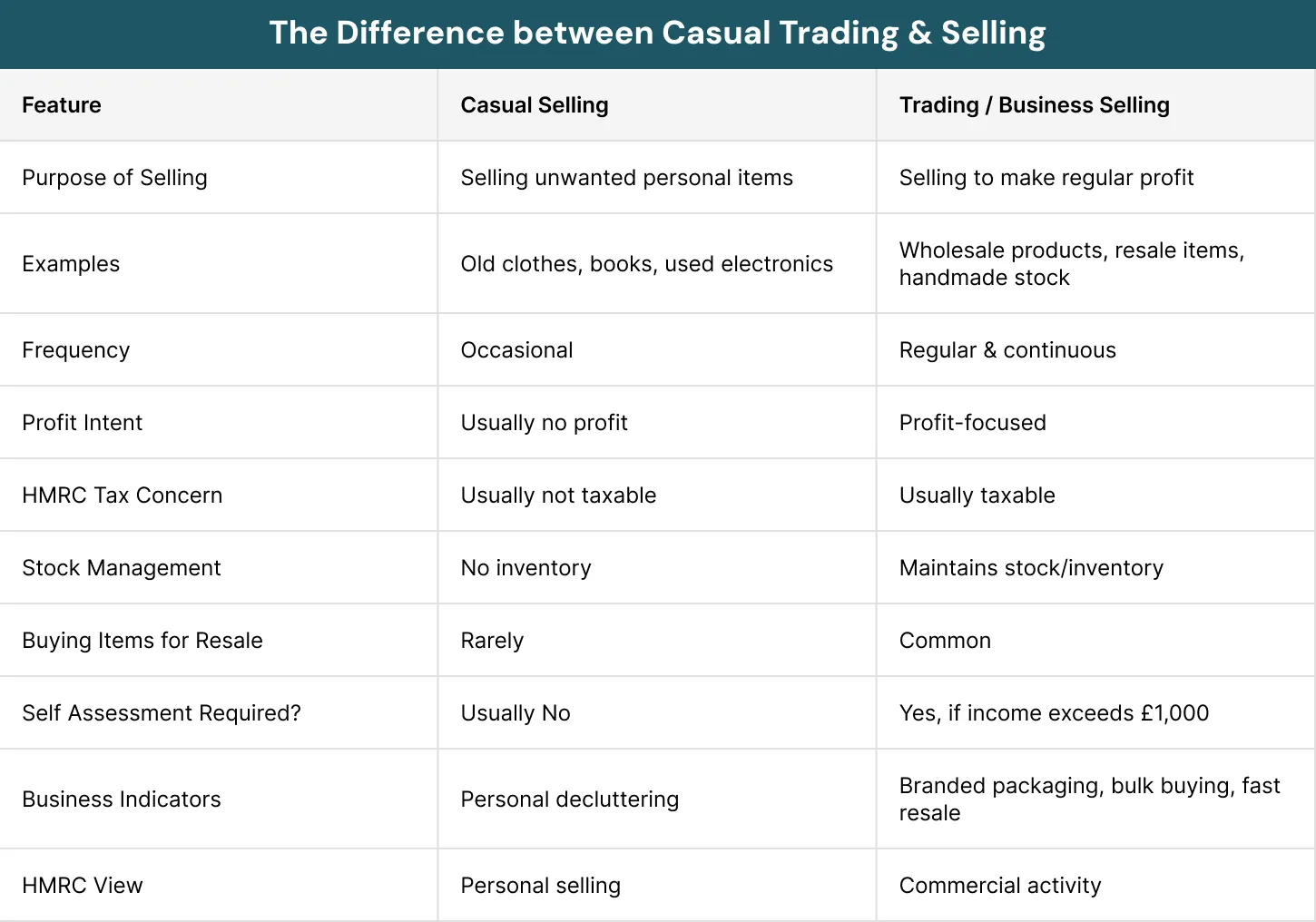
The first and most important thing to understand in eBay selling is to have a knowledge of when your selling becomes taxable. And for this thing you need to know the difference between casual selling and trading.
Casual selling is when you are selling your personal, unwanted or second hand items like used clothes, books, old video games or electronics etc. Such items are usually sold out with no profit so hence there is no tax imposed on it by HMRC.
Trading is when you are selling regularly throughout the year, maintaining stock, or purchasing wholesale goods etc. When you start making a huge profit and when your selling starts looking like a commercial business, that is when HMRC imposes tax on it.
Step 2: Understand the Trading Allowance
The United Kingdom has made a rule called Trading Allowance. This rule states that people can earn up to £1,000 per tax year from trading without the need to pay tax. It is usually helpful for small or beginners traders or those who are doing trading occasionally.
There is one important thing about trading allowance that beginners often misunderstand i.e, the £1,000 is not just for eBay, it’s for any other side business. Let’s take an example for make it more clear:
If you earn £600 for eBay and £600 from Etsy then the total income becomes £1200 then you have to register for Self Assessment.
Step 3: Register for Self Assessment
Once your trading income exceeds £1,000 then it’s the time to register for the Self Assessment set by HMRC. Self Assessment is a system that reports online selling income, side hustle profits or any untaxed income.
For Self Assessment you need to report your sales incomes, allowable expenses and profits.
The registration deadline for Self Assessment is 5 October after the end of tax year. The UK tax year runs from April 6 to April 5.
Keep in Mind
Crossing the £1,000 threshold does not automatically mean huge taxes — it mainly triggers reporting obligations.
Step 4: Understand About the Tax you Pay
People usually think that they need to pay tax for every pound they earn. The tax you pay is based on profit and not on revenue. For Example if you sell £5,000 worth of products from which earned a profit of £1800 then you have to pay tax on this amount of profit. The UK tax system works in bands, you only have to pay a higher rate on the portion of income within that band.
Step 5: Know Which Expenses you can Claim
Beginners usually have no knowledge about which expenses they are allowed to claim. Claim your expenses clearly as this is an important step in eBay tax rules. These expenses must be exclusively for your business purposes.
Common claimable eBay expenses include:
- eBay fees which further includes listing & final value fees and seller charges.
- Payment processing fee which includes PayPal fee and card processing charges.
- Postage & Shipping which includes royal mail postage, courier costs, shipping labels etc.
- Packaging materials which includes tapes, boxes, bubble wrap etc.
- Product cost which includes wholesale inventory, handmade items, items purchased for resale.
Software & Services which includes website hosting, accounting software, bookkeeping services and accountant fees.
Pro Tip
Save every receipt related to packaging, postage, eBay fees, and stock purchases to maximise allowable expense claims.
Step 6: Maintain Proper Records
Keep proper records of your online selling to avoid any inconvenience in the future. HMRC expects that sellers should maintain a proper record of:
- Sales
- Income
- Expenses
- Cost
- Invoices
- Bank statements
- eBay transaction history
- PayPal statements
- Shipping records
Proper record keeping not only helps you to calculate your profit accurately but also helps to respond to HMRC questions promptly. You can also use spreadsheets or accounting apps to keep the track of your records.
Step 7: Understand Capital Gains Tax
Along with the Income Tax it is also important to understand the CGT (Capital Gains Tax) as a part of eBay tax rules. CGT applies when you sell personal assets at a gain. Things like vintage watches, artwork, antiques etc may be subject to CGT.
If you sell an item worth more than £6,000 then CGT applies on it. For example if you buy an item of £1,000 and then sell it at £8,000 then it becomes taxable. One important thing to keep in mind is that personal cars are not subject to CGT.
Step 8: Learn About VAT
As a beginner you don’t have to worry about VAT from the starting point. But it’s important to learn about VAT as once your taxable turnover exceeds the amount of £90,000 in 12 months VAT registration becomes mandatory.
After the VAT registration you have to follow VAT compliance rules, submit VAT on returns, charge VAT on sales and keep VAT records. VAT registration allows reclaiming VAT on purchases and improves business credibility.
For selling on eBay internationally you need to understand the international VAT rules. International VAT rules apply when you start selling your products outside the UK or storing the stock overseas. In some cases like international sales eBay may also collect VAT on behalf of the seller.
Even though eBay collects the VAT it is important that sellers must also themselves maintain the records to report the VAT accurately.
Step 9: Learn how HMRC Monitors
During recent times HMRC have become more focused on the digital economy and that’s why it has started monitoring online selling more closely.
HMRC frequently monitors the following to find out wether it’s causal selling or trading:
- Records
- Transaction history
- Undeclared income
- Listing
- Selling activity
HMRC particularly looks for the sellers who are regularly making profit and operating continuously to spot the signs of trading. Frequent listing, fast resale activity, branded packaging, dedicated inventory storage are some of the common indicators that helps HMRC identify trading.
Step 10: Know the Consequences of Non-Compliance in Advance
As a beginner in eBay selling it’s important to understand how serious tax non-compliance is. In fact it would not be wrong to call tax compliance one of the most important eBay tax rules.
Beginners usually think that small online selling is okay to ignore but they do not know that they can be subject to penalties and HMRC investigation once the trading becomes more frequent. Once you have been identified with undeclared income HMRC may charge you with financial penalties including unpaid tax and additional interest.
So, it is important to declare your income and comply with rules to avoid any HMRC investigations in the future.
Step 11: Understand the Difference Between Revenue and Profit
One of the most important things beginner sellers need to understand is the difference between revenue and profit. Revenue is the total amount earned from sales whereas profit is the amount left after calculating the expanses.
The tax you pay is one the basis of profit and not on the revenue.
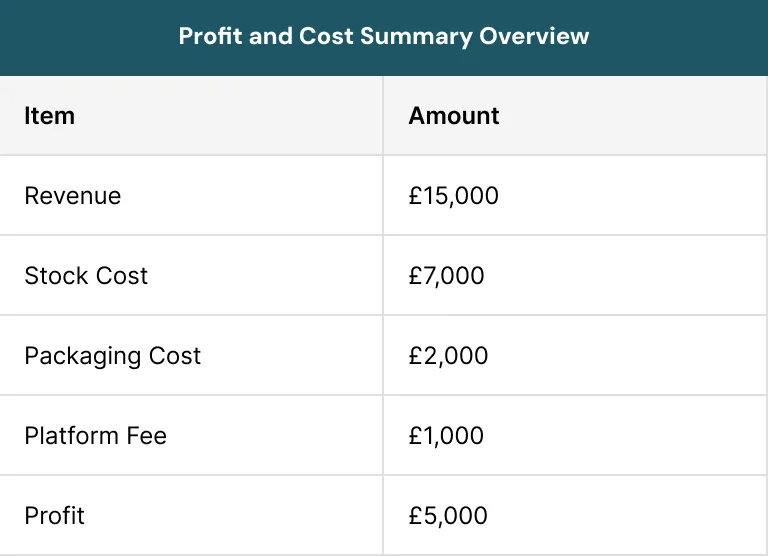
If your total sales revenue is £15,000 and total expense is £10,000 your profit would be £5,000 so the tax would apply to £5,000 (amount of profit).
Step 12: Know When to Seek Professional Advice
In the beginning you might not find the need to consult any professional but as your selling grows, handling eBay tax rules situations might start becoming difficult for you. So in that case seeking professional advice is a must.
Seeking professional advice helps to ensure compliance and reduces the chances of any penalties. It would be helpful for you to seek an expert advice when:
- You are selling internationally
- You reach VAT threshold
- Start making more profit
- Store stock overseas
- You want to turn your casual selling into trading
These are some of the important steps that you should learn in advance as a beginner eBay seller. Having knowledge about eBay tax rules will make your selling on eBay easier and more smooth.
Common Mistakes Beginner eBay Seller Make
Beginners eBay sellers make many mistakes simply because they don’t understand the rules completely due to the lack of proper knowledge.
Here are some of common mistakes that new sellers on eBay make:
- Ignoring the small amount of regular profits thinking that side hustle can not generate taxable income.
- Ignoring the trading allowance threshold.
- Not keeping the records and receipts which may lead to payment problems.
- Not creating a separate bank to keep accurate track of all the selling transactions.
- eBay collects VAT sometimes so some sellers think that eBay handles everything but that’s not true. As a seller you are responsible for accurate recording keeping and reporting.
How eBay Selling can Convert into a Business?
Many beginner sellers on eBay don’t realize when their selling starts turning into a business. At first, it may feel like an easy way to earn extra money by selling your unwanted items but with the passage of time you will see your sales start growing. eBay selling can eventually turn into a full time business without even sellers realizing.
When you see consistent demand for the products you are selling, daily profits, need to buy stock in bulk and frequent listing that is when your selling starts converting into a business. As the selling grows and starts becoming like a commercial business, sellers might invest more in packaging, storage space, photography and other operations.
Some sellers eventually move from part time to full time and then to a full ecommerce business. But one important thing to keep in mind is that with the growing business the tax responsibilities increase and also demands better record keeping, self assessment registration and VAT monitoring.
Quick Win
Keeping accurate records from day one can save you time, stress, and money during tax season.
Final Thoughts
Selling on eBay is no doubt a great way to establish a great side hustle and earn extra income. It is also one of the best platforms to start your online business. All you have to do is to follow the eBay tax rules and platforms best practices to avoid any inconvenience and HMRC penalties.
Once you completely understand the eBay rules for sellers, selling becomes more convenient for you. eBay tax rules at first might seem overwhelming to the beginners but once you start selling frequently you will better understand them.
The important things to remember as a beginner eBay seller are:
- Every sale on eBay is not taxable
- Tax applies to the profit and not on sales
- Staying compliant with eBay tax rules
- The £1,000 trading allowance
- Registering for Self Assessment
- VAT
- Accurate record keeping
Remember every full time eBay seller was once a beginner, so there is nothing that you have to worry much about. In the beginning you might make mistakes, but instead of giving up, learn from those mistakes, eventually you will master the art of selling on eBay. The key is to make a profitable selling while staying compliant with eBay tax rules.
If you still have some queries regarding eBay tax rules, HMRC rules, or Self Assessment deadlines then our tax experts are here to clear your queries.
Struggling to understand complex eBay tax rules or worried about HMRC penalties.
At Sterling Copper we help online sellers stay compliant and reduce tax stress. Trusted by UK freelancers and ecommerce businesses, we make online selling taxes simple. Contact us today!
FAQs
eBay itself does not directly charge income tax on your sales. However, HMRC may require you to pay tax if your eBay selling is considered trading and your income exceeds the £1,000 Trading Allowance. You may also need to pay VAT if your taxable turnover goes above £90,000 in a 12-month period.
Red flags for eBay sellers include frequent listings, buying items specifically for resale, maintaining stock, and making regular profits. HMRC may also view branded packaging, fast resale activity, and business-style operations as signs of trading rather than casual selling. Failing to keep records or report taxable income can also attract HMRC attention.
Selling more than 30 items on eBay does not automatically mean you owe tax, but your seller information may be reported to HMRC under digital platform reporting rules. HMRC will then assess whether your activity qualifies as casual selling or trading. If you are selling regularly for profit, you may need to register for Self Assessment and pay tax on your profits.
The amount eBay takes from a $100 sale depends on the product category and seller account type, but eBay typically charges around 10%–15% in selling fees, including final value fees and payment processing charges. This means you may pay roughly $10–$15 in total fees from a $100 sale. Additional costs may apply for promoted listings or optional upgrades.
In the UK, you can generally earn up to £1,000 per tax year from online trading before needing to report it to HMRC under the Trading Allowance. However, if you are regularly selling for profit or operating like a business, HMRC may still consider your activity taxable even below this threshold. Casual sales of personal belongings are usually not taxed unless valuable items trigger Capital Gains Tax rules.
Recent Posts
How to Build a Cash Reserve for Business Stability
August 11, 2026
How to Forecast Cash Flow During Economic Uncertainty
August 6, 2026