

Posted by:
Admin
Date:
June 22, 2026
Category:
blogs
Why Monthly Management Reports Matter for Growing Businesses
Your business is growing, but numbers are still not clear? It is a common problem faced by UK SMEs. Even when sales are up, there can be problems with cash flow and costs.
Studies show around 22% of UK firms face cash flow issues in recent reports. This makes monthly management reports important for growing businesses. These reports give managers a clear view of cash flow and help control costs. They also support better decision-making by using up-to-date financial data.
Key Takeaways
- Monthly management reports help businesses track financial performance in real time.
- They support faster and better business decisions throughout the year.
- Regular management reporting improves cash flow control and forecasting.
- Growing businesses can spot problems early before they become serious.
- A monthly management report gives more visibility than annual accounts alone.
- Management reporting for businesses helps directors plan staffing, pricing, and expansion.
- Outsourced reporting can save time for SMEs with limited finance teams.
- Clear monthly reports improve lender and investor confidence.
What Are Monthly Management Reports?
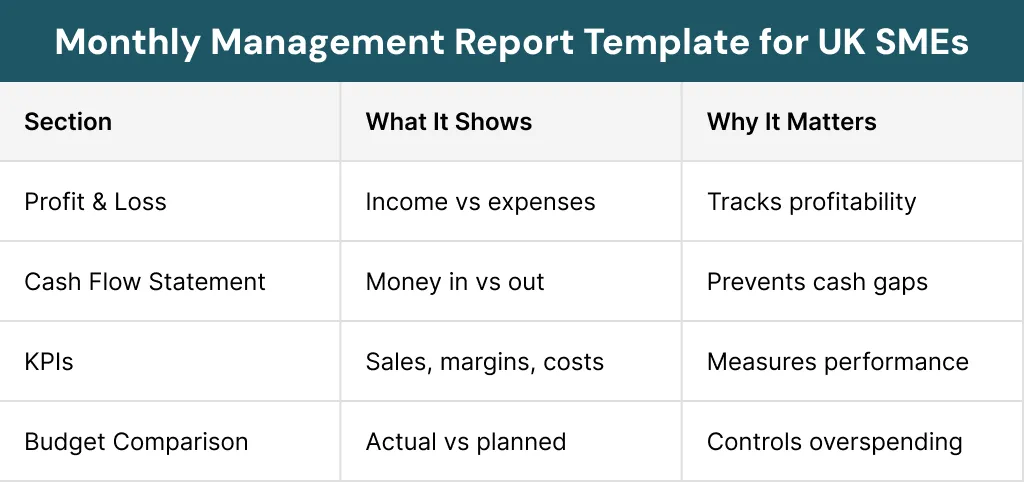
Management reports are just the basic monthly reports. These reports include the monetary figures and business information of the company. They enable the managers to know how well the business has performed in the past month. These reports also inform if there are any changes made to the budget.
Did you know?
Businesses using a monthly management report are more likely to spot cash flow problems early compared to yearly reporting. This helps avoid late financial surprises and improves control over business costs.
Why Do Monthly Management Reports Matter for Growing Businesses
These reports matter for growing businesses because these firms face fast changes. Costs can rise quickly. Staff costs can also increase. Vendor bills can also grow. Without regular reports, control becomes harder. These reports help track cash flow.
The key reasons why monthly management reports matter are explained below:
1. Stay Ahead of Cash Flow Issues
To stay ahead of cash flow issues, you need to keep an eye on your growing expenses because they usually outpace revenue. Management accounts help you track these income and expenses in real time. You can find:
- Cash flow gaps early
- Forecast payment cycles
- Supplier needs and plan for tax bills or big investments
2. Make Data-Driven Decisions
Monthly management accounts support better decision-making. These reports also provide the financial data needed to make those strategic decisions confidently. They:
- Show accurate figures
- Help you with budget comparisons
- Let you track profit margins
Without monthly reports, though, you’re just guessing.
Key Insight
Strong management reporting for businesses removes guesswork. It turns financial data into clear actions like pricing changes, cost control, and smarter budgeting.
1. Track Business Performance Over Time
Management accounts help compare:
- Month-to-month results
- Year-to-date performance
- Budget vs actual outcomes
This lets you spot trends, seasonal changes, weak departments and key strengths to focus on.
2. Prepare for Investment, Funding or Sale
Firms require solid accounting data whenever they seek outside funding or sales. All these parties would like to be assured that their money is in safe hands. They would require recent and current financial figures, not old year-end data.
This is what management monthly accounts provide. It provides information about the firm’s current performance.
They help show:
- Cash flow position
- Profit levels
- Spending trends
3. Avoid Nasty Surprises at Year-End
Many business owners only review their finances once a year. By that time, it is often too late to fix problems. Small issues like rising costs or cash gaps can grow over time. Using monthly management accounts can always help. You can
- Track tax stuff and save up for it
- Ensure VAT and PAYE are covered
- Find overspending way earlier
This is why growing businesses rely on monthly management reports.
What Makes a Good Monthly Management Report?
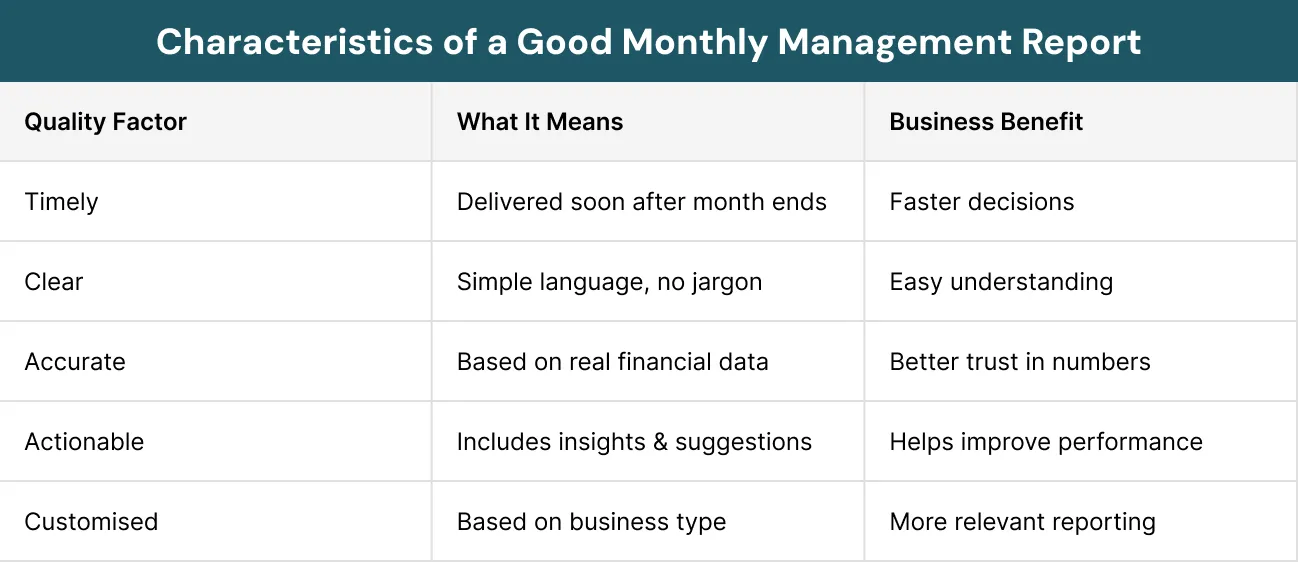
A good management report links data with insights. It fills the gap between past performance and future planning. The report ensures everyone stays up to date and management remains in control and makes better financial decisions.
These reports are:
- Timely – arriving a few days after the month ends
- Clear – written in simple English
- Easy to read – no confusing numbers
- Insightful – include short comments to explain results
The reports should be customised for your business goals, showing KPIs that matter most. For instance, a retail company may track:
- Gross profit margin
- Stock turnover rate
- Sales per square foot
In contrast, a consultancy focuses on billable hours, utilisation rate, and revenue per client.
Who Prepares Management Accounts?
Management accounts can be prepared by your in-house finance team or outsourced to accountants. Many small businesses don’t have the time or resources to make monthly reports, so we handle it for them. We provide accurate figures at an affordable cost. Our experts provide simple insights to help you understand the reports better.
“Without data, you’re just another person with an opinion,”
by W. Edwards Deming
Do You Need Monthly Management Accounts?
You should think about getting monthly or quarterly management accounts if:
- You have more than five staff
- You are growing fast or plan to
- You need better cash flow control
- You are preparing for funding or a sale
If you want to base decisions on real data, this can help too. Monthly management reporting for businesses keeps things under control, increases profitability and stops you from missing financial issues.
Case Study
Sage, a UK-based software company operating in over 20 countries, moved from one-time software sales to a subscription-based model. This change made regular financial tracking more important than ever.
With stronger management reporting, Sage gained a clearer view of its monthly recurring revenue, customer contracts, cash flow, and income trends. This helped the company monitor performance more closely and make informed business decisions.
As subscription revenue grew, regular reporting provided the visibility needed to track progress and plan ahead with greater confidence. The company’s income became more predictable, supporting long-term growth and stability.
This example shows why monthly management reporting matters. By giving businesses a clear picture of their financial performance, it helps them identify trends early, make better decisions, and stay in control as they grow.
Growth Tip
If you only review a monthly management report once a month but don’t act on it, you lose its value. The real benefit comes from using it for weekly business decisions.
Conclusion
A monthly management report helps managers make better decisions. It also improves cash flow. Forecasting improves and financial risk is also reduced.
Simply having annual accounts is no longer enough for small businesses in the UK today. Therefore, monthly management reports are becoming vital for growing businesses.
At Sterling Cooper, we provide monthly management reporting for firms to ensure that managers have control over things. Contact us today to enjoy a clear view of your performance, cash flow and key business metrics.
Struggling with unclear financial data each month?
Many UK SMEs face the same challenge. Strong management reporting improves financial visibility, supports better decisions, and helps businesses stay in control of their finances. If you are facing these issues, get in touch today to see how the monthly management reporting can help grow your business.
FAQs
Monthly management reports are structured documents that summarize a company’s financial and operational performance over a specific 30-day period. They provide decision-makers with a consistent, timely overview of business health, allowing them to track Key Performance Indicators (KPIs), assess budget adherence, and make informed strategic adjustments.
Monthly management reports are vital for growing businesses because they provide a timely, data-driven snapshot of financial health. Rather than waiting for annual tax returns, these regular updates help owners monitor cash flow, track key performance indicators (KPIs), and adjust strategies before minor issues escalate.
A monthly management report is an internal tool that summarizes a company's financial and operational performance over the past 30 days. It typically includes an executive summary, core financial statements (P&L, cash flow, balance sheet), key performance indicators (KPIs), budget tracking, and actionable recommendations for the upcoming month.
Management reports should be reviewed on a tiered schedule depending on the data type: daily/weekly for operational metrics (like sales or cash flow), monthly for comprehensive financial and strategic reviews, and annually for high-level governance. This cadence ensures timely course corrections without overwhelming leadership.
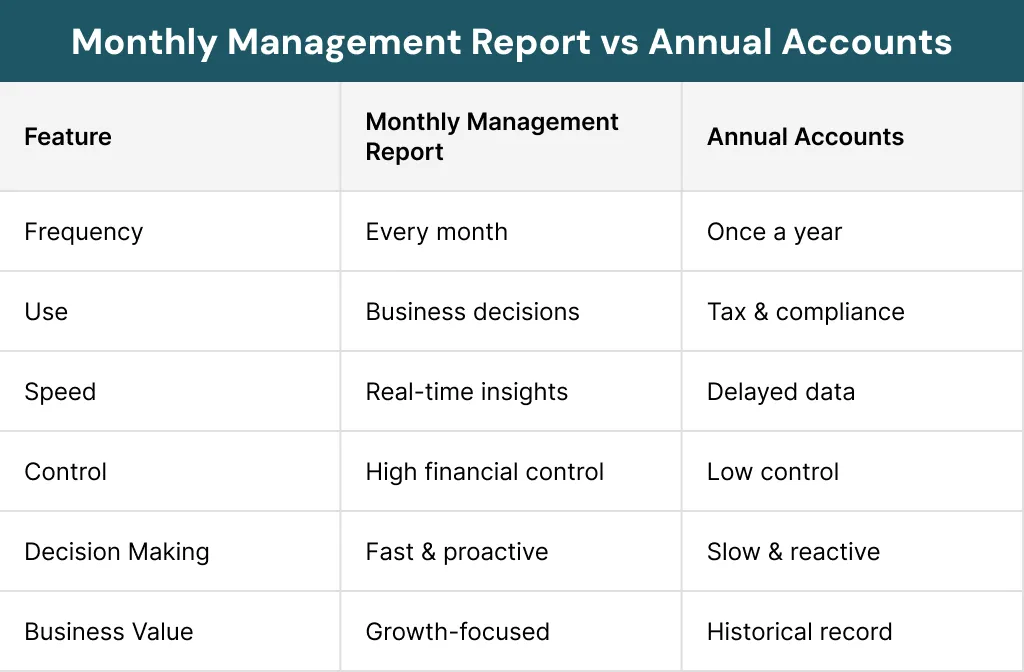
Monthly management reports are generally better for day-to-day business operations and proactive decision-making than annual accounts. While annual accounts are essential for tax compliance and legal filings, they arrive too late to guide business strategy. Monthly reports provide timely financial visibility and control.
Recent Posts