
Posted by:
Admin
Date:
March 17, 2026
Category:
blogs
Why ESG Reporting Is Now Part of Financial Audits?
Do you know that hidden risks can cause significant losses to your business? Businesses today must understand rules better. They now face rising pressure from rule makers, investors and the public. Many businesses are not sure about the data they need to report. ESG reporting is one of the areas now linked with financial audits.
ESG reporting shows how a company manages climate, social and leadership risks. It also shows how these factors may affect financial results. In the UK, long term risk disclosures are becoming more common.
According to the UK Government, over 1,300 largest UK companies must disclose ESG data. It must be reported under the TCFD framework for climate related financial information. This rule is part of the UK’s long term strategy.
In this blog, you will learn:
- What is ESG reporting
- Why ESG matters
- Why ESG reporting is now part of financial audits
- What are key reporting requirements
- What are major reporting standards
- How ESG data appears in financial audits
- What are steps to implement ESG framework
- What are risks and limits of ESG reporting
What Is ESG Reporting?
ESG reporting means sharing data about how a company handles key risks. These risks relate to the environment, people and company rules. ESG has three main parts:
Environmental
This part looks at how a company affects the Earth such as:
- Carbon output
- Energy use
- Waste control
- Climate impact
Social
This part looks at how a company treats people such as:
- Worker health
- Staff mix
- Local impact
- Supply chain work rules
Governance
This part looks at how a company is led and checked including:
- Leader setup
- Fair conduct
- Board checks
- Risk control
These areas show how well a company runs its business. They also help people see how the company acts beyond profit. Many groups use the following data:
- Investors
- Rule makers
- Buyers
- General public
Many companies now compare ESG reports with their yearly reports. The goal is to give a clear view of risks that may affect the firm in the future.
Why ESG Information Matters to Investors and Businesses
Investors do not look at financial data alone before they invest. They also want to know if a firm can stay strong in the long run.
Climate risk, staff issues or weak leaders can harm profit. Because of this, ESG data now plays a role in many investment choices. A few key reasons given below explain why this data has become more important.
Growing Investor Expectations
Large investors now ask companies to share reports about long term risk. These points help investors judge the strength of a firm. They show if a company may face risk in the future. Big funds often review things such as:
- Carbon cut goals
- Climate risk to the business
- Board mix and firm rules
- Fair supply chain work
Public Transparency
Customers and local groups also expect businesses to act in a fair and open way. Public reports help people see how a firm deals with climate and social duties. This open view helps build trust.
Regulatory Developments
Rules on ESG are now growing in many places. These rules help make sure companies share clear and fair data. They also help keep reports the same across businesses. Without clear rules, long term risk claims can be hard to check.
What Is the Link Between ESG Reporting and Financial Audits
Audit firms now review ESG risk reports more often as stakeholders expect reliable data. In the past, ESG reports were voluntary. Companies could publish them without outside checks.
This situation is changing. Several factors have pushed ESG reports into the audit process. Some of the important factors are:
Financial Risk Links
Some ESG issues can affect financial results. Auditors now review these risks when checking company accounts. Examples include:
- Asset values changing due to climate policy
- Higher operating costs from regulation
- Legal penalties linked to climate damage
Investor Trust
Investors want reliable data. They prefer information that has been reviewed. When ESG data is checked during audits, investors trust the reports more.
Clear Reporting Practices
Many UK companies now follow ESG reporting standards. These standards help companies present data in a clear way. They also make it easier for auditors to compare reports.
Regulatory Pressure
Rules in the UK and Europe are expanding. Companies now face stronger pressure to report ESG data clearly and accurately.
Key ESG Reporting Requirements
ESG reporting requirements depend on the size of the company, its industry and the rules it must follow. Businesses often report data in areas such as:
- Greenhouse gas emissions
- Climate risk exposure
- Workforce diversity
- Leadership structure
- Board accountability
This data helps investors and regulators understand how the company is performing.
Most ESG reports also include other key details that explain how the business manages these risks.
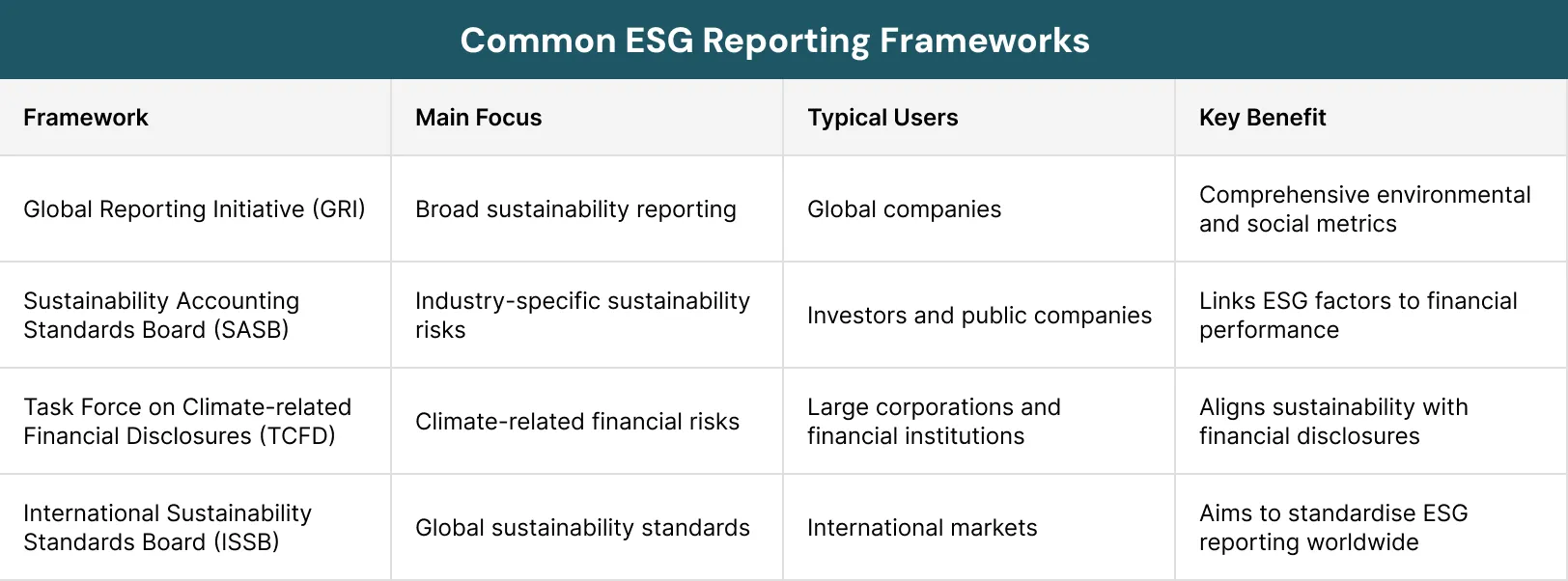
Major ESG Standards Used in UK
The major ESG reporting standards shape how companies disclose environmental, social and governance data in the UK. Many ESG reporting standards include:
- GRI
- SASB
- TCFD
- ISSB
How ESG Data Appears in Financial Audits
ESG data appears in financial audits when auditors review sustainability risks that may affect financial statements. Auditors must review risks that may affect a firm’s accounts. When checking reports, they may look at:
- Asset values linked to climate risk
- Climate costs and future duties
- Board control and oversight
- Long term plans that affect future spend
These issues can change profit forecasts and balance sheet figures. Because of this, ESG data is now often part of audit checks.
Audits no longer look only at numbers. They also review long term risks that may affect those numbers. ESG data is often included in a firm’s wider financial reports.
This data moves through a firm before it reaches the audit stage. The accounting cycle explains how financial records move through this process in a clear and simple way.
The Role of Independent Verification in ESG Reporting
Independent checks help confirm that ESG reports are clear and reliable. These checks may include:
- Reviewing carbon emission data
- Comparing risk data with company records
- Checking leadership policies
- Reviewing risk control steps
Such reviews help improve transparency and trust. They also reduce the risk of unclear or misleading reports. Because of this, many companies now ask external auditors to review ESG data before publishing their reports.
How Businesses Can Implement ESG Reporting Step by Step
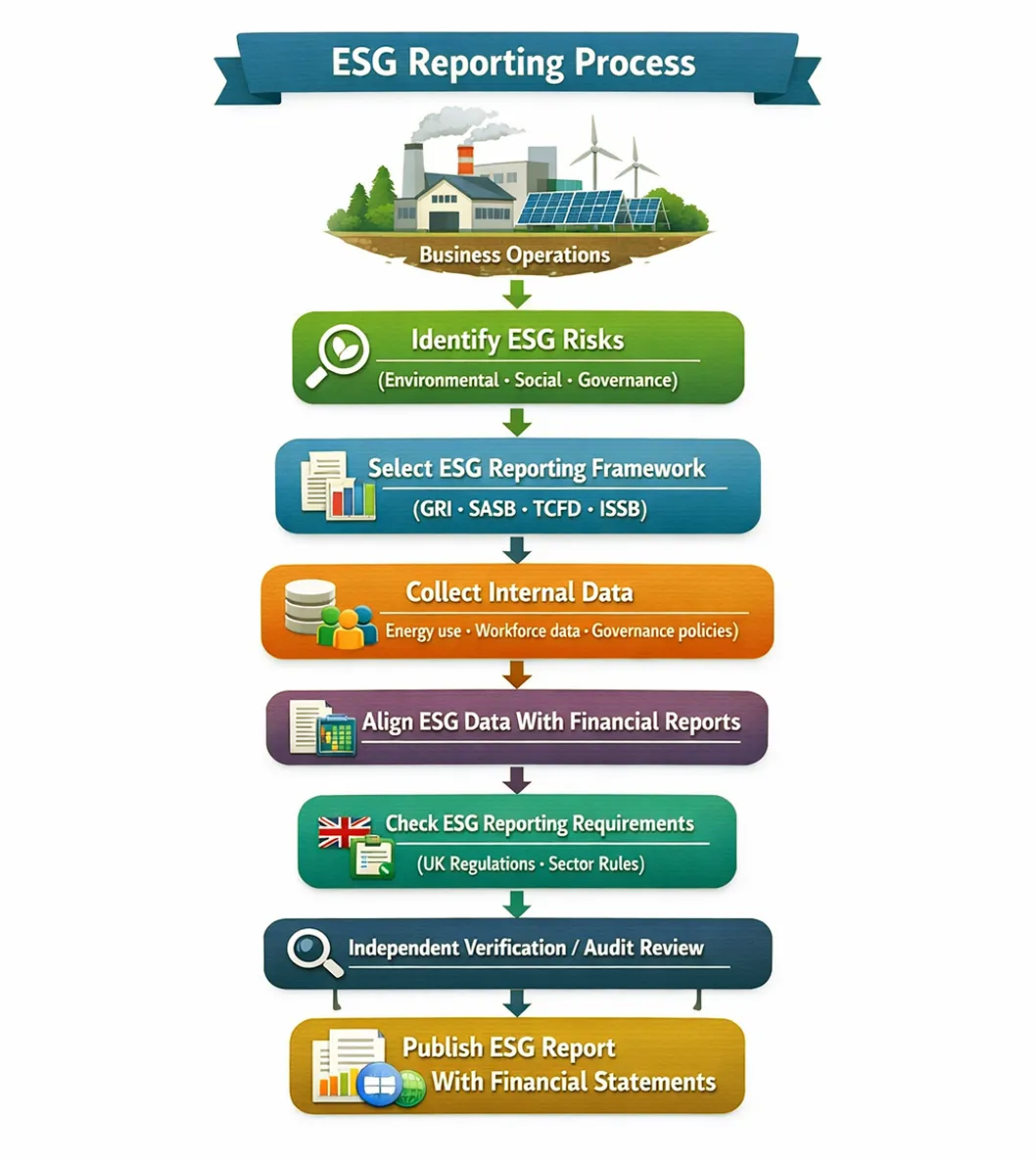
Many companies start ESG reporting without a clear plan. A simple step by step process can help organise the work. The key steps involve:
1. Identify ESG Risks
Start by finding the main risks that affect the business. These risks vary by industry, company size and location. Understanding these risks helps companies decide what data to report. Common areas to review include:
- Carbon emissions
- Energy use
- Supply chain labour practices
- Board leadership structure
- Workplace safety policies
- Diversity policies
- Environmental impact of operations
2. Choose an ESG Reporting Framework
Companies usually review several frameworks before choosing one. The goal is to find a framework that suits the business and its goals. Using a recognised framework also improves consistency. A reporting framework helps companies:
- Decide what data to report
- Measure key metrics
- Explain risks to investors
3. Gather Internal Data
The next step is collecting data from the company. Accurate data is important because investors and regulators rely on these reports. Several departments may provide information such as:
- Finance teams
- Operations managers
- Human resources
- Compliance teams
- Leadership teams
Common records used in ESG reporting include:
- Energy use data
- Climate impact checks
- Workforce diversity reports
- Leadership policies
- Supplier codes of conduct
4. Link ESG Data With Financial Reports
Sustainability data should connect with financial reports. Auditors often review these links during financial audits. This helps show how ESG risks may affect financial results.
If you are new to financial reporting, the annual accounts guide explains the process in simple terms.
5. Check ESG Reporting Rules
Companies should check whether ESG rules apply to them. This helps avoid incomplete reporting. Requirements may depend on:
- Company size
- Stock exchange listing
- Policy rules
- Industry regulations
6. Request an Independent Review
Some companies request an outside review before publishing reports. This review helps improve trust in the data. It may include:
- Checking environmental calculations
- Reviewing leadership policies
- Verifying risk data
How Businesses Can Prepare for Future ESG Reporting Changes
ESG rules keep changing. Businesses that start early may find it easier to deal with new rules later. The few simple steps that can help are:
Tracking Rule Updates
ESG rules may change as new global standards grow. Companies should keep an eye on new reporting rules.
Improving the Data Systems
Good data systems help businesses gather the right data. This can lead to:
- Faster data checks
- Fewer report delays
- More correct data
Train Your Staff
Staff need to know the main ESG reporting rules which are necessary. Training the teams helps them to:
- Gather the right data
- Use the same report steps
- Keep reports clear
Linking ESG Risks With Finance Plans
ESG risks can affect costs and future plans. Looking at these risks alongside finance plans can make reports more accurately.
Reviewing Leadership Oversight
Strong oversight allows clear reports. These checks also support open ESG reports. Companies should regularly review:
- Board roles
- Risk control systems
- Report steps
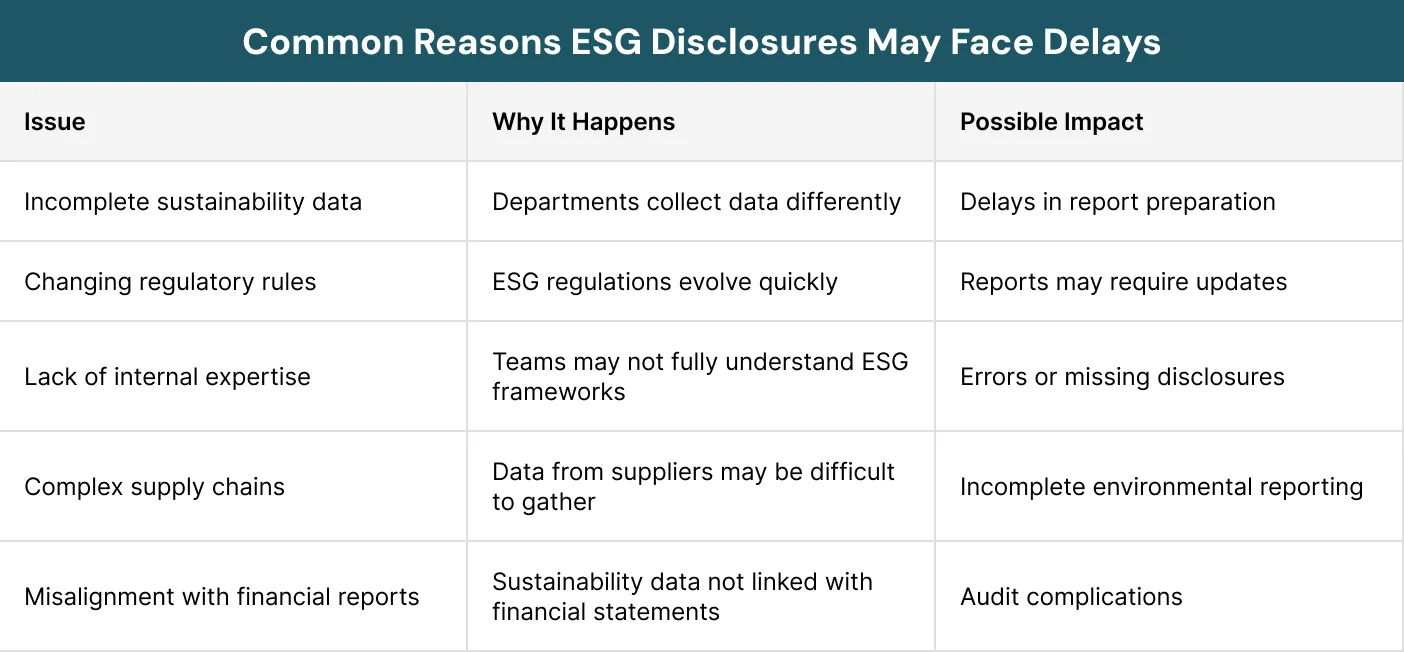
Common Reasons ESG Disclosures May Face Delays
Even with the best intentions, companies sometimes struggle to publish ESG data on time. Here are the common reasons for such delays with possible impacts:
Risks and Limitations of ESG Reporting
ESG reports can give useful insights. They show how a business manages climate, social and leadership risks. However, these reports also have limits. Understanding these risks helps companies keep their reports clear and fair. Common issues businesses usually face are:
Data Accuracy Issues
Collecting ESG data can be hard. The data may come from many teams or outside partners. Without proper checks, these issues can create errors in reports. Common issues include:
- Data collected from different departments
- Missing records from suppliers
- Different teams using different methods
Changing ESG Standards
ESG rules and frameworks continue to change. New standards appear as global reporting practices develop. This can increase reporting work. Because of this:
- Companies may need to update their reports often
- Reporting methods may change over time
- Businesses may need to learn new standards
Risk of Greenwashing
Greenwashing happens when companies make claims that are not fully supported by evidence. Investors and regulators now review ESG reports more closely to prevent this. Examples include:
- Overstating climate progress
- Publishing goals without proof
- Reporting claims without data
Resource Needs
Preparing ESG reports takes time and effort. Businesses may need extra support to collect and manage data. This may include:
- Staff training
- Better data systems
- External advisory support
How ESG Reporting Supports Long Term Business Transparency
Businesses use ESG reporting to show how they deal with risk. Clear reports help others see how the firm works. Good ESG reports can help companies to:
- Show how they manage risk
- Show fair and clear leadership
- Show care for the climate
- Share long term plans
Investors and rule makers often read ESG reports with the firm’s financial reports. This helps them see how the firm is doing as a whole. Because of this, many companies now share ESG reports with their yearly financial reports.
Real Life UK Examples
The following two examples help explain the importance of ESG reporting. These show how a business can get affected by these reports significantly.
Boohoo Supply Chain Scandal
This case involved a UK online fashion retailer known as Boohoo Group.
In 2020, reports of wrong labour practices in company’s supply chain factory in Leicester emerged. It raised concerns about the governance issues. Primary issues reported were:
- ESG social and governance risks
- Worker pay
- Labour conditions
- Supply chain oversight
Investigations found that some workers were reportedly paid below the UK minimum wage. And they were forced to work in poor conditions. These allegations raised concerns about labour rights, ethical sourcing and supply chain monitoring.
A major market reaction was faced and the company’s share price dropped sharply. It caused a significant loss in market value to the company.
Boohoo later authorised an independent review of its supply chain. The company announced changes to improve oversight.
Several large investors later filed legal claims as well. They alleged that the company failed to disclose material ESG risks related to labour practices. The case became a widely cited example of how weak ESG governance and poor disclosure can lead to financial losses.
ClientEarth Case
In ClientEarth vs Shell Directors, the environmental law organisation ClientEarth filed a legal claim against the Shell’s directors in 2023.
The claim said that the board had failed to manage climate related financial risks. These risks were linked to Shell’s wider business strategy.
It was one of the first attempts in the UK to hold company directors accountable for ESG and climate governance decisions.
ClientEarth argued that Shell’s climate strategy was not strong enough. In their view, it failed to meet global climate targets and could create long term financial risks.
The organisation also tried to bring a derivative action on behalf of Shell shareholders.
The High Court of England and Wales later dismissed the claim. The court said ClientEarth had not provided sufficient evidence to proceed with the case.
Even though the case was dismissed, it still drew significant attention from investors, regulators and corporate boards.
The case is often cited as a landmark ESG governance challenge. It highlights how climate strategy and ESG disclosures may increasingly face legal scrutiny.
Conclusion
ESG reports are now a key part of company reporting. Investors, regulators and the public want businesses to share this information. These reports explain how climate, social and leadership risks may affect future results.
As these expectations grow, ESG reporting is becoming part of financial audits. Auditors and stakeholders now look beyond financial statements. They also review how long term risks may affect a company’s position.
Because of this, businesses need a clear reporting process. Companies should collect reliable data and follow recognised ESG reporting standards. They should also stay aware of new reporting rules. Clear reports help businesses share accurate and consistent information.
Sterling Cooper provides professional help to the businesses in financial reporting and corporate governance requirements.
Get in touch today to improve your business reporting practices and stay prepared for changing ESG standards.
Structured support can make the process easier if sustainability disclosures and governance reporting feel complex.
Book an appointment today to get expert assistance in ESG reporting and regulatory compliance.
FAQs
Most small businesses are not legally required to publish ESG reports. However, some may still share this data to meet investor expectations or supply-chain requirements. Voluntary reporting can also improve transparency.
Many companies update ESG reports once a year, often alongside their annual financial reports. Some organisations may also release updates if there are major changes in policies, risks or sustainability goals.
Responsibility usually sits with senior management and the board. Finance teams, compliance teams and sustainability specialists often work together to gather and review ESG data.
Yes, investors often review ESG disclosures when assessing long-term risks. Strong ESG practices may indicate better risk management, while weak disclosures may raise concerns about future business stability.
Incorrect or misleading ESG data can harm investor trust and attract regulatory attention. In some cases, companies may face investigations, legal claims or reputational damage.
Recent Posts

How to Build a Cash Reserve for Business Stability
August 11, 2026

How to Forecast Cash Flow During Economic Uncertainty
August 6, 2026