Posted by:
Admin
Date:
September 15, 2026
Category:
blogs
How to Prepare Final Accounts in the UK
Preparing a company’s final accounts involves more than summarising its annual income and expenses. The figures must be complete, reconciled and adjusted to present an accurate picture of the company’s financial position at year-end. For UK companies, the process also depends on their size, applicable accounting standards, audit requirements and filing obligations.
The process typically starts with reviewing bookkeeping records and making year-end adjustments before preparing the annual accounts. These accounts must be filed with Companies House where required, while the company’s Corporation Tax Return is submitted separately to HMRC.
This guide explains the key requirements and steps involved in preparing final accounts. This will help you understand your company’s responsibilities and meet the relevant filing deadlines.
Key Takeaways
- Final accounts summarise a company’s financial performance and position at the end of its financial year.
- Company size determines which reporting provisions and exemptions may be available.
- Preparation involves reconciling records, producing a trial balance and making year-end adjustments.
- Companies must use an appropriate accounting framework, such as FRS 102 or FRS 105 where eligible.
- Companies House and HMRC have separate filing and payment deadlines.
What Are Final Accounts?
Final accounts, commonly called year-end accounts, are financial statements prepared at the end of a company’s financial year. For limited companies, statutory accounts must meet the applicable legal and accounting requirements.
These accounts help shareholders understand the company’s financial position and provide information for statutory reporting and tax calculations.
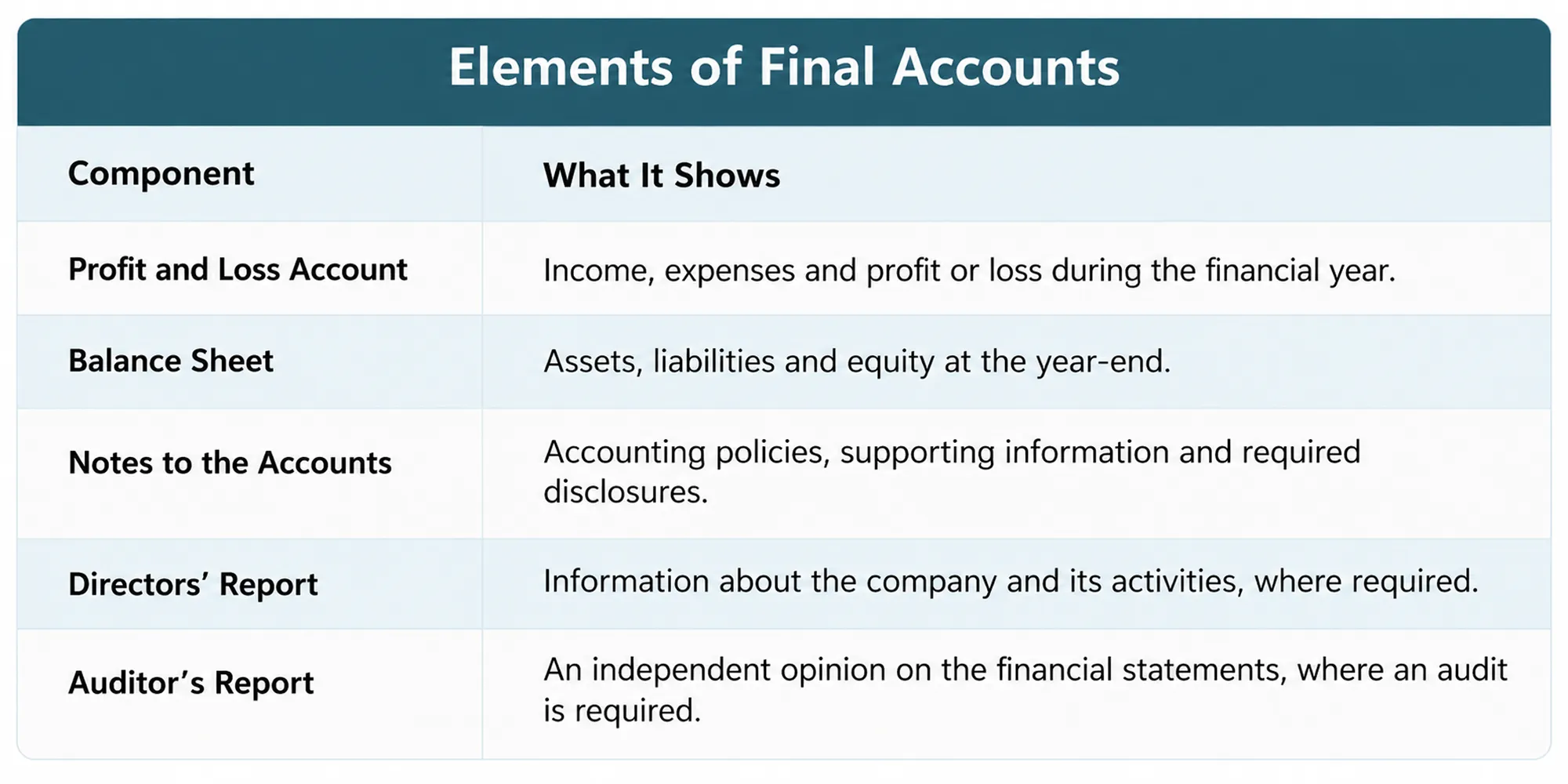
The components of final account filing must prepare depend on its reporting regime. Some qualifying small companies and micro-entities can use simplified reporting provisions.
What Types of Final Accounts Does Your Company Need?
The reporting requirements depend on the company’s size, structure and eligibility for statutory exemptions. Company size is generally assessed against three criteria: annual turnover, balance sheet total and average number of employees. A company normally needs to meet at least two criteria to qualify for a category, subject to applicable rules.
For accounting periods beginning on or after 6 April 2025, the revised UK thresholds are:
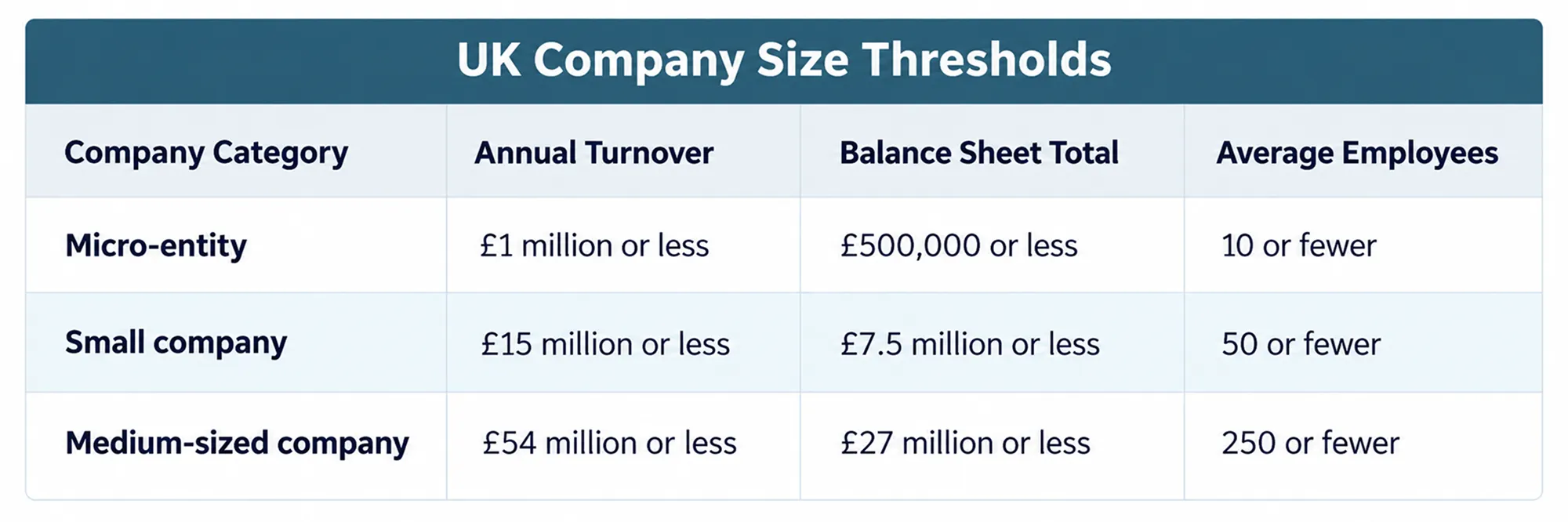
Companies that exceed the relevant medium-sized criteria may be classified as large, subject to the applicable rules. The two-year rule, group circumstances and other statutory conditions can also affect classification.
These thresholds do not automatically determine every filing or audit obligation. Qualifying micro-entities may use FRS 105 and simplified accounts, while eligible small companies may benefit from reduced filing requirements and audit exemptions. The accounts prepared for shareholders may contain more information than the version filed with Companies House.
How to Prepare Final Accounts in the UK: Step-by-Step
To prepare final accounts, start by organising and checking your financial records. Make the necessary year-end adjustments and audit financial statements. This helps you meet filing requirements, assess profitability, track cash flow and make informed decisions about costs, investment and business growth. Here are the key steps to follow when preparing final accounts in the UK:
Step 1: Gather and Check Your Financial Records
Collect the documents covering the financial year you are reporting on. These provide the evidence needed to verify transactions and prepare the accounts. Your records may include:
- Bank and credit card statements
- Sales and purchase invoices
- Expense receipts and payment records
- Payroll and pension records
- VAT returns and supporting documents
- Loan and finance statements
- Fixed asset registers
- Stock records, where relevant
- Director loan account records
- Share capital and other relevant company records
Check that transactions have been recorded in the correct period and that supporting documents are available. Investigate missing invoices, unrecorded expenses and unusual transactions before proceeding.
Step 2: Reconcile Your Accounts
Compare the balances in your accounting system with external statements and supporting records. Reconcile bank accounts and review credit cards, loans, VAT balances, payroll liabilities and other relevant control accounts. Look for:
- Missing or duplicated transactions
- Incorrect amounts or posting dates
- Unrecorded bank charges or interest
- Outstanding payments and receipts
- Differences in opening balances
Investigate and correct discrepancies before finalising the figures. A reconciliation confirms whether recorded balances agree with available evidence, but it does not guarantee that every transaction has been classified correctly.
Step 3: Prepare the Trial Balance
Prepare a trial balance from the general ledger after completing the initial checks. It lists the balances of the company’s accounts, including income, expenses, assets, liabilities and equity.
Total debits should equal total credits. However, a balanced trial balance does not necessarily mean that the records are complete or error-free. Transactions may have been omitted or posted to the wrong accounts without affecting the totals.
Review unusual balances and investigate unexpected movements before making year-end adjustments.
Step 4: Apply the Appropriate Accounting Framework
UK companies generally prepare statutory accounts under UK Generally Accepted Accounting Practice (UK GAAP) or, where permitted or required, the applicable International Financial Reporting Standards. FRS 102 is the principal UK accounting standard for entities within its scope. Eligible micro-entities may use FRS 105 under the UK micro-entities regime.
The relevant framework determines how transactions are recognised, measured, presented and disclosed. It affects areas such as revenue, leases, financial instruments and fixed assets. Check which framework applies to your company and reporting period, particularly if the business has complex transactions or is affected by changes to accounting standards.
Step 5: Make Year-End Adjustments
Year-end adjustments ensure that income, expenses, assets and liabilities are recorded in the appropriate accounting period and measured according to the applicable framework:
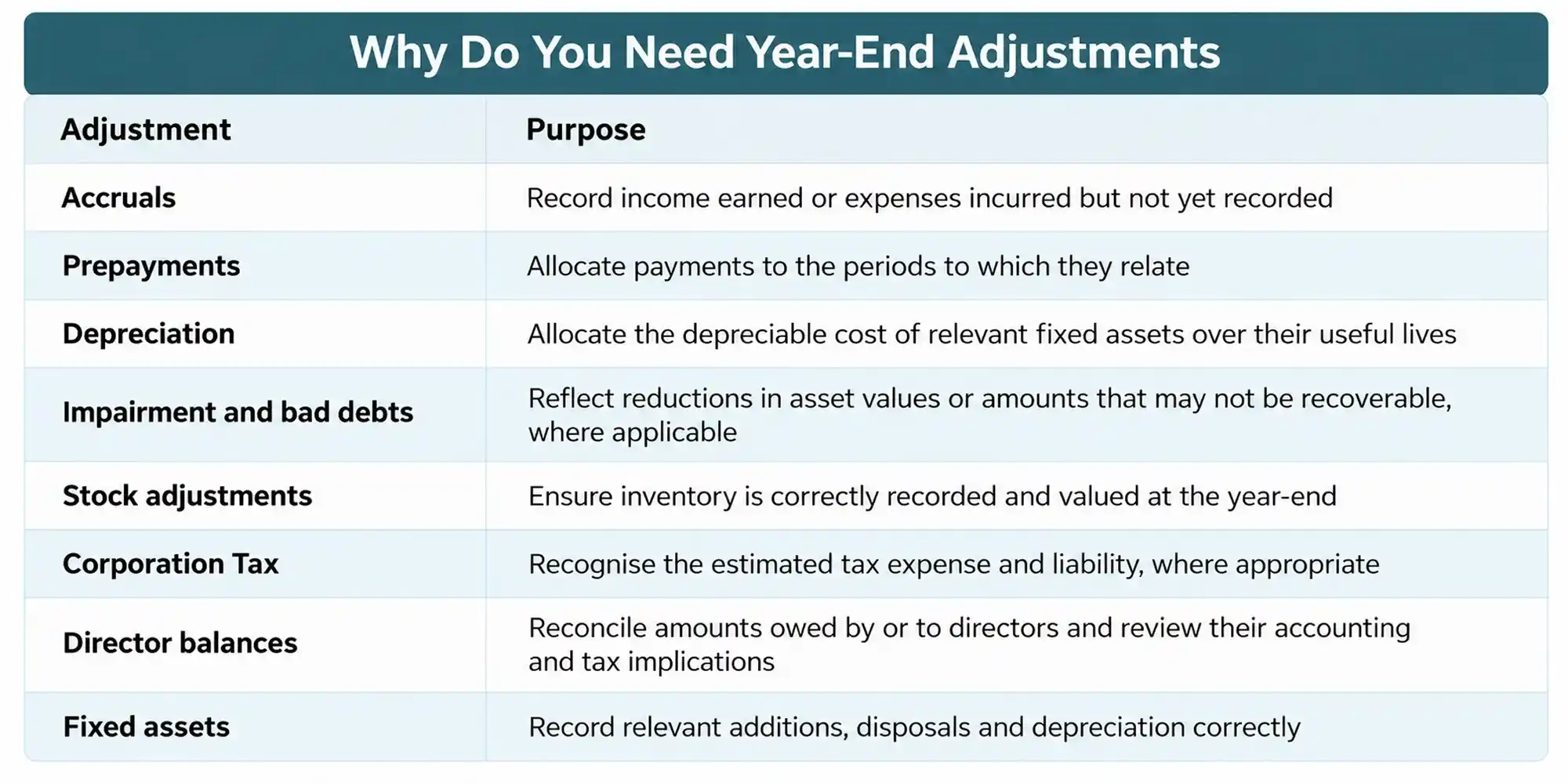
For example, an accrual may be required when a company receives a service before the year-end but receives the supplier’s invoice afterwards.
The adjustments needed will depend on the company’s activities. Corporation Tax is calculated under tax rules, so the accounting profit may require further adjustments when preparing the tax computation.
Step 6: Prepare and Review the Financial Statements
Use the adjusted trial balance to prepare the financial statements required under the company’s reporting regime. These generally include the profit and loss account, balance sheet and notes to the accounts. Other reports may be necessary depending on the company’s circumstances. Before finalising the statements, check:
- Whether revenue and expenses have changed unexpectedly compared with the previous year
- Whether gross profit margins are consistent with trading activity
- Whether bank and loan balances agree with supporting records
- Whether assets, liabilities and equity are correctly classified
- Whether the required disclosures and accounting policies are included
- Whether significant differences from the previous year’s accounts have been explained
Resolve any discrepancies before submitting the accounts for approval.
Step 7: Approve the Accounts
The company’s board of directors must approve the statutory accounts. A director must sign the balance sheet on behalf of the board and print their name in accordance with the applicable requirements. Directors remain responsible for the company’s statutory accounts even when an external accountant prepares them.
Check that the correct version has been approved and that all required signatures and statements are present before filing.
How to File Final Accounts with Companies House and Report to HMRC
Once the accounts have been approved, a UK limited company generally needs to address two separate reporting obligations:
- File its annual accounts with Companies House.
- Submit its Company Tax Return to HMRC when required.
Although both processes use the company’s accounting information, their purposes and deadlines differ.
Filing Annual Accounts with Companies House
Companies House receives the statutory accounts for the public register. The version filed depends on the company’s reporting category and any exemptions it can claim. The process involves:
- Confirming which filing requirements apply.
- Preparing the appropriate version of the accounts.
- Ensuring the directors have approved the accounts.
- Filing through an available Companies House service or suitable software.
- Checking that the submission has been accepted.
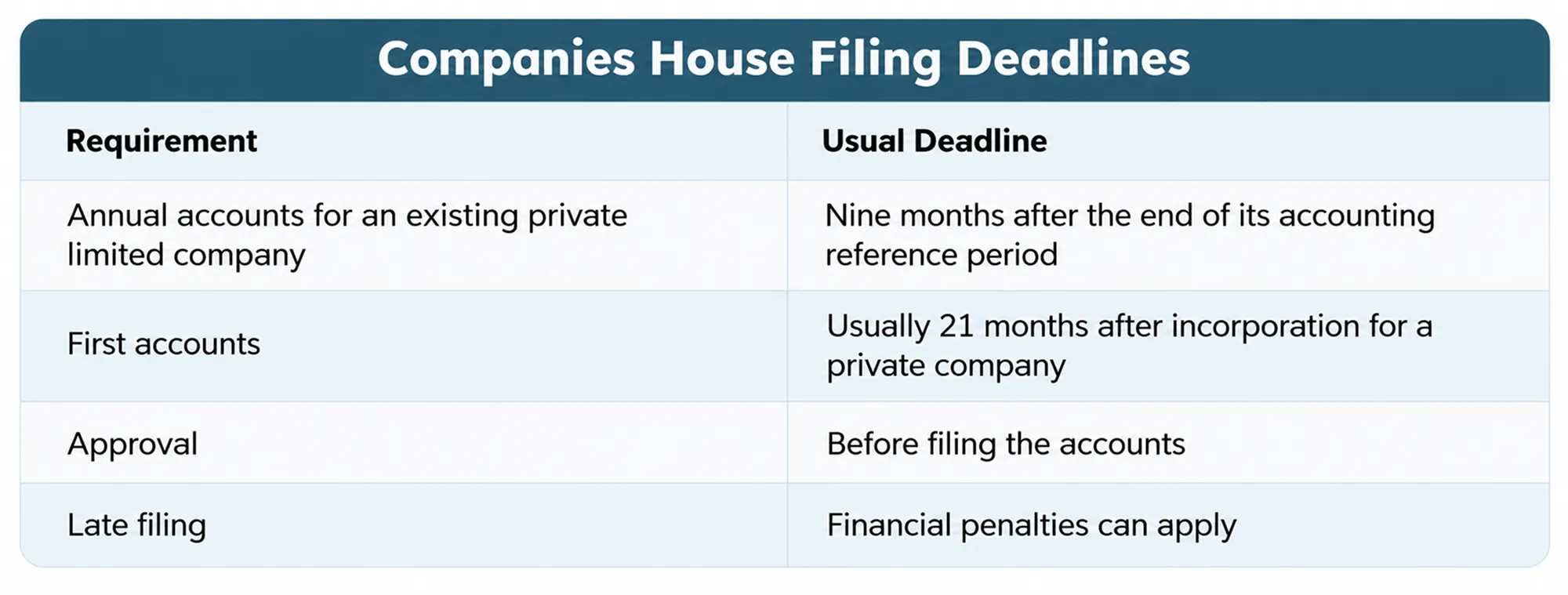
Different deadlines can apply depending on the company’s circumstances and the period covered by its first accounts. Check the actual filing date recorded for your company rather than relying solely on the general deadline.
Reporting Corporation Tax to HMRC
The company’s financial statements provide the starting point for its Corporation Tax calculations. However, accounting profit is not necessarily the same as taxable profit because tax adjustments may be required for items such as disallowable expenses and capital allowances.
A Company Tax Return normally includes:
- A CT600 Company Tax Return
- Company accounts
- A Corporation Tax computation
- Any required supplementary information
Companies generally need to submit the return using appropriate software. A company that receives a notice to deliver a return must normally file it even if it has made a loss or has no Corporation Tax to pay:
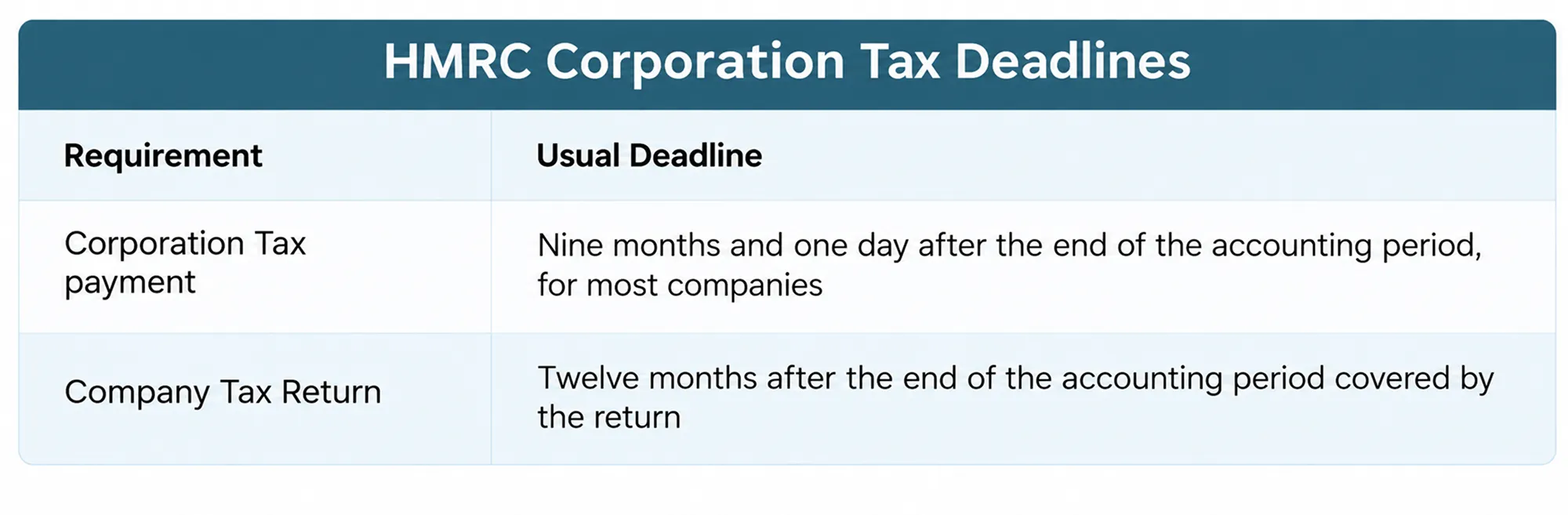
Different payment arrangements apply to some companies, including those required to pay Corporation Tax in instalments. A Corporation Tax accounting period cannot exceed 12 months, so a company with a longer financial year may need to submit more than one tax return.
Should You Prepare Final Accounts Yourself or Use an Accountant?
Directors can prepare their own accounts, provided they understand the relevant accounting and filing requirements. This may be manageable when the bookkeeping is straightforward, and the company has uncomplicated transactions. Professional support may be useful if you need help with:
- Applying accounting standards and reporting exemptions
- Resolving complex year-end adjustments
- Preparing statutory financial statements
- Reviewing Corporation Tax calculations
- Managing filing obligations and deadlines
An accountant can also explain the company’s financial results and identify issues that may require further investigation.
If you need assistance with year-end reporting, explore Sterling Cooper Consultants’ services to establish whether its accounting and tax support meets your requirements.
Conclusion
Preparing final accounts requires organised records, appropriate accounting adjustments and financial statements that meet the company’s reporting obligations. The next step is to ensure the approved accounts are filed with Companies House, and the relevant Corporation Tax reporting is completed with HMRC.
If you need help with your company’s year-end accounts, professional support can help you manage the process and address reporting requirements.
Need help preparing your company's year-end accounts?
Contact us today to discuss your requirements and explore the available support.
FAQs
You generally need bank statements, sales and purchase invoices, expense records, payroll information, loan statements and fixed asset records. You may also need supporting documents for other financial transactions.
The appropriate accounting standard depends on the company’s circumstances and eligibility. Many UK companies follow UK GAAP, including FRS 102, while eligible micro-entities can use FRS 105.
Not always. Eligible small companies and micro-entities may qualify for an audit exemption. However, some companies must have an audit because of their size, circumstances or specific legal requirements.
Not always. Eligible small companies and micro-entities may be able to omit their profit and loss account from their Companies House filing. However, they must still meet their accounting and applicable tax reporting obligations.
Yes. Dormant limited companies generally need to file annual accounts with Companies House, even if they have not traded. Qualifying companies may file simpler accounts, while their Corporation Tax obligations depend on their circumstances and HMRC requirements.
Yes. Company directors can prepare their own accounts if they understand the relevant accounting and filing requirements. An accountant can help with complex transactions, year-end adjustments and compliance.
Yes. If you identify an error in filed accounts, you may need to submit amended accounts to Companies House. The correction process depends on the nature of the error and the type of accounts originally filed.
Recent Posts