Posted by:
Admin
Date:
August 31, 2026
Category:
blogs
How Much Do Accounting and Bookkeeping Services Cost for UK Small Businesses?
What would you expect to pay an accountant for your small business?
£50 a month? £150? Or £500?
The answer can be surprisingly different from one business to another. A sole trader who only needs help with a Self Assessment tax return has very different needs from a limited company that needs bookkeeping, VAT, payroll, annual accounts and tax advice.
That is why there is no single price for accounting and bookkeeping services in the UK.
The cost of managing business finances is also becoming more important as reporting requirements change. HMRC’s latest Administrative Burdens Advisory Board survey found that 11.3% of businesses surveyed employed an accountant, agent or bookkeeper to handle their day-to-day record keeping in 2026, up from 9.1% in 2025.
This is one reason many small businesses choose to outsource some or all of their bookkeeping. But how much should you actually expect to pay?
This blog looks at typical 2026 market prices for accounting and bookkeeping services and explains what you may need to budget for as a UK small business.
How Much Do Accounting and Bookkeeping Services Cost?
There is no standard UK fee for accounting or bookkeeping services. What you pay depends on the type of business you run, the services you need and the complexity of your financial records.
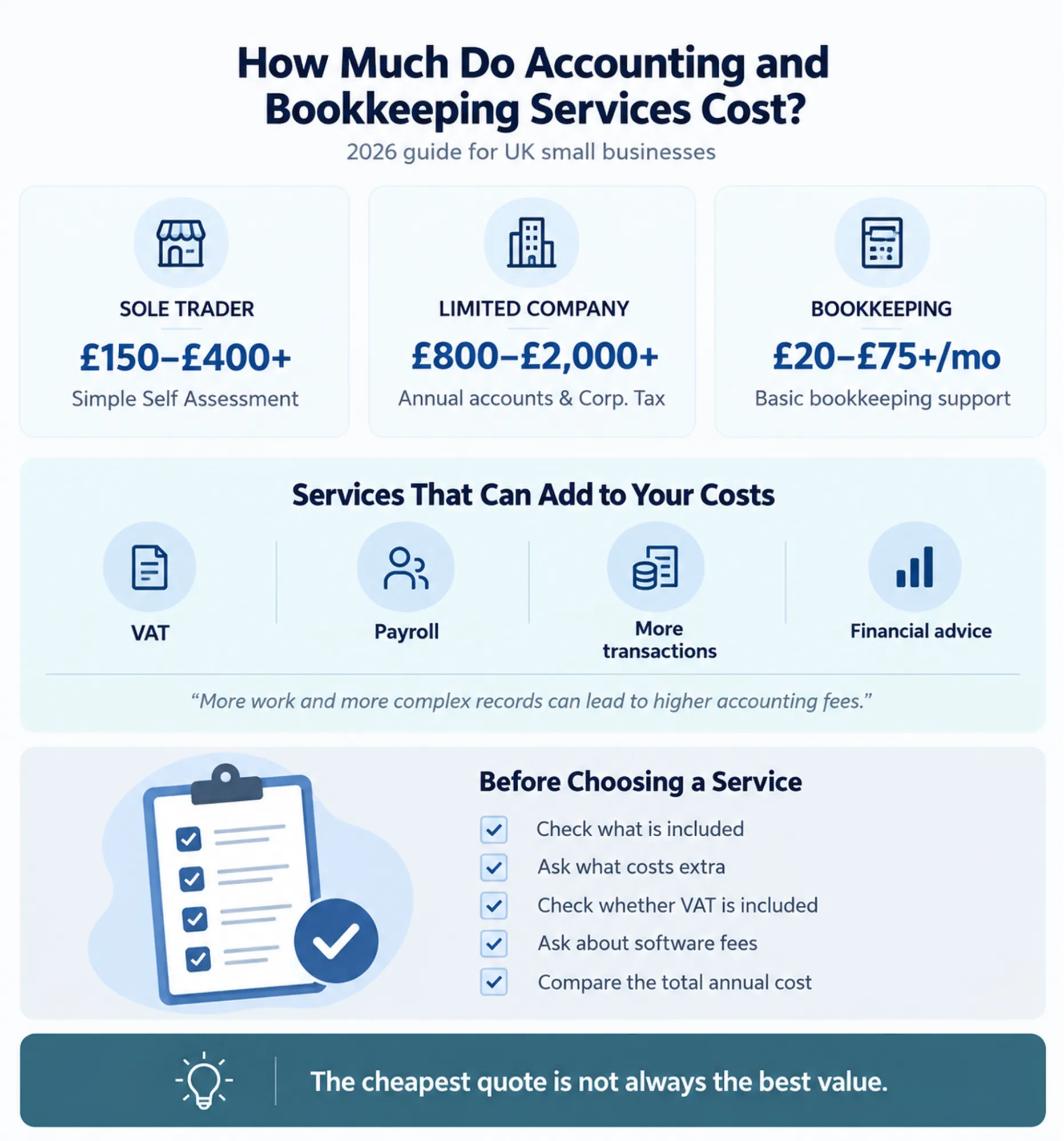
As an indicative 2026 market guide, you may see prices around the following ranges:
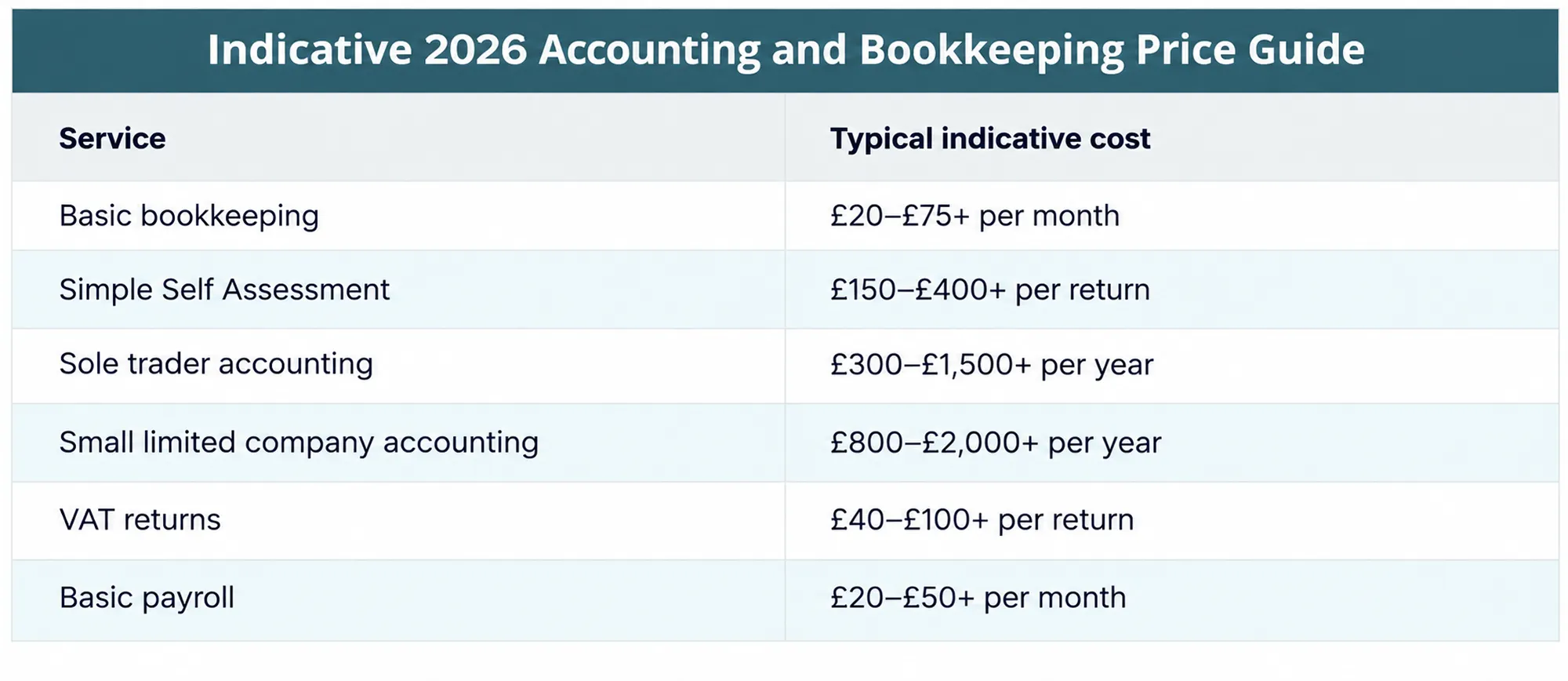
These are market ranges rather than fixed prices. The final accounting and bookkeeping services cost can be higher if your business has a large number of transactions, employees, VAT obligations, complex records or additional reporting requirements.
When comparing accountants, look at what is included in the fee rather than comparing monthly prices alone. A £50 monthly package may look cheaper than a £100 package, but the more expensive option may include bookkeeping, VAT returns, payroll and regular advice.
How Much Does Bookkeeping Cost for a Small Business?
For a small business with relatively simple financial records, bookkeeping may cost around £20–£75 per month.
A basic bookkeeping service may include recording sales and expenses, reconciling bank transactions and maintaining financial records. Some providers may also prepare information for VAT returns or provide basic financial reports.
The amount of work involved can increase significantly when a business has:
- A high number of monthly transactions
- Multiple business bank accounts
- Several payment platforms
- Large volumes of invoices
- Complicated expense records
- Poorly organised financial information
The way the bookkeeper charges can also affect the final cost. Some providers offer a fixed monthly fee while others charge according to transaction volume, hours worked or the level of support required.
Before agreeing to a package, ask exactly how the fee is calculated and what happens if your transaction volume increases.
How Much Does Accounting Cost for Sole Traders and Limited Companies?
The cost of accounting can vary considerably depending on whether you operate as a sole trader or a limited company.
Sole Trader Accounting Costs
A straightforward Self Assessment tax return may cost around £150–£400 or more.
However, this can increase if you need bookkeeping, tax planning, business advice or support with more complicated income and expenses.
Some sole traders choose to pay an accountant only when their tax return is due. Others prefer a monthly package that includes ongoing bookkeeping and advice.
The introduction of Making Tax Digital for Income Tax also means some sole traders will need to consider how they keep and submit their financial records.
From 6 April 2026, Making Tax Digital for Income Tax applies to individuals with qualifying income above £50,000. The threshold falls to above £30,000 from 6 April 2027 and above £20,000 from 6 April 2028.
For affected businesses, this can mean additional software costs or professional support alongside existing accounting fees.
Limited Company Accounting Costs
A small limited company may pay around £800–£2,000 or more per year for annual accounts and Corporation Tax services.
However, the total cost depends heavily on what is included.
A broader package may include:
- Annual accounts
- Corporation Tax return
- Bookkeeping
- VAT returns
- Payroll
- Director’s Self Assessment
- Management accounts
- Cash flow support
- Regular tax and business advice
This is why it is important to compare the overall service rather than simply looking at the monthly figure.
For example, a £100 per month package may provide considerably more value than a £50 per month package if the additional cost covers services you would otherwise have to pay for separately.
What Can Increase the Cost of Accounting Services?
The advertised starting price is rarely the whole story. Several factors can increase the amount you pay for accounting and bookkeeping support.
These can include:
- The number of monthly transactions
- Multiple bank accounts or payment platforms
- VAT registration and quarterly VAT returns
- Payroll and the number of employees
- Complex business structures
- Additional tax returns
- Management accounts
- Cash flow forecasting
- Tax planning
- Financial advice
- Cleaning up incomplete or inaccurate records
This is why two businesses in the same industry can receive very different accounting quotes.
The more organised your financial records are, the easier it can be for an accountant or bookkeeper to complete the work efficiently. Good bookkeeping can therefore help reduce avoidable costs as well as giving you a clearer view of your business finances.
Case Study: How the Right Accountant Can Add More Than Compliance
The value of an accountant is not always reflected in the cost of preparing accounts or submitting a tax return.
Consider the example of BrightWeb, a UK micro business. The business initially found that its accountant was not providing the level of financial support it needed. As the business developed, it moved to a chartered accountant who helped put better financial systems in place.
The accountant supported the business with its annual budget, tax returns and cash flow statements that could also be used when dealing with the bank.
The lesson is simple: accounting support can extend beyond compliance.
A good accountant should not simply tell you what happened financially last year. Depending on the services you agree with, they can also help you understand your numbers and make better-informed decisions about the future.
How Much Should Your Business Budget for Accounting?
There is no single amount that every UK small business should budget for accounting.
A sole trader with straightforward records may only need occasional support with their Self Assessment return. A growing limited company may need bookkeeping, VAT, payroll, annual accounts, Corporation Tax and ongoing financial advice.
Before choosing a provider, consider:
- What accounting tasks do you actually need help with?
- How many transactions does your business handle?
- Are you VAT registered?
- Do you have employees?
- Do you need monthly bookkeeping?
- Do you need regular financial advice?
- Are you likely to need more support as the business grows?
Once you understand these requirements, you can compare accounting packages more accurately.
The cheapest accountant is not necessarily the best choice. The right service should provide the level of support your business actually needs at a fee you understand and can budget for.
Conclusion
The cost of accounting and bookkeeping services depends on what your business needs. A sole trader with simple records may only need occasional tax support, while a limited company with VAT, payroll and regular bookkeeping will usually need a wider service.
The right service should give you the support your business needs at a clear and manageable cost. Comparing what each package includes can help you avoid paying for unnecessary services while ensuring important financial work is properly managed.
This is the approach taken by Sterling Cooper Consultants, providing tailored support with accounting, bookkeeping, tax and wider financial matters based on each business’s needs.
Need accounting and bookkeeping support?
Get in touch with Sterling Cooper Consultants to discuss your business needs.
FAQs
The cost depends on the type of business and services required. A simple Self Assessment may cost around £150–£400, while a small limited company may pay £800–£2,000 or more per year for annual accounts and Corporation Tax services.
Bookkeeping is generally less expensive than a full accounting service because it focuses mainly on maintaining financial records. However, the actual cost depends on transaction volume and the level of support required.
Basic bookkeeping can start at around £20–£75 per month for a business with straightforward records. More complex businesses may pay considerably more.
A small limited company may pay around £800–£2,000 or more per year for annual accounts and Corporation Tax services. The cost can increase if bookkeeping, VAT, payroll or ongoing advice is included.
It can. VAT-registered businesses generally require additional work, such as preparing and submitting VAT returns. Some accountants include this within a monthly package while others charge separately.
Yes. Some small businesses manage their day-to-day bookkeeping themselves and use an accountant for annual accounts, tax returns or specific advice. This can reduce professional fees, provided your records are accurate and maintained properly.
It depends on your business. A monthly package can be useful if you need regular bookkeeping, payroll, VAT support or ongoing advice. It can also make costs more predictable compared with paying separately for different services throughout the year.
Recent Posts