Posted by:
Admin
Date:
September 4, 2026
Category:
blogs
How to Choose a Tax Accountant in the UK
Running a business means making important financial decisions every day, but choosing the right tax accountant in the UK is one decision that can have a significant impact on your finances, compliance and growth. The right tax accountant does more than prepare tax returns or calculate figures for HMRC. They can help you manage tax risks, identify legitimate tax-saving opportunities, improve cash flow and make better-informed financial decisions.
From Corporation Tax planning and VAT compliance to payroll obligations and strategic financial advice, professional support can make complex tax responsibilities easier to manage. However, choosing a tax accountant should not be based on cost alone. You should also consider professional qualifications, relevant HMRC registration requirements, specialist expertise, reputation and the ability to provide proactive advice.
Key Takeaways
- Choose a tax accountant based on your business structure, tax obligations and support requirements rather than fees alone.
- Look for relevant experience in your industry and with businesses similar to yours.
- Check professional qualifications, membership of recognised professional bodies and any applicable HMRC registration requirements.
- Confirm exactly what is included in the fee before signing an engagement letter.
- Look for an accountant who can support both tax compliance and legitimate tax planning.
Why Hire a Tax Accountant?
Many UK business owners initially consider managing their taxes themselves or using accounting software. While these options may be suitable for straightforward situations, tax responsibilities can become more complex as a business grows. Different business structures, changing tax obligations, VAT requirements and payroll responsibilities can all increase the amount of work involved.
A tax accountant can help you understand your obligations, prepare accurate tax submissions and identify legitimate opportunities to improve tax efficiency. They can also help you understand the financial implications of business decisions and plan for upcoming tax liabilities.
The level of support you need will depend on your circumstances. Understanding your requirements before approaching an accountant will help you choose a professional whose services match your business.
How to Choose a Tax Accountant
Choosing a tax accountant is an important decision for any UK business owner because the right professional can support compliance, financial efficiency and long-term planning. Rather than viewing an accountant as someone who simply completes annual tax returns, consider whether they can provide the guidance your business needs as it develops.
The following checks can help you assess potential accountants and make a more informed decision.
1. Identify the Tax Services You Need
Before contacting a tax accountant, identify the specific services your business requires. Every business has different financial responsibilities, and choosing an accountant without understanding your needs may lead to unsuitable or insufficient support.
Some businesses need help with annual tax compliance, while others require ongoing advice, payroll support or more complex tax planning.
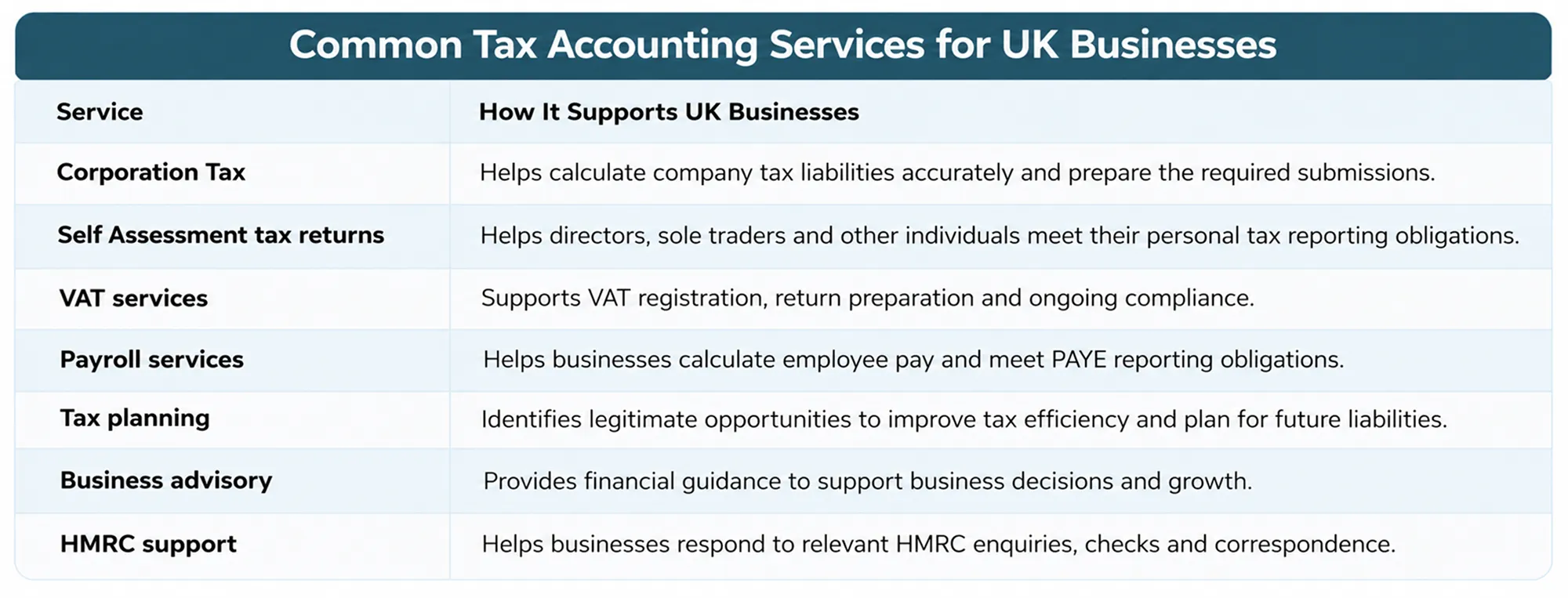
Before choosing an accountant, confirm which of these services you need and whether they are included in the proposed package. If your requirements are likely to change as your business grows, ask whether the accountant can provide additional support when needed.
2. Look for Relevant Industry Expertise
Not all accountants specialise in the same areas. An accountant who regularly works with businesses similar to yours may understand the tax considerations, cash-flow pressures and commercial challenges common in your industry.
For example, a construction business may need advice on the Construction Industry Scheme (CIS), while an online retailer may require support with VAT, stock costs and digital sales reporting.
Industry experience is useful, but it should not be your only consideration. Ask potential accountants how they have handled tax matters relevant to your business and whether they understand your particular business structure and obligations. Their answers can help you assess whether their experience matches your needs.
3. Check Professional Qualifications and Credentials
Professional qualifications can provide evidence of relevant training and technical knowledge. In the UK, accountants and tax professionals may hold qualifications or memberships from recognised professional bodies, including:
- Association of Chartered Certified Accountants (ACCA).
- Institute of Chartered Accountants in England and Wales (ICAEW).
- Chartered Institute of Taxation (CIOT).
These organisations have professional standards and requirements for their members. However, membership and qualification requirements differ between bodies, so check the individual’s actual credentials rather than relying on a general claim of being qualified.
You can ask which qualifications the accountant holds, whether their membership is current and whether they have experience with the specific tax matters affecting your business. This is particularly important if you need specialist advice on complex tax issues.
4. Check the Accountant’s HMRC Registration Requirements
If an accountant acts as a paid tax adviser on your behalf, they may need to register with HMRC and meet the applicable requirements for accessing its services. HMRC is introducing tax adviser registration requirements in stages, so the relevant requirements depend on the circumstances and timing.
You can use the official HMRC guidance on tax adviser registration to understand the requirements that apply.
It is also worth asking how the accountant handles HMRC enquiries, compliance checks and tax correspondence. A suitable adviser should be able to explain the support they provide, what falls outside their service and when additional specialist assistance may be necessary.
Pro tip:
Before appointing an accountant, ask how they would support you if HMRC raised a query or opened a compliance check. Clarify whether this assistance is included in the agreed fee or charged separately.
5. Review Their Reputation and Client Feedback
An accountant’s reputation can provide useful insight into their reliability, communication and approach to client service. However, reviews should be considered alongside other evidence rather than treated as proof of technical expertise.
Before making a decision, review their Google Business Profile reviews, client testimonials, professional profiles and relevant case studies. Look for consistent feedback about accuracy, responsiveness, clarity and the ability to explain complex tax matters.
Where possible, ask for examples of the types of businesses they support and the services they provide. If case studies include specific financial or tax-saving results, check whether the claims are supported by clear evidence and whether the circumstances are comparable to yours.
Questions to Ask Before Choosing a Tax Accountant
An initial consultation can help you determine whether an accountant is the right fit for your business. Use the opportunity to understand their experience, the services they provide and how they work with clients.
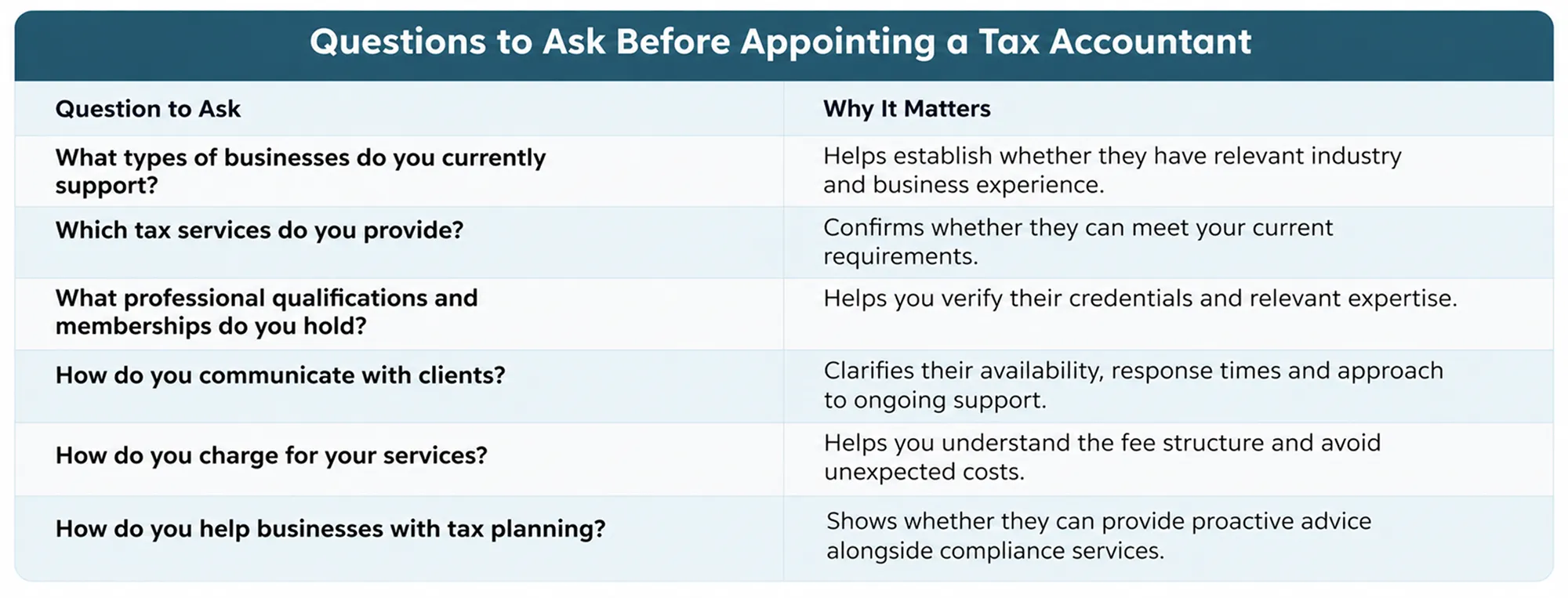
You should also ask who will handle your account, what documents you will need to provide and how the accountant will keep you informed about deadlines and upcoming tax liabilities. These details help establish expectations before you commit to a working relationship.
What to Do After Choosing Your Tax Accountant
Once you have selected an accountant, take a few practical steps to establish a clear and professional working relationship. Agreeing on responsibilities, fees and communication arrangements from the outset can help prevent misunderstandings later.
Your accountant should provide an engagement letter setting out the services they will deliver, their fees and the responsibilities of both parties. Read it carefully and ask for clarification if any part of the agreement is unclear. Confirm whether additional work, such as responding to an HMRC enquiry, is included or charged separately.
A written engagement letter is an important part of establishing clear expectations between an accountant and a client. You can also review the relevant guidance and professional standards issued by the accountant’s professional body.
You may also need to authorise your accountant to deal with HMRC on your behalf. Depending on the tax service involved, this may be completed through an online authorisation process or an appropriate paper form, such as HMRC Form 64-8. Check HMRC’s current guidance to confirm the correct authorisation method for the services you require.
Remember that authorising an accountant does not transfer your legal tax responsibilities to them. You should continue to provide accurate information, review important submissions and ensure you understand your tax obligations.
Why Choose Sterling Cooper as Your Tax Accountant?
Choosing a tax accountant means choosing a professional partner to help you manage your business’s tax responsibilities and financial decisions. The right support can make it easier to understand your obligations, plan for tax liabilities and approach financial decisions with greater confidence.
Sterling Cooper Consultants provides accounting and taxation services for businesses seeking support with their financial responsibilities. Whether you need help understanding your tax requirements or want to explore more proactive tax planning, the right starting point is a clear understanding of your business, current challenges and future objectives.
If you are reviewing your current tax arrangements or looking for professional support, explore Sterling Cooper’s taxation services to see how they may fit your requirements.
Need Help With Your Business Tax?
Get the right support to manage your tax responsibilities and plan ahead with confidence. Contact Sterling Cooper Consultants to discuss your business tax needs.
FAQs
A tax accountant helps businesses understand and manage their tax responsibilities. Depending on the services agreed, this may include preparing tax returns, supporting HMRC compliance, calculating tax liabilities and identifying legitimate tax planning opportunities.
The cost depends on the size and complexity of your business, the services you need and the level of ongoing support required. Before appointing an accountant, request a clear breakdown of fees and check whether additional work is charged separately.
A tax accountant may hold qualifications or memberships from recognised professional bodies such as ACCA, ICAEW or CIOT. The most suitable credentials depend on the services you require. Check the accountant's actual qualifications, relevant experience and any applicable registration requirements before appointing them.
An accountant may handle broader financial tasks such as bookkeeping, financial reporting and management accounts. A tax accountant focuses more specifically on tax compliance, tax liabilities and tax planning. However, many accountants offer both general accounting and taxation services, so check the scope of support each provider offers.
Recent Posts