

Posted by:
Admin
Date:
April 15, 2026
Category:
blogs
What Is a Business Growth Strategy? A Beginner’s Guide with Real Examples
A business needs a clear plan to reach new markets, improve its products and make better use of its resources. A business growth strategy provides this direction. It helps owners decide where to allocate their time, money and efforts to support sustainable expansion. For a small business, choosing the right growth approach can make expansion more organised and easier to manage.
In this guide, we’ll explain what a business growth strategy is, explore the core strategies businesses use to grow and look at real examples to show how these approaches work in practice.
Key Takeaways
- Growth can come from existing products, new products, existing markets or new markets.
- Market penetration focuses on selling more existing products to existing customers.
- Product development means creating new products for an existing market.
- Market development means taking existing products or services into new markets.
- Diversification combines a new product with a new market.
- Businesses should review their results and change their approach when needed.
What Is a Business Growth Strategy?
A business growth strategy is a plan that explains how a company wants to grow. It sets out the actions a business can take to increase its revenue, attract customers, enter new markets or improve its position.
A useful way to understand growth is through the Ansoff Matrix. It looks at products and markets and identifies four core business growth strategies. This includes market penetration, market development, product development and diversification.
‘Strategy is the creation of a unique and valuable position.’ — Michael E. Porter
Core Business Growth Strategies
A core business growth strategy relies on four fundamental expansion paths that are mentioned below.
Market Penetration
Market penetration means selling more of your products or services to your current market. For example, a local gym could encourage existing members to sign up for personal training sessions. This allows the business to increase sales within its existing customer base.
Market Development
Market development means taking an existing product or service to a new market. The new market could be a different customer group, location, industry or country. For example, a UK software company that mainly serves small businesses could start offering its software to larger companies as well. This example shows that the product stays the same, but the target market changes, which directly relates to market development.
Product Development
Product development means creating new products or services for an existing market. A company may notice that its customers need something that it does not currently offer. It can then create a new product to meet that need. For example, a coffee brand could add ready-to-drink coffee to its product range for customers who have no time to wait for preparation.
Pro Tip:
Before launching, the business should research customer needs, costs and demand.
Diversification
Diversification means selling a new product or service in a new market. For example, a clothing brand could develop sports equipment for customers outside its existing clothing market. This can help a business create a new source of revenue. However, this approach can take more time and money. Within the Ansoff Matrix, diversification is generally considered the highest-risk growth strategy because both the product and the market are new.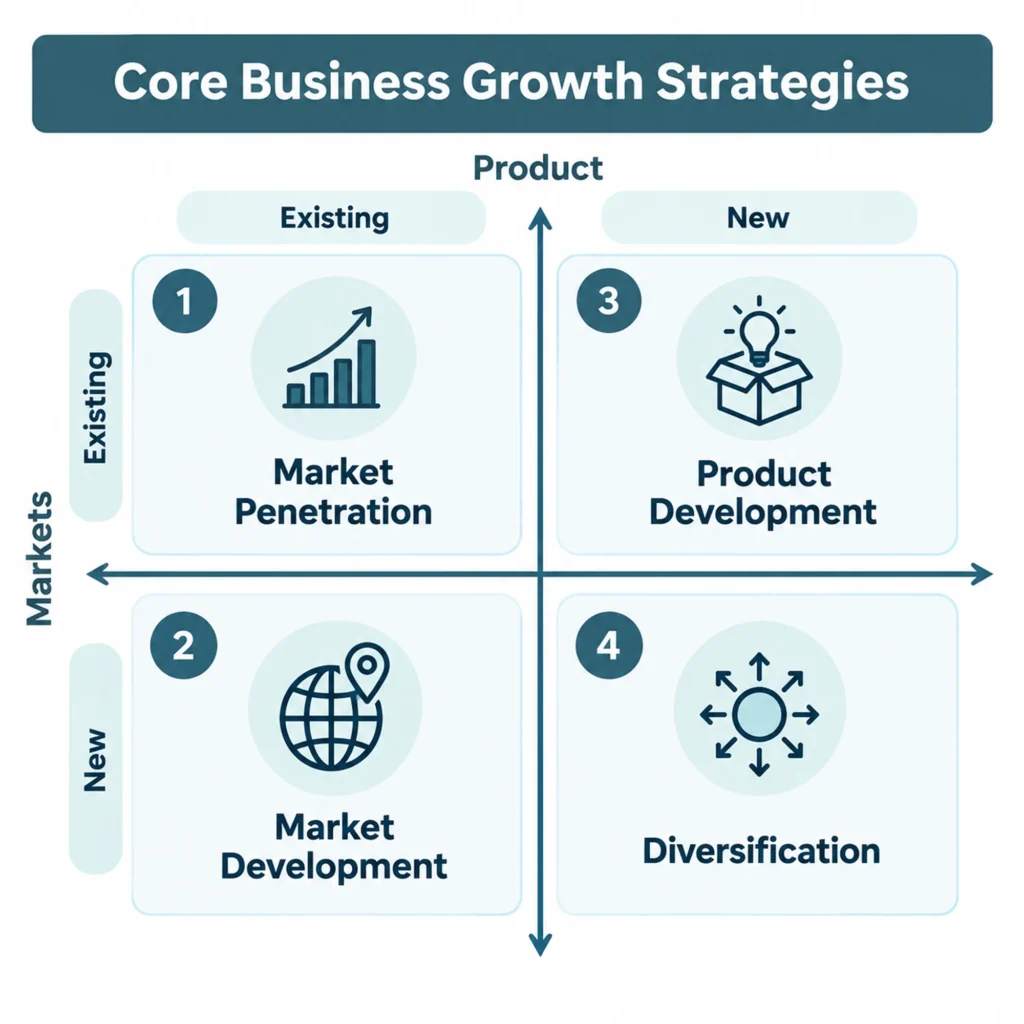
How to Choose the Right Growth Strategy
Businesses should consider their existing products, target markets, resources, customer demand and growth goals before choosing any growth strategy. A business with a strong existing customer base may focus on market penetration, while one with opportunities in a new location or customer segment may consider market development. Product development may suit businesses with established customers, while diversification generally requires greater resources and investments because both the product and market are new.
In simple words, the right growth strategy should match your business goals, resources and opportunities.
Case Study: How Gymshark Used Different Growth Strategies?
Gymshark, a fitness clothing company founded in Birmingham in 2012, provides a useful example of how it uses core business growth strategies over time.
Market Penetration: Gymshark strengthened its position in the fitness market by using athletes, community building and social media to promote its existing products and connect with its target customers.
Market Development: Gymshark expanded beyond the UK into international markets. It now serves customers in more than 200 countries.
Product Development: Gymshark expanded its product range within the fitness market, including women’s collections such as Flex, Vital and Adapt.
Diversification: In its early days, Gymshark sold fitness supplements alongside clothing, entering a different product area within the wider fitness market.
This case study shows how a business can use different strategies together to strengthen its existing market, develop new products and reach new customers in a new market.
Conclusion
A business growth strategy gives a company a clear way to move from its current position towards its future growth goals. A business can grow by selling more existing products, creating new ones, entering new markets or moving into new areas. As Michael E. Porter explains, strategy involves making clear choices about where a company will compete and how it will create value.
Ready to implement effective business growth strategies that deliver real results?
Need a clear strategy to grow your business? Contact business growth experts at Sterling Cooper to discuss your goals and find the right path forward.
FAQs
A business growth strategy is a plan for increasing a company's sales, customers, market reach or other areas of performance.
Common strategies include market penetration, product development, market development and diversification.
Planning a business strategy involves setting clear goals, understanding your target market, reviewing your resources, identifying growth opportunities and creating practical steps to achieve your goals.
There is no single best option for every small business. The right choice depends on its customers, products, resources, competition and goals.
Yes. A company can combine different approaches over time. For example, it may first increase sales in its current market, then develop new products and later enter new markets.
Recent Posts