

Posted by:
Admin
Date:
August 21, 2026
Category:
blogs
How Digital Bookkeeping Is Transforming UK Startups?
For a growing UK startup, managing finances can become more demanding as transactions increase. Recording transactions, organising receipts, raising invoices and reconciling accounts can take time away from running the business. Digital bookkeeping can simplify these tasks by automating routine processes and keeping financial records organised in one place. Regularly updated records can also give startups clearer visibility of income, expenses, outstanding payments and cash flow.
This guide explains how digital bookkeeping is changing financial management for UK startups, its key benefits and how to implement it effectively.
Key Takeaways
- Digital bookkeeping can automate routine financial tasks and reduce manual work.
- It helps keep financial records organised and can reduce some data-entry errors.
- Startups can access financial information more quickly to monitor cash flow and performance.
- Automated processes can support financial planning as the business grows.
- Choosing suitable software and setting it up correctly is important for getting the most from digital bookkeeping.
What Is Digital Bookkeeping?
Digital bookkeeping uses accounting software and other digital tools to record, organise and manage a business’s financial transactions. Accounting software can connect to business bank accounts and import transactions. Depending on the system, it may also support invoicing, expense tracking, payment matching and financial reporting.
OCR tools can extract information from invoices and receipts, reducing manual data entry. However, digital bookkeeping doesn’t automate every task. Transactions may still need categorisation, reconciliation, and review. Business owners, bookkeepers and accountants also need to investigate discrepancies and make financial decisions.
For startups, digital bookkeeping provides a more efficient way to manage financial records as the business grows. Businesses can also use professional bookkeeping services to manage these processes and maintain accurate financial records as their bookkeeping needs develop.
How Digital Bookkeeping Simplifies Financial Management for UK Startups
Digital bookkeeping can facilitate several routine financial processes. This can make day-to-day bookkeeping easier to manage as transaction volumes increase:
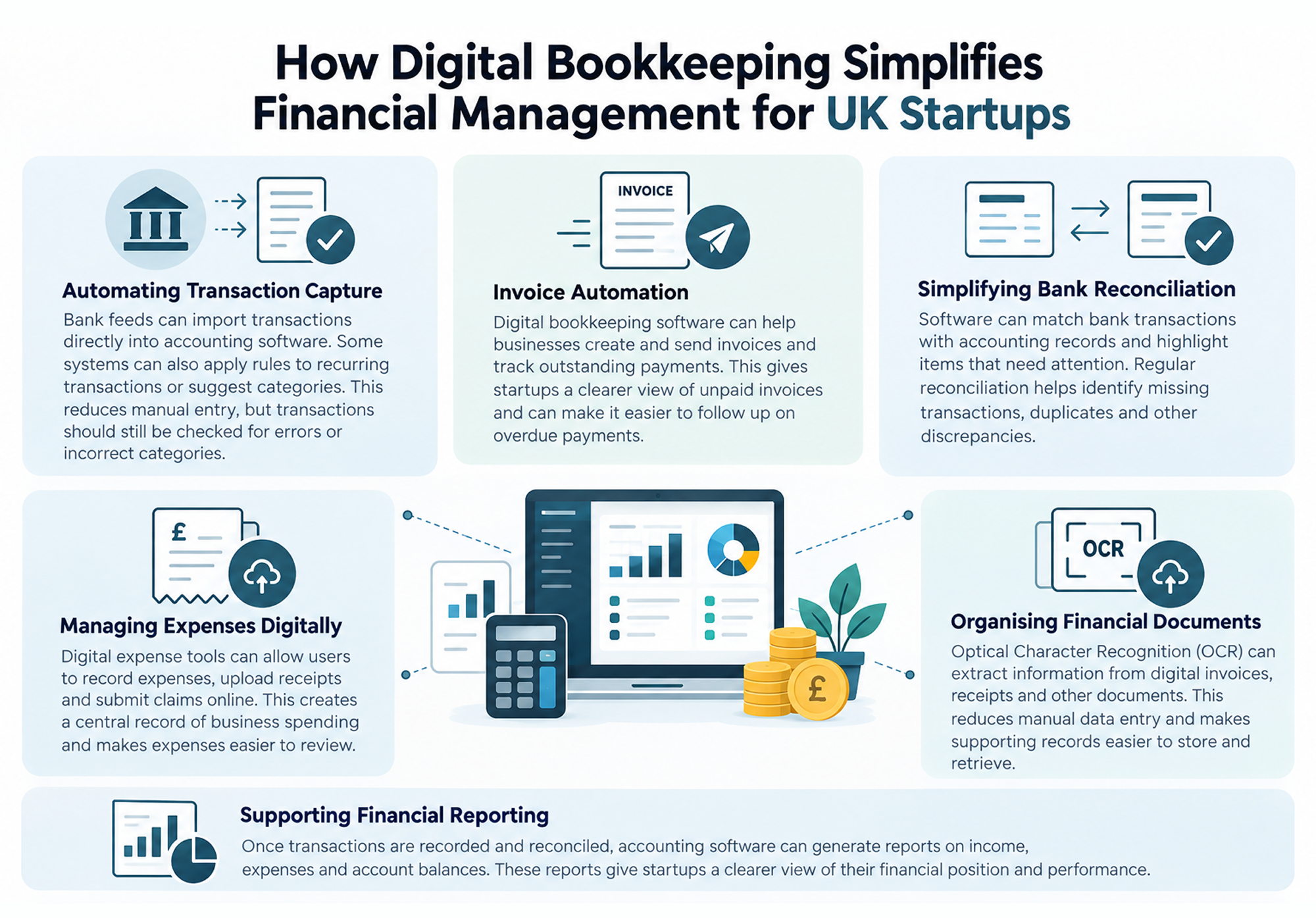
Automating Transaction Capture
Bank feeds can import transactions directly into accounting software. Some systems can also apply rules to recurring transactions or suggest categories. This reduces manual entry, but transactions should still be checked for errors or incorrect categories.
Invoice Automation
Digital bookkeeping software can help businesses create and send invoices and track outstanding payments. This gives startups a clearer view of unpaid invoices and can make it easier to follow up on overdue payments.
Simplifying Bank Reconciliation
Software can match bank transactions with accounting records and highlight items that need attention. Regular reconciliation helps identify missing transactions, duplicates and other discrepancies.
Managing Expenses Digitally
Digital expense tools can allow users to record expenses, upload receipts and submit claims online. This creates a central record of business spending and makes expenses easier to review.
Organising Financial Documents
Optical Character Recognition (OCR) can extract information from digital invoices, receipts and other documents. This reduces manual data entry and makes supporting records easier to store and retrieve.
Supporting Financial Reporting
Once transactions are recorded and reconciled, accounting software can generate reports on income, expenses and account balances. These reports give startups a clearer view of their financial position and performance.
Benefits of Digital Bookkeeping for UK Startups
The main benefits of digital bookkeeping come from reducing manual work and making financial information easier to access and manage.
Save Time
Manual bookkeeping can involve entering transactions, checking statements, organising receipts and updating records. Automating some of these tasks can reduce repetitive work. This can give startup teams more time to focus on operational and commercial priorities.
Improve Accuracy
Manual data entry can result in incorrect amounts, duplicate entries or miscategorised transactions. Automation can reduce some of these errors by transferring and matching information between connected systems. However, software does not eliminate errors. Regular reconciliation and review are still necessary.
Improve Cash-Flow Visibility
Cash flow is important for startups because they need enough money available to meet their financial commitments. Up-to-date bookkeeping can show income, expenses, outstanding invoices and recent transactions. This gives founders a clearer picture of their current cash position. It can also help them identify changes in spending or delayed customer payments that may require attention.
Support Financial Decisions
Accurate financial information can help founders make decisions about spending, costs and growth. For example, they can review income and expenses, monitor recurring costs and identify changes in financial performance.
Support Business Growth
Bookkeeping can become more complex as a startup gains customers, suppliers, employees and transactions. Digital systems can handle larger volumes of financial data without relying entirely on manual entry. Businesses can also add users, integrations and features as their needs change.
How to Implement Digital Bookkeeping in Your Startup
Moving to digital bookkeeping should be a planned process. Startups do not need to automate every financial task immediately. It is often more practical to begin with processes that take the most time or are most prone to errors:
Evaluate Your Current Process
Review how you currently manage bookkeeping. Identify repetitive tasks, delays, recurring errors and areas where information is difficult to access. This will help you identify which processes would benefit most from digital tools.
Set a Realistic Budget
Consider the full cost of digital bookkeeping. This may include software subscriptions, additional users, integrations, setup and external bookkeeping support. Choose an option that fits your current budget without creating unnecessary costs.
Select the Right Software
Look for software that meets your current needs and can support future growth. Consider features such as bank feeds, invoicing, expense tracking, reconciliation, reporting, document capture and integrations. UK startups should also consider relevant tax and record-keeping requirements.
Train Your Team
Decide who will manage key bookkeeping tasks. These may include recording expenses, reviewing transactions, reconciling accounts and following up on unpaid invoices. Clear responsibilities can help prevent important tasks from being missed.
Import and Check Financial Data
Transfer relevant records into the new system and connect business bank accounts where supported. Check imported transactions, opening balances and other financial information before relying on the new records.
Set Up Relevant Integrations
Connect the bookkeeping system with tools that support your financial processes, such as payroll, invoicing or payment platforms. Only use integrations that provide a clear benefit. Too many unnecessary connections can make the system harder to manage.
Review the System Regularly
Check the system for unreconciled transactions, duplicate records and incorrect categories. As the business grows, review whether the software and processes still meet its needs.
Conclusion
Digital bookkeeping can help UK startups manage financial administration more efficiently. It can reduce repetitive tasks, improve access to financial information and make bookkeeping easier to scale. Regularly updated records can also give founders better visibility of income, expenses and cash flow. This can support day-to-day financial decisions as the business grows. However, software alone does not guarantee accurate records. Startups still need clear processes, defined responsibilities and regular reviews.
Need help managing your startup's bookkeeping?
Contact Sterling Cooper Consultants to discuss how our bookkeeping support can help you keep your financial records organised and up to date.
FAQs
No. Digital bookkeeping software can automate many routine tasks, but accountants can still provide professional advice, review financial records, support tax compliance and assist with financial planning.
Some UK businesses have digital record-keeping and reporting obligations under Making Tax Digital. The requirements depend on the relevant tax and the business's circumstances.
Businesses should check current HMRC guidance to understand which requirements apply to them.
Costs depend on the software, features and level of support required. Startups may need to consider software subscriptions, additional users, integrations, setup and bookkeeping or accounting support.
Consider features such as bank feeds, invoicing, expense tracking, reconciliation, reporting and document capture. Startups should also consider integrations, security, ease of use and whether the software can support their future needs.
Start by reviewing your current bookkeeping process and identifying areas that take the most time. Then choose suitable software, establish responsibilities, transfer relevant records and connect necessary integrations. Review the system regularly to keep financial records accurate and up to date.
Recent Posts